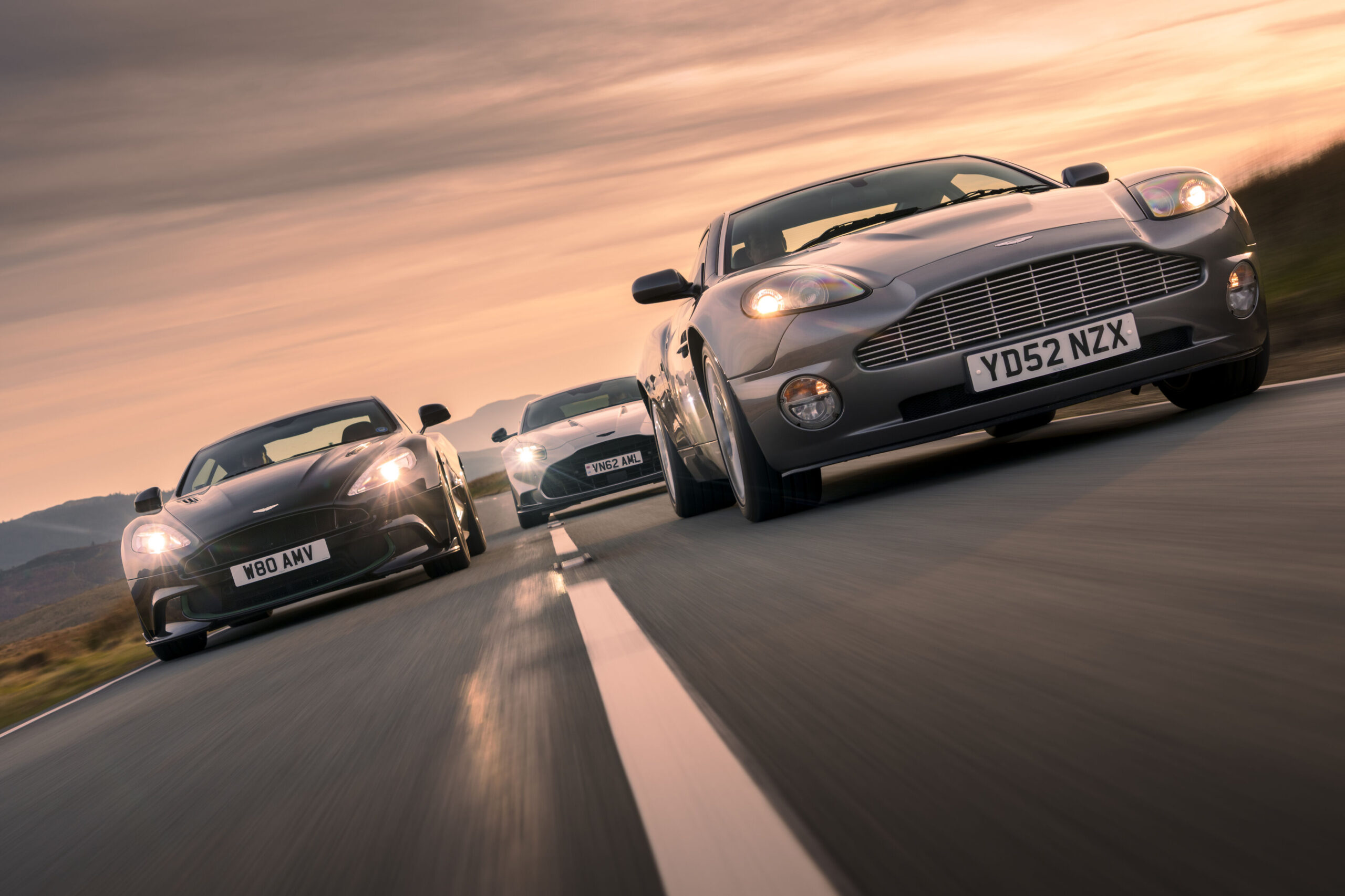
Aston Martin marks this month the 25th anniversary of the Vanquish, one of the most iconic names in its modern history and one that, since its debut in 2001, has come to identify some of the most sophisticated and ambitious sports cars of the British brand.
Now in its third generation, the Vanquish remains the ultimate expression of Aston Martin's front-engine sports car range. In its current incarnation, unveiled in 2024, the model has become the most powerful flagship ever produced by the brand, with 835 hp and 1000 Nm of torque.
Adrian Hallmark, CEO of Aston Martin, emphasizes that, from the beginning, the name Vanquish has always been associated with an idea of exception, ambition, and boldness. He also believes that, in 2026, the model continues to symbolize what the British brand is capable of creating, highlighting the pride surrounding the significance that the Vanquish has assumed over three generations.
A historic name that was born in Geneva
The origin of this lineage dates back to the 2001 Geneva Motor Show, where Aston Martin first presented a model bearing the name Vanquish. Equipped with a V12 engine, this car laid the emotional and aspirational foundations of a name that would become central to the brand's identity.
The first generation opened a new era
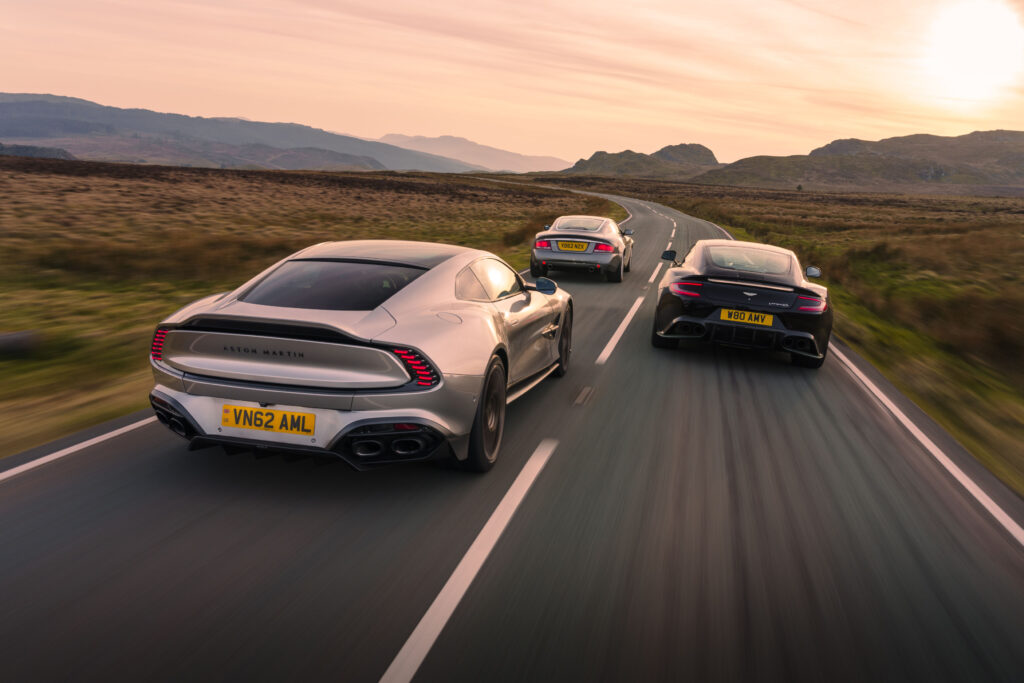
Produced between 2001 and 2007, the V12 Vanquish represented a technological and industrial milestone for Aston Martin. It was the last model to be manufactured in Newport Pagnell before the move to Gaydon, and it stood out for the adoption of solutions that were then very advanced, such as the electronic throttle and the paddle-shift gearbox inspired by Formula 1.
Under the hood was a 6.0-liter V12 engine with 460 hp, paired with a paddle-shift transmission. The model also utilized a tubular aluminum structure and body panels made from composite materials, marking a decisive advance both technically and in design.
The construction of the automobile involved highly precise processes, supported by computer systems, at a time when the brand was making an important leap in industrial terms. The model was widely praised by the press and customers, solidifying its importance in the recent history of Aston Martin.
The second generation reinforced sophistication and performance
The second generation of the Vanquish was revealed in 2012, entering production the following year. The model introduced a new aesthetic language inspired by the One-77, with more tense and aggressive lines, and a body entirely composed of aerospace-grade carbon fiber exterior panels.
This solution allowed for a 25% reduction in the body weight compared to the DBS, the model it replaced. The 6.0-liter V12 engine received several technical evolutions, now delivering 565 hp and 620 Nm of torque. With these numbers, the Vanquish accelerated from 0 to 100 km/h in 4.1 seconds and reached a top speed of 295 km/h.
The model also featured carbon-ceramic brakes, which improved fatigue resistance and thermal dissipation. Available in 2+0 and 2+2 configurations, and with a trunk capacity of up to 368 liters, it took the top spot among the brand's production sports cars. Throughout its commercial life, the convertible Volante version and more powerful S variants, with 600 hp and a top speed of 323 km/h, were also introduced.
The third generation elevated the Vanquish to a new level
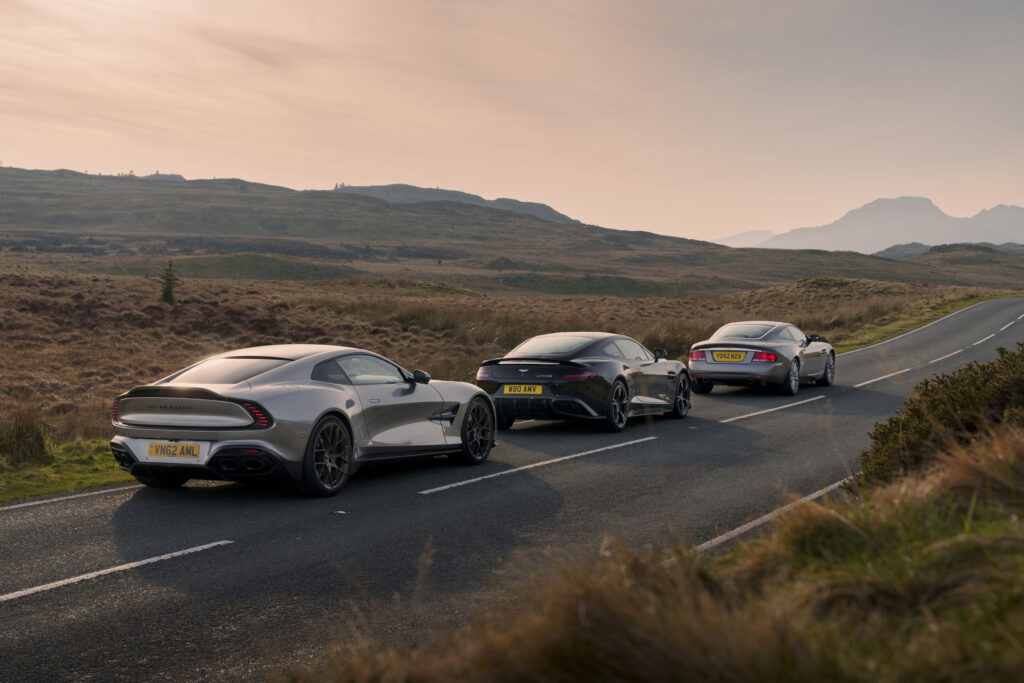
In 2024, Aston Martin unveiled the latest generation of the Vanquish, presented as the most impressive ever. Positioned at the top of the range of front-engine sports cars, this new Super GT combines a new 5.2-liter twin-turbo V12, a bespoke chassis, a carbon fiber body, and an interior focused on contemporary luxury.
The engine delivers 835 hp and 1000 Nm of torque, allowing the model to go from 0 to 100 km/h in 3.3 seconds. The top speed of 344 km/h made it, at the time of launch, the fastest production Aston Martin ever.
Like the DB12 and the Vantage, this generation is based on a bonded aluminum structure, with a front suspension using double wishbones and a multi-link rear suspension. The model comes standard with a Carbon Ceramic Brake system, featuring 410 mm discs at the front and 360 mm at the rear, designed to improve braking performance, reduce fade at temperatures up to 800 °C, and decrease unsprung weight.
The aesthetics follow the technical proposal, with a new design language based on a muscular silhouette, marked stance, and fluid lines. Key elements contributing to this presence include the increased wheelbase and the extension of the distance between the A-pillar and the front axle by 80 mm, a solution that allowed for a longer hood and enhanced the expressiveness of the profile.
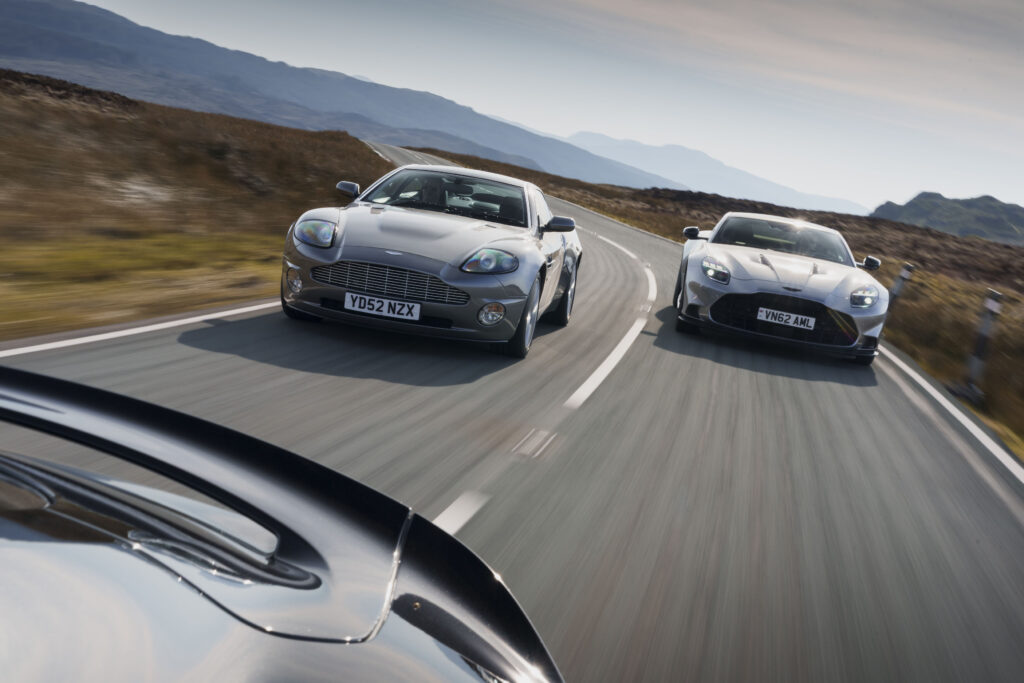
A quarter of a century of evolution
Reflecting on the model's trajectory, Aston Martin historian Steve Waddingham recalls that the very word “vanquish” evokes ideas such as conquering or dominating, characteristics that, in his view, define the ambition of the first car to bear this name.
According to Waddingham, both the second and third generations maintained this requirement and identity, allowing everyone involved in the development of the Vanquish over the past 25 years to look back on this journey with pride.
For Aston Martin, the Vanquish continues to represent much more than just a model name: it is a designation that has crossed three distinct generations and remains linked to the pinnacle of performance, engineering, and exclusivity of the British brand.