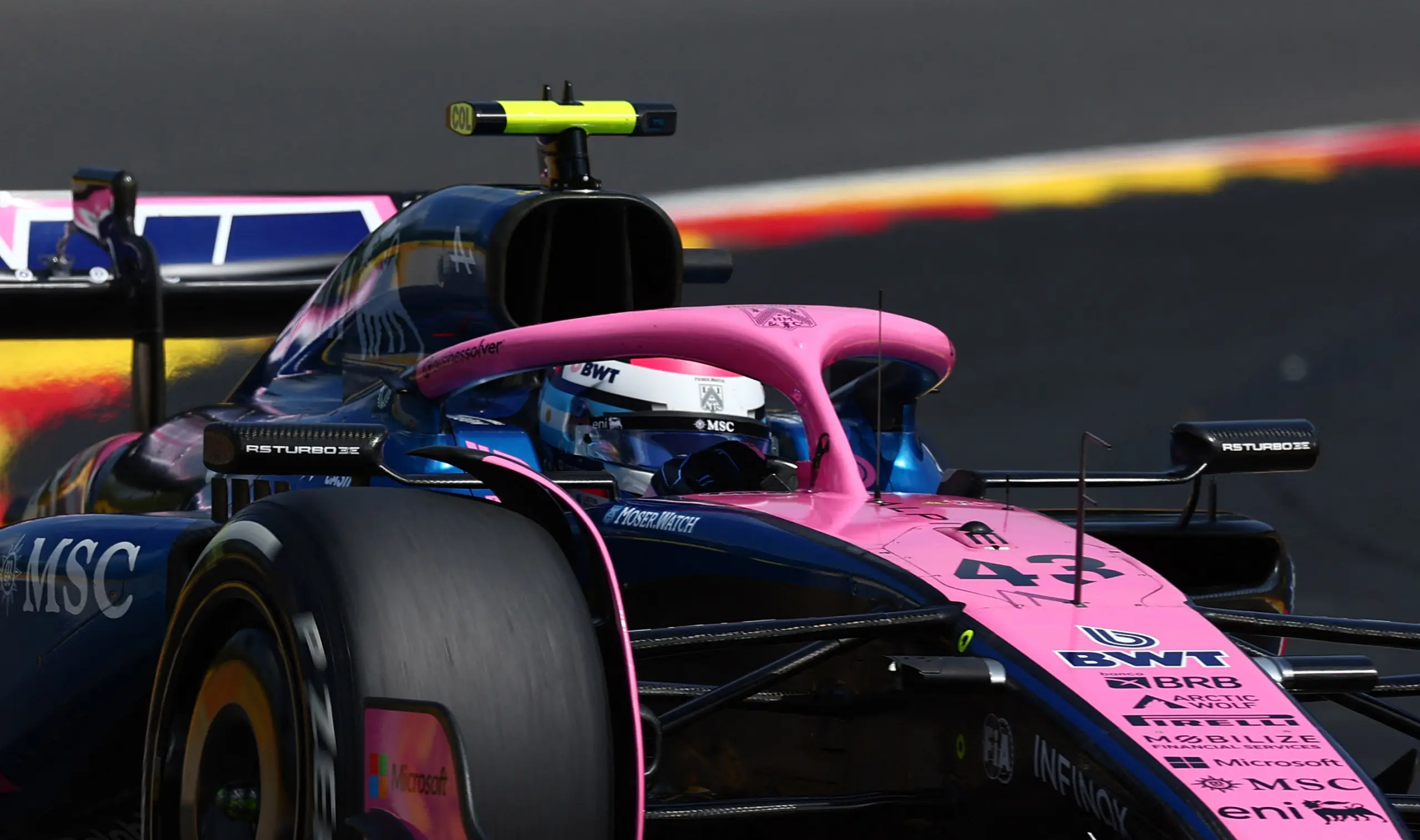
Alpine’s Dismal Descent: The Most Notorious Last Place in F1 History
In a shocking turn of events, Alpine has carved its name into the record books as the most disappointing team in Formula 1 history in 2025. Finishing at the very bottom of the standings, the team has ironically earned the title of the “best worst team” ever. With a staggering 48 points adrift of Sauber, the team’s performance has raised eyebrows and sparked debates among fans and experts alike.
Despite its abysmal overall standing, Alpine achieved a remarkable feat: no team in F1 has ever finished last while accumulating as many points as they did. The car may have been among the slowest on the grid, but it wasn’t entirely irredeemable. The evidence lies in Pierre Gasly’s impressive record of 11 Q3 appearances, showcasing Alpine’s ability to reach the final stages of qualifying at nearly half the races. Furthermore, the team’s deficit in single-lap pace, just under 1.4%, marked the smallest gap for the slowest car this century.
This performance reflects a broader trend in Formula 1, where teams are improving exponentially due to the introduction of cost caps, stricter technical regulations, and limitations on aerodynamic testing. However, the term “worst” is subjective, and in this case, Alpine’s performance stands out as the most competent ever recorded for a last-place team.
Adding a bizarre twist to this saga, Alpine secured its dismal position in the championship before the final race of the season—a historical first. Unlike teams of the past, which often clung to the hope of a last-minute miracle, Alpine was so far behind that even a perfect finish in Abu Dhabi wouldn’t have propelled them above the competition.
Ultimately, the highly competitive 2025 season revealed that Alpine’s drivers lacked the necessary machinery to contend throughout the races. Gasly alone accounted for all 22 of the team’s points, achieved in just six out of 24 races. This figure is a mere third of the 65 points scored in 2024 and a staggering 12.7% of the 173 points amassed in 2022, when Alpine was considered a formidable contender. Such a rapid decline raises serious questions about the team’s management and strategic direction.
The roots of this downfall can be traced back to the decision to shift focus to the 2026 season far too early, leaving lingering issues from 2024 unresolved. Meanwhile, rivals surged ahead, leaving Alpine scrambling to catch up. This drastic fall is particularly painful for Renault, as this marks the first time in the company’s storied history that its works team has finished last.
Even during its inaugural year post-acquisition in 2016, when Renault rescued a struggling Team Enstone and recorded a mere eight points, they still managed to outpace two other teams, Sauber and Manor. For a manufacturer of Renault’s stature, spending nearly a decade in the midfield with sporadic success is simply unacceptable. However, the sharp decline witnessed in 2025 has been unprecedented.
It’s astonishing to recall that just three years ago, Alpine bested McLaren on merit, clinching fourth place in the championship during the first year of new regulations. While McLaren has surged to championship-winning status, Alpine’s trajectory has plummeted dramatically—a glaring example of missed opportunities and mismanagement.
The return of Flavio Briatore has been nothing short of catastrophic, pushing Alpine into the depths of despair. Yet, it would be unfair to place all the blame on him. The entire Alpine era has seen a regression, exacerbated by the chaotic interference of Laurent Rossi and the shadowy influence of former Renault CEO Luca de Meo, who was ultimately responsible for the team’s downfall until mid-2025.
Though ambitious plans are still being touted, with Briatore expressing hopes for podium finishes as a Mercedes partner by 2026, reality remains sobering. To plunge from being the best of the rest to dead last in just three years marks a disheartening conclusion to Alpine’s tenure as a works team, especially with the cancellation of Renault’s F1 engine program ahead of the new rules.
This gamble has put Alpine’s competitive future on the line. The only question that remains is: can they possibly get worse? The 2025 season has set a new low, and the entire motorsport community is watching with bated breath to see if they can reclaim their former glory or if this truly is the end of the line.