Title: Alpine’s Bold Shift: No More 100-Race Plans, Just Relentless Pursuit of F1 Greatness!
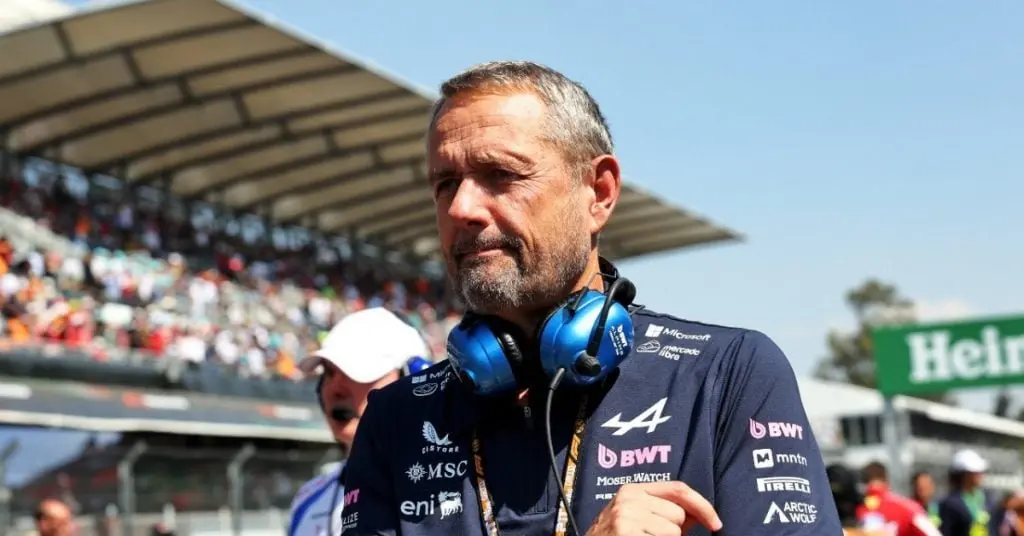
In a stunning departure from previous management strategies, Steve Nielsen, the newly appointed managing director of Alpine, has shattered the illusion of long-term recovery plans in Formula 1. Gone are the days of ambitious 100-race schemes aimed at catapulting the Enstone-based team back to the forefront of the sport. Instead, Nielsen is advocating for a more grounded approach, focusing on immediate improvements and strategic restructuring as the team grapples with the aftermath of a dismal season.
Alpine’s ambitious 100-race plan, which kicked off in 2021 when Renault rebranded its F1 operation, promised podium finishes by 2024 and victories by 2025. However, reality struck hard as the team faced its toughest season yet, finishing dead last in the constructors’ championship with a mere 22 points. The team halted development of the A525 early into the season, redirecting resources to prepare for the 2026 regulations—a move that left fans and critics alike questioning the team’s vision.
Nielsen, who stepped into his role in September, is adamant about breaking free from the shackles of predetermined timelines. “I’m not a person who believes in a 100-race plan or a three-year plan or a five-year plan,” he declared emphatically during a recent interview in Abu Dhabi. Instead, he emphasizes the importance of assembling the best talent, aligning the team around a clear mission, and committing to hard work. “You mill away at it; it’s a slow grinding process,” he explained, acknowledging the unpredictable nature of competition in F1.
As he eyes the 2026 season, Nielsen is cautiously optimistic about the direction of Alpine. “I can tell you we’re building a better car next year than we have this year,” he asserted, though he tempered expectations by admitting, “I can’t tell you whether that will line up first, 10th, or 20th on the grid.” The competition is fierce, with all nine rival teams making strides, but Nielsen believes that the structural improvements and targeted recruitment are crucial steps in reversing Alpine’s fortunes.
Drawing from his extensive experience at Enstone during the glory days of the Benetton and Renault eras, Nielsen recalled how it took three years to secure the first victory and five years to clinch the championship. “That metric doesn’t necessarily apply today,” he acknowledged, leaving the door open for both shorter and longer timelines on the road to recovery.
With the 2025 season now behind them, Nielsen’s clear goal for 2026 is to achieve consistent competitiveness and engage in a fierce battle at the top of the midfield. “I want to be racing every week, ideally for points,” he stated passionately. The disheartening reality of finishing at the back of the grid is unacceptable for a team with Alpine’s rich history. “We need to be fighting at the top end of the midfield for points every weekend,” he demanded, reflecting the urgency for a radical transformation.
As the dust settles on a challenging season, Alpine is poised to abandon outdated strategies and embrace a no-nonsense approach to reclaim its place in Formula 1. With Steve Nielsen at the helm, the team is gearing up for a gritty battle ahead—one that promises to be as thrilling as the races themselves. The question now remains: can Alpine rise from the ashes and redefine its legacy in the highly competitive world of Formula 1? Only time will tell, but one thing is certain—the relentless grind has already begun!