Title: Aston Martin’s F1 Future in Jeopardy: Are Newey and Honda Prepared for 2026?
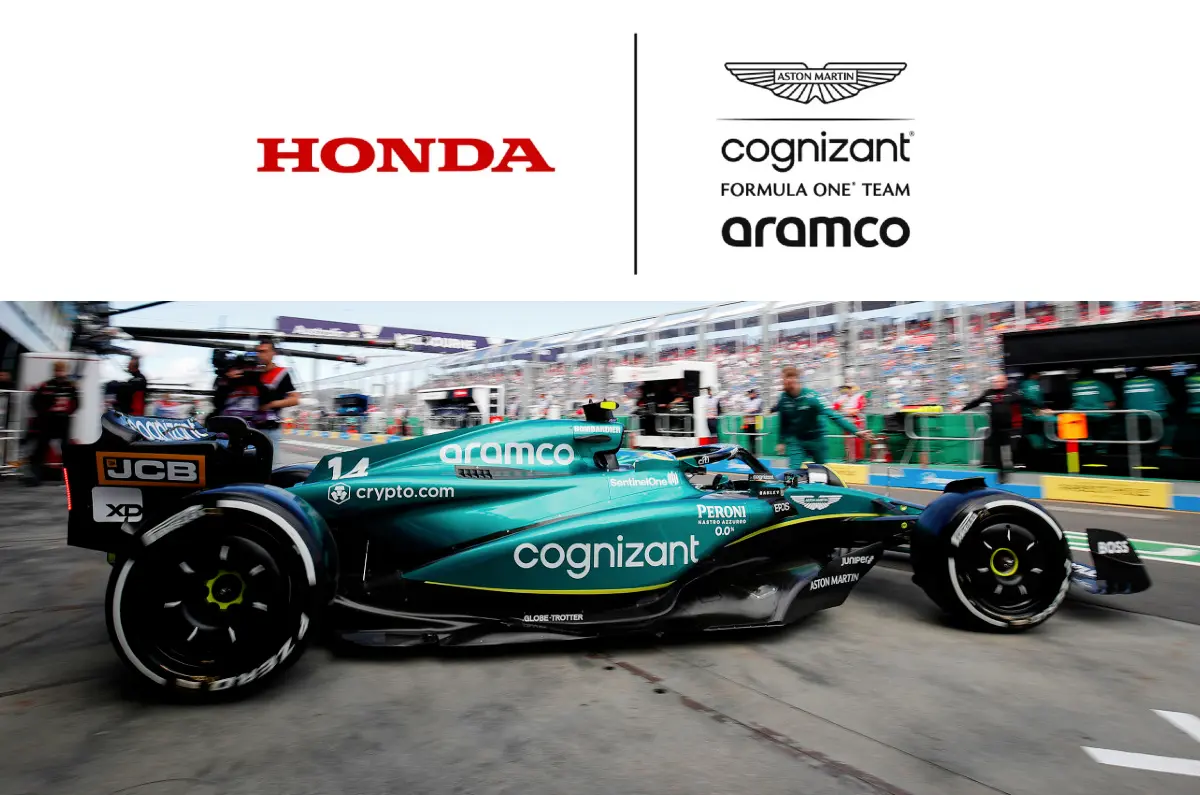
The countdown to 2026 has begun, and the excitement surrounding Adrian Newey’s ambitious Formula 1 project with Aston Martin and Honda is palpable. Fans and experts alike are buzzing with anticipation, but lurking beneath the surface are critical concerns that could jeopardize this superteam’s chances before the engines even roar to life.
On paper, Newey’s vision is nothing short of a dream. He has the freedom to design a revolutionary car that will adhere to a major rules overhaul, powered by Honda’s newly minted works engine. This partnership is backed by the financial might of Aston Martin, which promises seemingly boundless resources. However, history teaches us that F1 championships are not won by mere ambitions; they are clinched through execution, precision, and uncompromising performance.
One of the most pressing issues facing this alliance is Honda’s apparent misstep regarding a crucial loophole in the 2026 engine regulations. While Mercedes and Red Bull Powertrains are poised to exploit a higher compression ratio than their competitors believe is permissible, Honda has missed out on this critical advantage. The compression ratio, which measures the volume difference in an engine’s cylinders, has been officially reduced, but the FIA has allowed for variations under specific conditions. This oversight places Honda at a significant disadvantage, potentially damning their campaign from the start.
Moreover, Honda’s late entry into the project raises alarm bells. Despite being an established powerhouse in F1, Honda’s withdrawal from the sport in 2021 has left them scrambling to regain their footing. Their engines may have been used by Red Bull until last season, but the support infrastructure behind their F1 program has been severely diminished. Resources have been diverted to other research projects, and as a result, Honda’s 2026 program is starting almost from scratch—a precarious position when facing a formidable grid of competitors.
Significant questions remain regarding the capabilities of Honda’s new engine, particularly in battery technology. The upcoming designs demand a sophisticated balance between combustion and electrical power, and if Honda fails to keep pace, it could spell disaster for Aston Martin’s performance. The absence of the MGU-H, a component that captures waste heat energy, adds another layer of complexity, further complicating Honda’s quest for a competitive edge.
As if the technical hurdles weren’t enough, Aston Martin’s partnerships with relatively untested suppliers like Aramco and Valvoline introduce additional uncertainty. With Aramco providing its first F1 fuel, the stakes are high. Established brands like Petronas and Shell have years of experience, and any shortfall in fuel technology could translate to tangible performance losses on the track.
Adrian Newey, a titan in F1 engineering, has been tasked with navigating this labyrinth of challenges. The logistics of coordinating efforts across multiple locations—between Aston Martin in the UK and Honda in Japan—could lead to inefficiencies that hamper progress. As the clock ticks down to 2026, the pressure mounts for Newey and his team to harmonize these disparate elements into a cohesive and winning strategy.
If Aston Martin’s 2026 project falters, the blame could easily fall squarely on Honda’s shoulders, a narrative that could become a reality if the team faces engine deficits or reliability issues. The stakes have never been higher, and with every corner they navigate, the potential for an underwhelming debut looms large.
In the world of Formula 1, the margins for success are razor-thin. As Newey and Aston Martin prepare for a critical new chapter, only time will tell if this superteam can rise to the occasion or if they will be yet another cautionary tale in the relentless pursuit of speed and glory. The race is on, but the road ahead is fraught with peril. Will they conquer the challenges ahead, or will they succumb to the weight of their own ambition? As the F1 community watches with bated breath, one thing is clear: the future of Aston Martin’s F1 superteam hangs in the balance.