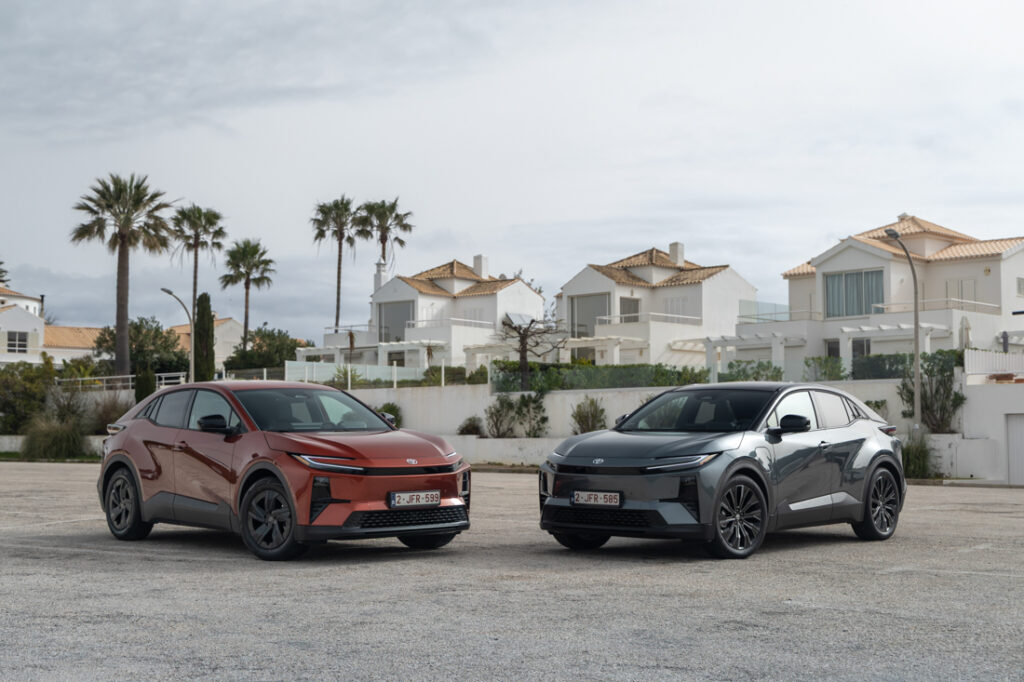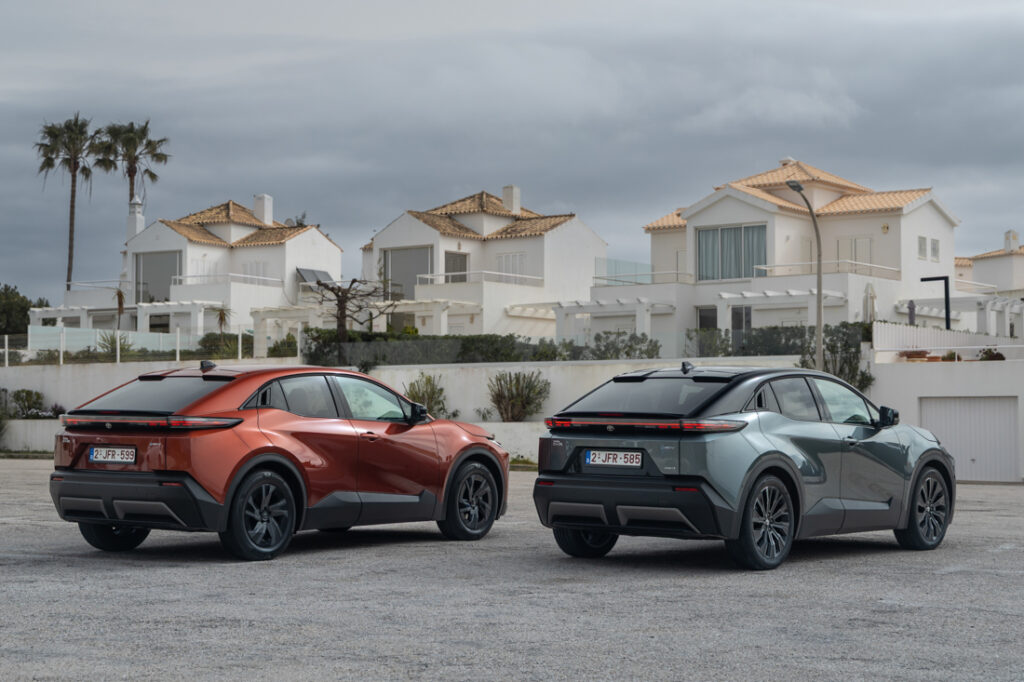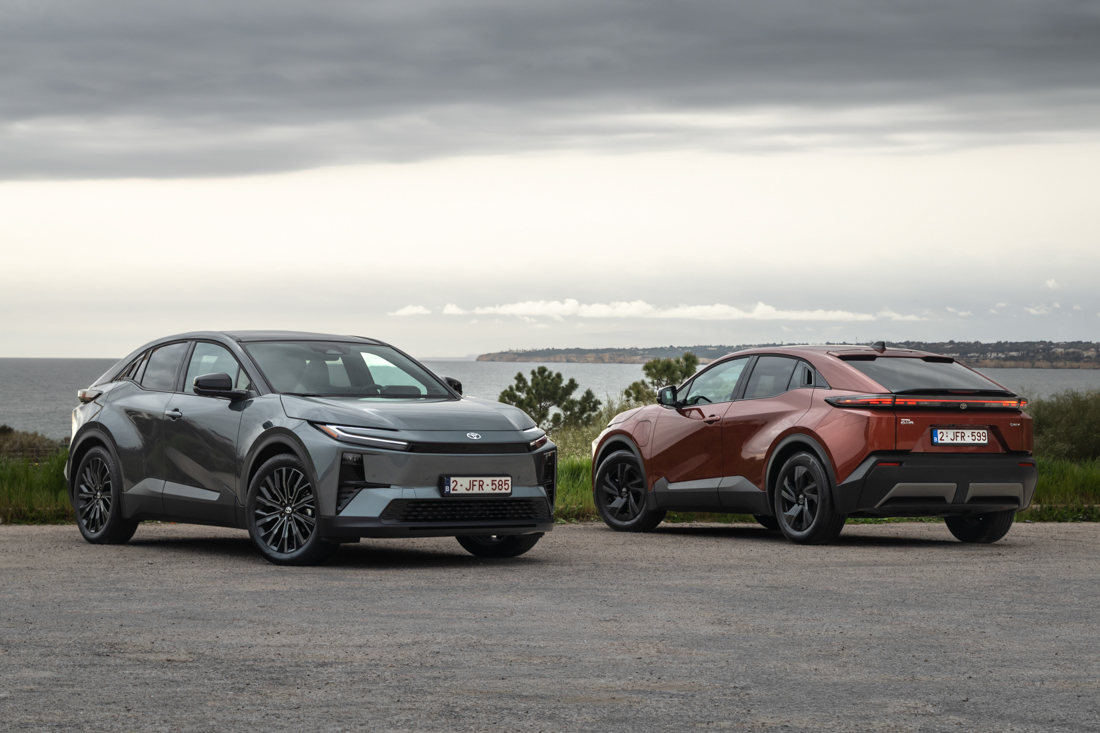
Much due to modern design, which has made it an object of desire among younger drivers, the Toyota CH-R, a compact SUV originally launched in 2016, succeeded by the current generation in 2023, has contributed to an important change in the customer profile of the world's largest manufacturer, both in Europe and in Portugal, similar to what happened with the Yaris in 1999. The C-HR+, visually, approaches the bold image of the model from which it inherits its name, but technically, the new 100% electric proposal from the Japanese brand has more in common with the bZ4X.
Firstly, because it is based on the e-TNGA platform, the same as the bZ4X, and although it is shorter in length and wheelbase, this does not compromise either the luggage capacity (416 liters) or the habitability, optimized by the flat floor, achieved thanks to the placement of the battery between the axles. The range consists of three versions, two with front-wheel drive and one with all-wheel drive: Exclusive (167 hp, battery with 54 kWh usable capacity, 458 km of range in the combined WLTP cycle, prices starting at €40,900), Premium (224 hp, battery with 72 kWh, 607 km of range, from €45,300) and Lounge (343 hp, battery with 72 kWh, 501 km of range, from €53,500).
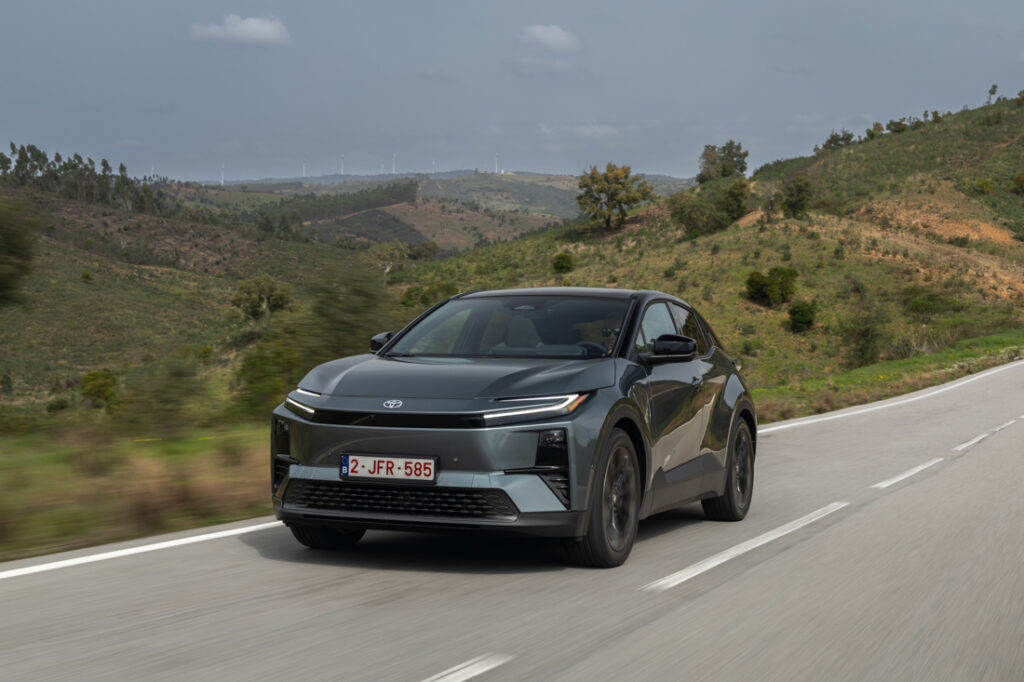
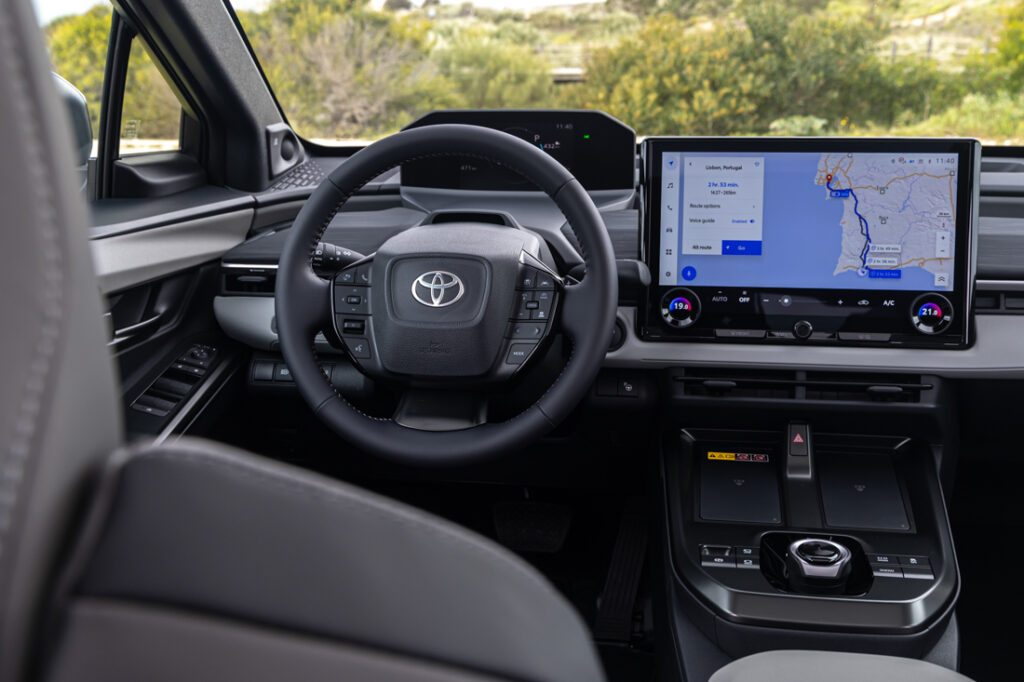
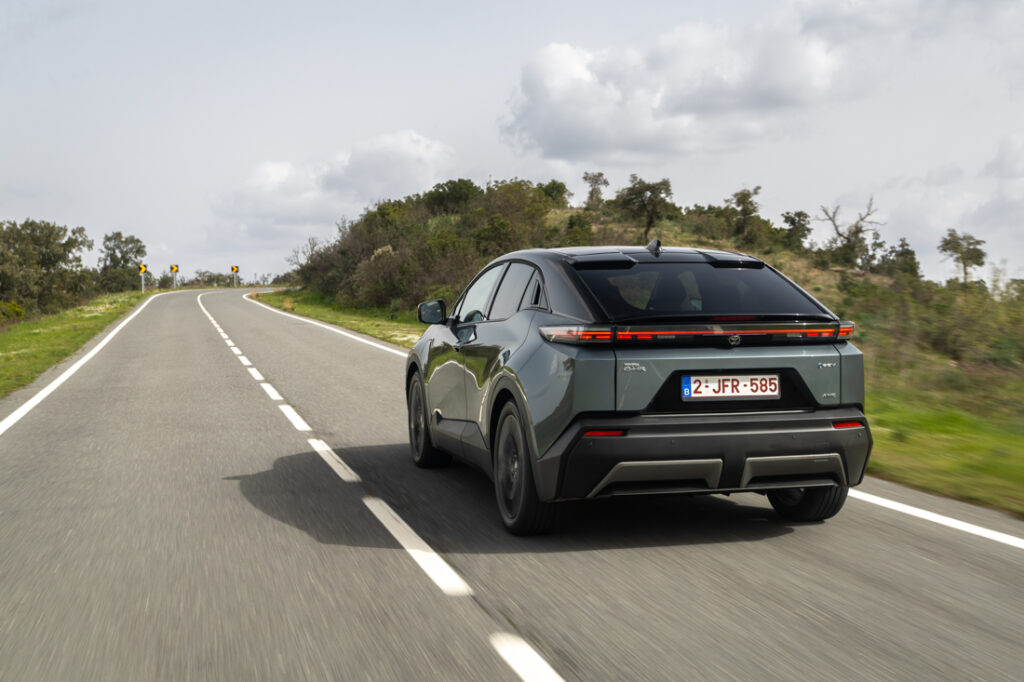
The mid-range version travels the farthest on a single battery charge, and the top-of-the-line model boasts the title of Toyota without the “sporty” Gazoo Racing (GR) label, achieving 0-100 km/h in 5.2 seconds. The interior of the C-HR+ also references the bZ4X, rather than the C-HR, as it retains the digital instrumentation on a 7-inch monitor, and the steering wheel has a smaller diameter than usual. For controlling the infotainment system, there is a 14-inch touchscreen in the center of the dashboard, with physical controls for the defroster and sound system, which simplifies usage while driving.
The battery can be recharged using the onboard charger of 11 kW (optional, 22 kW), or a fast charger with up to 150 kW of power – the battery features temperature pre-conditioning to increase the speed of the operation. There are four levels of energy regeneration during deceleration, selectable via paddles on the steering wheel, although none of them are of the One Pedal type, capable of bringing the vehicle to a complete stop, in addition to the Eco and Snow driving modes.