Title: Mercedes’ Start Struggles: A Shocking Weakness That Could Define Their Season!
In a startling revelation from the world of Formula 1, Mercedes has become the talk of the paddock for all the wrong reasons. Despite boasting arguably the most powerful engine and a top-tier chassis, the German powerhouse has been plagued by disastrous race starts that leave fans on the edge of their seats and competitors licking their lips. The irony? While these struggles make for thrilling entertainment, they also expose a critical flaw that could jeopardize Mercedes' championship ambitions.
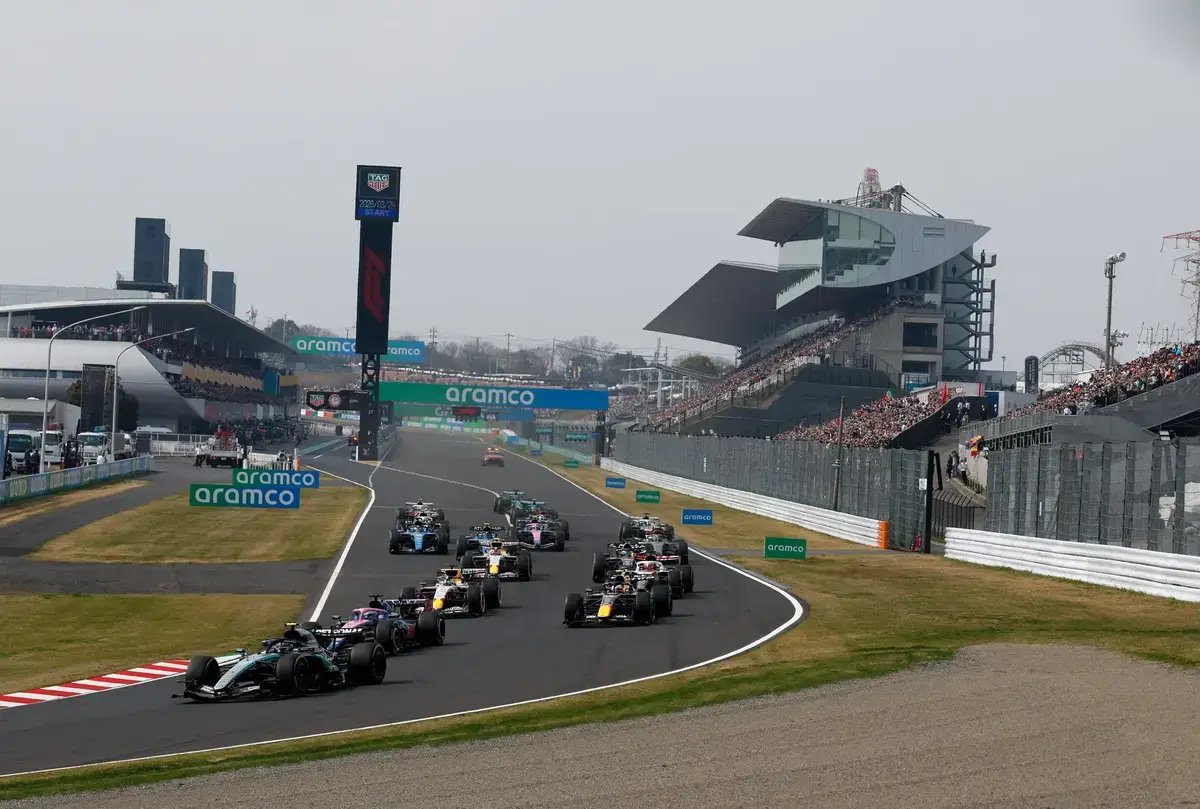
So far this season, Mercedes has dominated qualifying, locking out the front row in all three races. Yet, shockingly, they have failed to lead into the first corner of any race! The high-octane action began in Melbourne, where the fast-starting Ferraris and, more recently, McLaren's Oscar Piastri, have seized the opportunity to leapfrog the silver arrows off the line. The Japanese Grand Prix was particularly eye-opening, as Mercedes drivers found themselves outpaced yet again, raising eyebrows and questions alike.
But is this just a temporary setback, or a sign of deeper issues? According to Mercedes’ own data analysis, the team believes it has finally optimized its power unit and launch procedures to match competitors like Ferrari and McLaren. However, the gripping drama at Suzuka showed that the team’s race starts were more a product of unforeseen circumstances rather than a lack of technical progress.
Take Kimi Antonelli, who started on pole. Rather than repeating past mistakes, his struggles stemmed from an overly aggressive clutch release, not the cold rear tires that had hampered him in previous races. This miscalculation left him vulnerable and propelled the championship leader to realize he must practice clutch drops to refine his launch technique—a glaring weakness that could haunt him if not corrected.
On the other side of the garage, George Russell faced a unique conundrum at Suzuka. The downward slope of the grid forced drivers to apply brake pressure to prevent rolling forward, and Russell’s inability to release that pressure quickly resulted in a poor launch. The implications were clear: without a smooth getaway, he was left exposed to relentless attacks from the competition.
But the drama didn’t stop there! Mercedes has also faced challenges during safety car restarts, compounding their issues. In China, Russell lost crucial positions after a safety car period, and the pattern continued in Japan when he found himself falling back instead of charging ahead. The culprit? A frustrating recharge limit imposed by the new F1 regulations that restricts energy harvesting, leaving Russell powerless at crucial moments. When he hit the limit prematurely, it opened the door for Lewis Hamilton to overtake him during the restart—a bitter pill to swallow for the young driver.
Team principal Toto Wolff described it as a “software glitch” that worsened Russell’s already challenging day. The struggle to find the right balance of energy deployment ultimately backfired, and Russell lamented, “It was just one thing after another.”
As the team prepares for the next race in Miami, fans are left wondering: will Mercedes finally crack the code and conquer their race start challenges? Or will they continue to stumble, allowing rivals to capitalize on their weaknesses? The tension is palpable, and the stakes have never been higher. Buckle up, F1 fans—this season is shaping up to be one for the history books!