Max Verstappen's Japanese Grand Prix Struggle: The Shocking Truth Behind His Stalled Charge
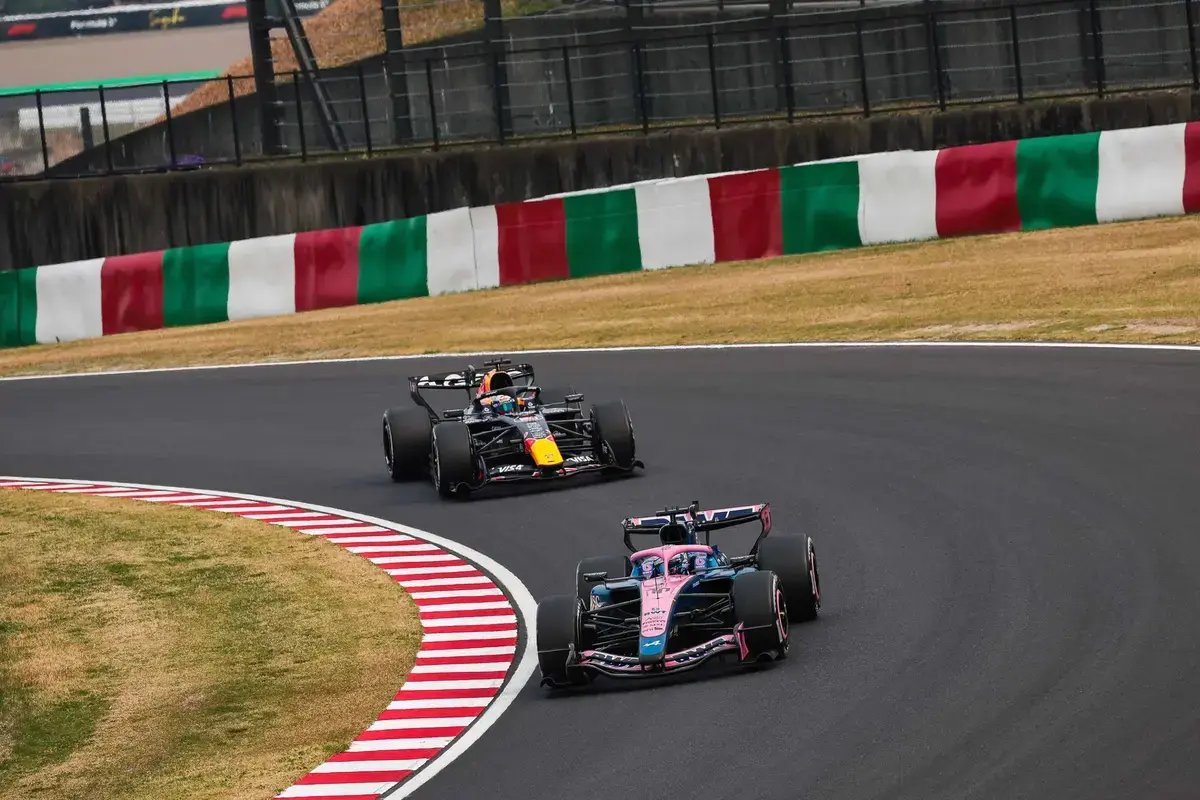
In a stunning revelation from the Japanese Grand Prix, Max Verstappen, the reigning four-time Formula 1 champion, found himself locked in a fierce battle with Alpine's Pierre Gasly for a staggering 53 laps. But despite his relentless pursuit, Verstappen could not shake off his rival, leaving fans and analysts alike questioning what went wrong for the star driver.
For the first time since 2019, Verstappen did not grace the starting grid from pole position. After a disastrous qualifying session where he failed to reach Q3, the Dutch driver was forced to start from P11. This unexpected setback was foreshadowed during the free practice sessions, where Verstappen struggled with his car's balance and pace, despite a handful of upgraded components.
However, the race began with a glimmer of hope. Verstappen quickly capitalized on the chaos of the start, surging up three places to P8 within the opening laps. With Gasly just ahead and a mere five-second gap, it appeared that a showdown was imminent. The telemetry data revealed a striking narrative: while Gasly boasted a significantly higher top speed on the main straight, Verstappen’s Red Bull was nipping at his heels, gaining ground through the corners.
As the race unfolded, the tension intensified. Despite being within striking distance, Verstappen was unable to execute a clean overtaking maneuver. The duo exchanged blows on the track, with Gasly utilizing a unique deployment strategy that allowed him to maintain his lead. The Frenchman’s ability to accelerate aggressively out of the final chicane consistently thwarted Verstappen's advances, as he reclaimed crucial tenths of a second.
The race took a dramatic turn on Lap 21 when a Safety Car presented both drivers an opportunity for a strategic tire change. Yet, as they rejoined the race, the positions remained unchanged — P7 for Gasly and P8 for Verstappen. What followed was a puzzling series of laps where expectations of an easy overtake for the Dutchman were dashed. Despite being within a second of Gasly, Verstappen found himself continually stymied.
Telemetry data revealed a mixed bag of performance between the drivers in the latter half of the race. While Verstappen improved his straight-line speed, Gasly maintained an edge through the S-curves, showcasing the Alpine's exceptional handling. It became a race of inches, with both drivers showcasing their prowess, but ultimately producing a stalemate.
In a bold attempt on Lap 48, Verstappen changed his deployment strategy, surging past Gasly with speed through 130R. However, this moment of brilliance was short-lived. As they approached the start-finish straight, Verstappen's battery drained, allowing Gasly to retake his position and restore the race order, much to the disbelief of spectators.
The final laps were a testament to the tight competition, with both drivers exhibiting almost identical pace. While Gasly secured valuable points for Alpine, Verstappen's failure to capitalize on the situation left Red Bull with a bitter taste, especially given their struggles in the championship race.
This battle at the Japanese Grand Prix serves as a stark reminder that even the best drivers can face unexpected challenges. For Alpine, a P7 finish marks a promising return to form, but for Red Bull, the pressure mounts as they strive to regain their dominance in the sport. With a critical break approaching, all eyes will be on Verstappen to see how he responds in the upcoming races. The drama of F1 continues, and the stakes have never been higher!