Title: “Ollie Bearman Survives Terrifying 300kph Crash: Is New F1 Rulebook to Blame?”
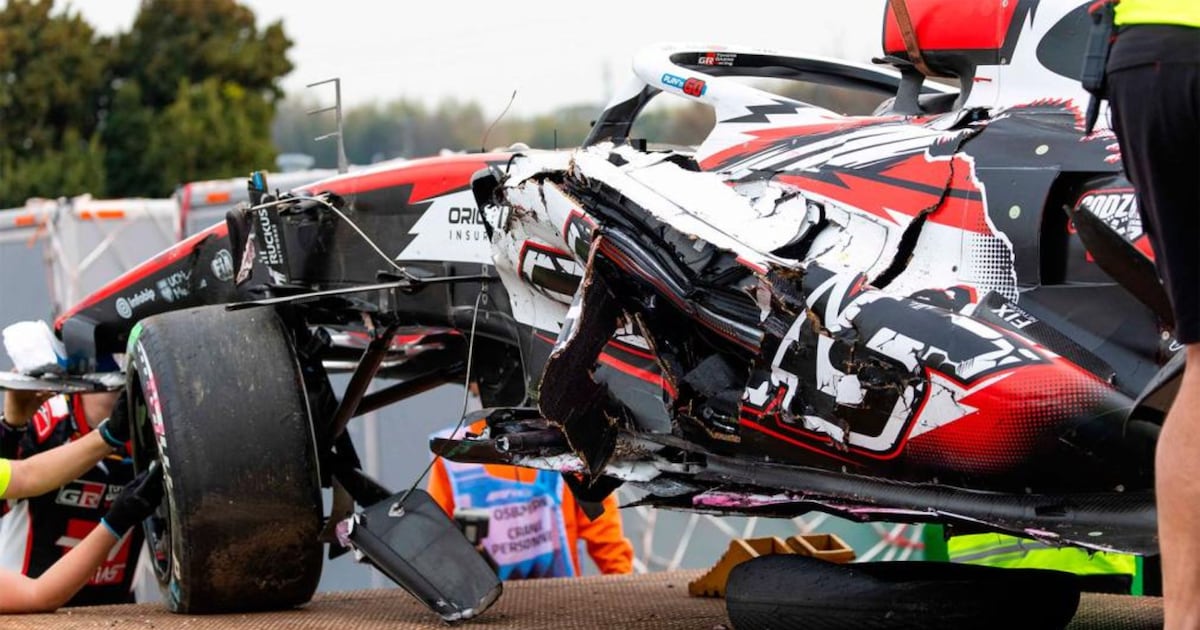
In a harrowing turn of events at the prestigious Japanese Grand Prix, Haas F1 driver Oliver Bearman faced a life-threatening situation when he crashed at a staggering speed of 300 kilometers per hour. The catastrophic incident unfolded on lap 22 at the notorious Suzuka International Circuit, as Bearman lost control of his vehicle, veering onto the grass and crashing violently at the challenging Spoon Curve.
The sheer force of the impact was recorded at an astonishing 50G, a figure that sends shivers down the spine of even the most seasoned motorsport enthusiasts. Miraculously, Bearman emerged from the wreckage with only a limp, showcasing his remarkable resilience. After the crash, he was promptly taken for x-rays, and thankfully, no fractures were found. Haas F1 confirmed that he was cleared from the medical center, allowing fans to breathe a sigh of relief.
As the dust settles on this shocking crash, Bearman has not shied away from addressing a critical concern—are the new regulations in Formula 1 contributing to the increasing dangers on the track? His comments raise serious questions about the evolving safety standards and the potential implications of recent rule changes. Could these modifications be putting drivers at greater risk?
This incident serves as a stark reminder of the relentless nature of Formula 1 racing, where speed and precision are paramount, but the line between glory and disaster is perilously thin. As Bearman recovers, the motorsport community will undoubtedly be watching closely, eager for answers about the safety measures in place and the future direction of F1 regulations.
Bearman’s experience not only highlights the physical toll racing can take but also ignites a critical conversation about the sport's safety protocols. With the spotlight now on the F1 governing body, fans and experts alike are left pondering—what changes need to be made to ensure the safety of drivers at such extreme speeds? The narrative of Bearman’s brush with danger is far from over; it could very well spark a movement for reform in one of the world’s most exhilarating yet perilous sports.