Terrifying High-Speed Collision: Oliver Bearman's Crash Raises Alarms in Formula 1
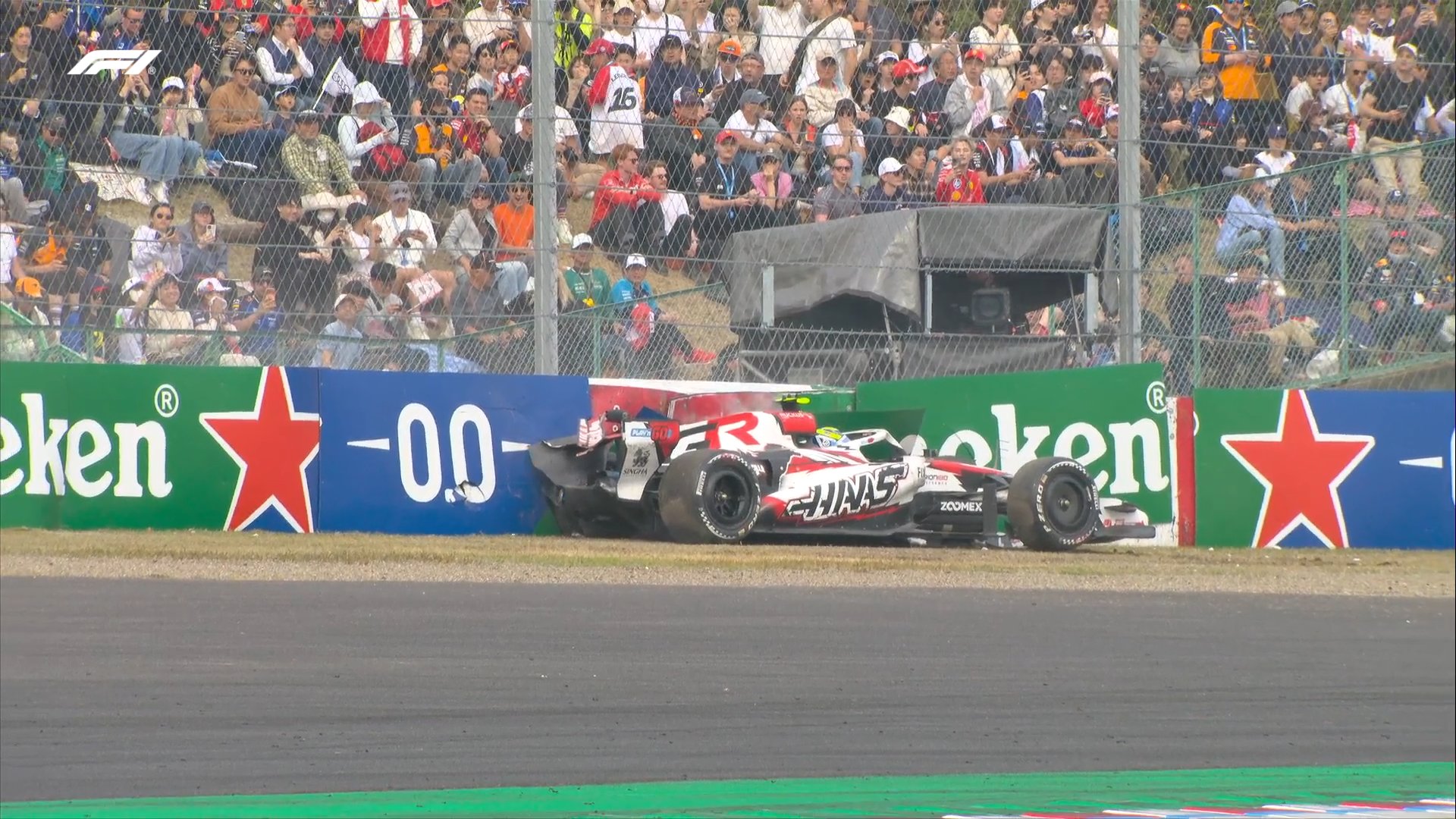
In a shocking turn of events at the Japanese Grand Prix, Haas Formula 1's young star Oliver Bearman found himself in a heart-stopping crash that has sent shockwaves through the racing community. The incident has stirred a whirlwind of discussion surrounding racing tactics, driver judgment, and the urgent need for enhanced safety measures in the sport.
Bearman, who qualified a disappointing 18th, was locked in a fierce battle with fellow racer Franco Colapinto for the 17th position when disaster struck. Approaching the notorious Spoon curve at a terrifying speed of 306 km/h, Bearman lost control of his Haas car, resulting in a catastrophic impact that registered a staggering 50G. Miraculously, Bearman managed to exit the wreckage on his own but was later treated for a right knee contusion— a reminder of how perilous these high-speed confrontations can be.
Haas team principal Ayao Komatsu stepped into the fray, vehemently defending Colapinto from any accusations of blame. He revealed that the harrowing incident was fueled by a staggering 45 km/h speed differential between Bearman's Haas and Colapinto's Alpine, attributing the cause to differing energy management strategies employed by the teams. “Leading up to that Turn 13, Colapinto was consistently managing his speed, and it’s not his fault at all,” Komatsu stated emphatically.
Komatsu elaborated on the mechanics of the crash, stating, “We were deploying more through there, so even during regular laps, we had a 20 km/h advantage. When Colapinto activated his boost button, it created a 50 km/h gap that Bearman misjudged.” The FIA corroborated this closing speed figure, amplifying the gravity of the situation. Komatsu highlighted the need for vigilance, asserting that “closing speed could become an issue,” warning that this incident should serve as a wake-up call for the entire F1 community.
Despite the harrowing circumstances, Komatsu refused to label Bearman's actions as a driving error. “To call it an ‘error’ would be too harsh,” he explained. “It was a small misjudgment, but that closing speed is frightening. It’s only the third race under these new regulations, and it’s something he’s never experienced before. It’s a cautionary tale for all of us in the F1 community.”
The Japanese team principal expressed relief that Bearman escaped with only minor injuries, stating, “I’m just glad he didn’t sustain a more serious injury. He hit his knee hard, but thankfully it’s nothing major.” This incident serves as a stark reminder of the inherent dangers in Formula 1, where split-second decisions can lead to life-altering consequences.
As the racing world grapples with the implications of this shocking crash, it raises crucial questions about the evolution of safety measures and the responsibilities of drivers in high-speed scenarios. With the spotlight now firmly on the Haas team and the complexities of racing dynamics, fans and experts alike are eager to see how this will influence future races and regulations within the sport.
Stay tuned as we continue to cover the aftermath of this dramatic incident, and what it means for the future of Formula 1 racing.