George Russell Shrugs Off Mercedes F1 Advantage Amid Controversial FIA Talks and W17 Modifications
In a thrilling twist in the Formula 1 narrative, George Russell has downplayed any supposed advantage being enjoyed by Mercedes’ W17 challenger, a claim that comes in the wake of critical discussions with the FIA that have prompted significant changes to the team's car. The Silver Arrows made headlines after a stellar performance at the Chinese Grand Prix, where they celebrated their second 1-2 finish of the season, showcasing the potential of rising star Kimi Antonelli, who clinched his first-ever victory.
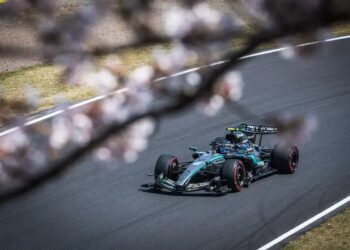
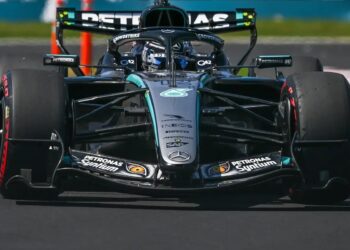
However, the jubilation was short-lived as scrutiny emerged regarding the new front wing introduced by Mercedes at Suzuka. Observers noted that while the active aerodynamic systems functioned as expected on straights, they raised eyebrows when the car entered corners. Initially, the wing seemed to operate outside the acceptable braking thresholds, leading to speculation about whether it violated regulatory standards, which stipulate a transition time between modes of no more than 0.4 seconds.
Russell did not shy away from calling the front wing a “problem.” In a candid statement to the media, he expressed that the situation is far from providing an advantage, stating, “It was not intentional, and it’s not an advantage for sure. It’s actually a problem, so something we’re trying to solve.” The young British driver highlighted the precarious nature of the front wing’s performance, which he noted nearly cost Antonelli his much-deserved maiden victory. “When we brake it is still open. Obviously, Kimi had the lock-up. I think this was a contribution to the front wing. It’s definitely not intentional.”
Russell, seemingly cautious about divulging too much, refrained from offering further insights, admitting, “No, because I don’t actually know, to be honest.” He elaborated on the challenges faced by the front wing in maintaining optimal performance, especially compared to the rear wing, which benefits from aerodynamic assistance during its operation. “It’s very challenging for the front wing… I don’t know if we don’t have enough, but it isn’t easy to bring the wing up when you are driving at 300 on the straight,” he explained.
This controversy adds fuel to the fire of criticism that Mercedes has faced since the onset of the 2026 season. The team had previously been under fire for their engine, which offered a controversial compression-ratio advantage. With the FIA now closely monitoring the situation, Mercedes has until June 1st to address these technical concerns or face severe repercussions.
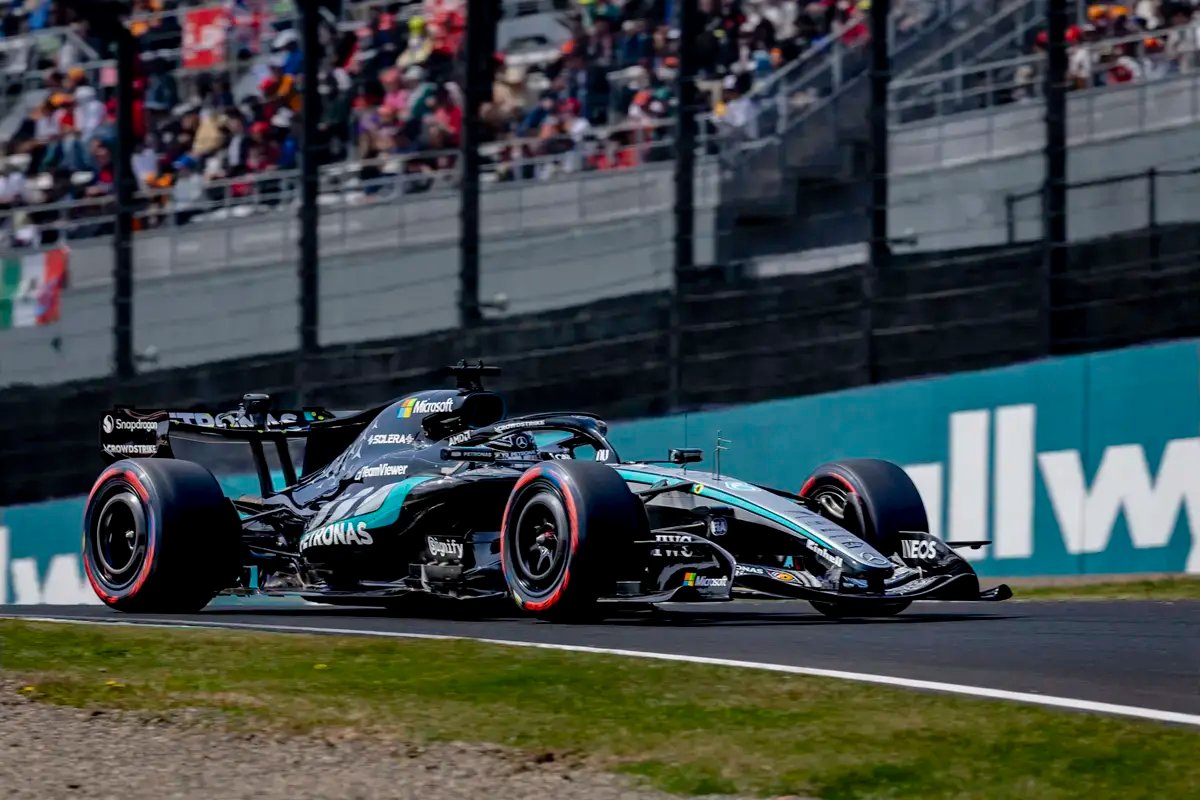
Despite the turbulence surrounding their recent performance, the Silver Arrows have shown no signs of slowing down. With a string of victories dominating their season thus far, they are poised to continue their winning streak in the upcoming Japanese GP. In a show of dominance, they topped the timings in Free Practice sessions, securing a 1-2 finish in FP1 and a 2-3 in FP2.
As the drama unfolds, one thing is clear: the battle for supremacy in Formula 1 is heating up, and all eyes are on Mercedes as they navigate this intricate web of performance, regulation, and relentless competition. Will they maintain their edge, or will the FIA’s scrutiny expose vulnerabilities that could alter the course of the season? Only time will tell.