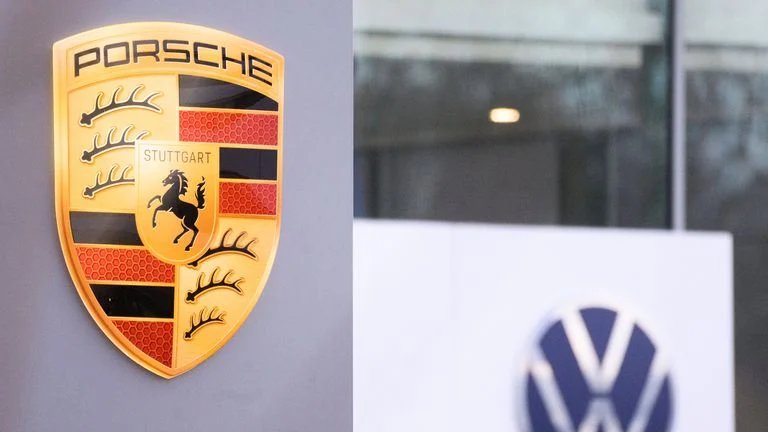
Porsche SE, the principal shareholder of Volkswagen, announced a significant increase in investment in the defense sector, in direct response to the decline in results in 2025 from its main holdings in the automotive sector.
Results pressured by costs and strategic decisions
The holding company of the Porsche-Piëch family, which owns 31.9% of the capital and 53.3% of the voting rights of Volkswagen, as well as 12.5% of Porsche AG, recorded an adjusted profit of 2.9 billion euros in 2025, a decrease of about 9% compared to the previous year.
The reduction in results is linked to the impact of high costs, including tariffs, and the decision to suspend the launch of electric vehicles from Porsche in September.
Defense and technology take center stage
In the context of conflicts in Ukraine and the Middle East, investor interest has shifted to sectors such as defense and technology, in contrast to the slowdown of the German automotive industry.
Porsche SE confirmed this shift in focus by announcing an investment of 100 million euros in a new defense fund managed by DTCP, aimed at European startups in the areas of cybersecurity and artificial intelligence.
According to CEO Hans Dieter Poetsch, the group identifies strong growth potential in this sector and anticipates new investments in the future.
Alternative investments help balance the accounts
Despite the pressure on automotive shares, Porsche SE’s secondary investments generated 193 million euros in profits, driven by stakes in companies such as Quantum Systems, linked to drones, and Celestial AI, focused on semiconductors.
Commitment to Volkswagen remains, but challenges increase
Despite diversification, Porsche SE reaffirms its commitment to Volkswagen as a long-term strategic investment. The group expects to use the current phase of difficulties to implement structural adjustments.
However, the pressure to reduce costs is intensifying, especially in the context of slowing sales in China, the largest automotive market in the world.
Group considers asset sales
As part of the reorganization strategy, Volkswagen is evaluating the divestiture of stakes in subsidiaries deemed non-essential to its core business.
According to Hans Dieter Poetsch, negotiations are ongoing that could evolve throughout the year, in an attempt to simplify the group’s structure and improve profitability.