Mercedes' Front Wing Controversy: Aerodynamic Anomaly or Rule-Bending Trickery?
The thrilling world of Formula 1 was recently rocked by an unexpected controversy following the Chinese Grand Prix, as Mercedes found itself under intense scrutiny for the peculiar behavior of its front wing's active aerodynamics. Fans and competitors alike were left gasping when footage emerged showcasing Kimi Antonelli's car undergoing an unusual multi-stage transition between straight-line and cornering modes, prompting heated debates and fierce speculation across the paddock.
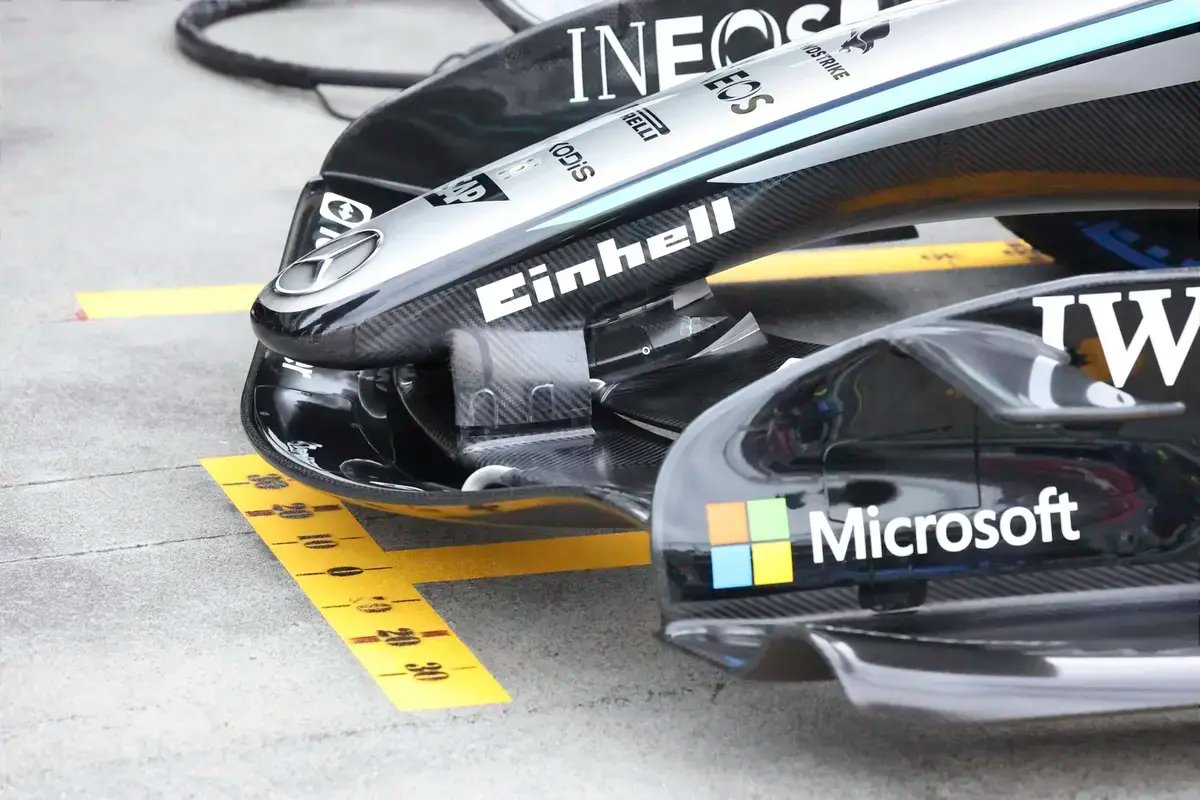
In the eye of the storm was a stark visual: the Mercedes front wing, appearing completely flat while hurtling down the straights, abruptly shifted into a precarious halfway state upon braking. It was only during the final approach to challenging corners, like the notorious hairpin at the end of the back straight, that the wing fully deployed. This perplexing performance raised eyebrows and led rival teams to question whether Mercedes was skirting the regulations, which explicitly state that the transition time between wing states cannot exceed 0.4 seconds.
According to Article 3.10.10 of F1's technical regulations, teams are mandated to adhere strictly to a defined transition time. The observed delay—exceeding the stipulated 400 milliseconds—and the presence of more than two fixed states triggered alarm bells among competitors, prompting at least one team to reach out to the FIA for clarification. Such extraordinary wing behavior sparked rampant theories suggesting that Mercedes might be exploiting the rules to gain an unfair advantage.
However, as the dust began to settle, it became evident that the reality was far less sensational. In a twist that could rival any plot twist in motorsport drama, the FIA confirmed that Mercedes’ wing issues stemmed from a miscalculation rather than any devious intent. The problem lay in the hydraulic system—specifically, the pressure required to switch modes. Mercedes had underestimated the force needed to transition the wing from straight-line to cornering mode at high speeds, resulting in a slower response that left some wondering if they had inadvertently created a loophole.
This hydraulic mishap first reared its head during qualifying in China, prompting a last-minute front wing change for George Russell. Despite their best efforts to rectify the issue before the race, Antonelli faced similar challenges, underscoring the unpredictable nature of high-stakes racing. Following the race, Mercedes engineers returned to their Brackley headquarters, launching a full-scale investigation to enhance their hydraulic systems and ensure this issue wouldn’t rear its ugly head again in the upcoming Japanese Grand Prix.
The FIA, in light of the concerns raised by rival teams, engaged in discussions with Mercedes and ultimately accepted their explanation, quelling fears of foul play. In a stroke of irony, analysis revealed that the very aerodynamic quirk that had sparked allegations of deceit could actually hinder performance, negatively impacting lap times by interfering with braking efficiency during cornering.
While speculation swirled around purported advantages such as enhanced energy harvesting and improved stability for drivers, the reality was that any supposed benefits of a slow-retracting wing were more illusion than reality. The FIA remains unyielding in its commitment to enforce the 400-millisecond transition rule, and the recent Mercedes episode has undoubtedly sharpened the focus on compliance, ensuring that any repeat of such peculiar aerodynamic behaviors will not go unnoticed.
In conclusion, while the initial uproar over Mercedes' front wing may have sent shockwaves through the F1 community, the truth revealed a story of miscalculation rather than manipulation. As the teams prepare for the next race, the scrutiny on aerodynamic systems is bound to intensify, leaving fans eagerly anticipating what thrilling drama will unfold next on the hallowed circuits of Formula 1.