McLaren’s 2026 F1 Season: A Speedy Mirage or a Competitive Contender?
The 2026 Formula 1 season has kicked off with an enigma wrapped in speed for the iconic McLaren team. At first glance, the numbers may suggest that McLaren is firmly in the upper echelons of the grid, but the reality on the track tells a more disheartening tale of lost potential and missed opportunities. Two races into the season, McLaren finds itself in a perplexing juxtaposition – quick enough to challenge the front-runners, yet tragically absent from the battle.
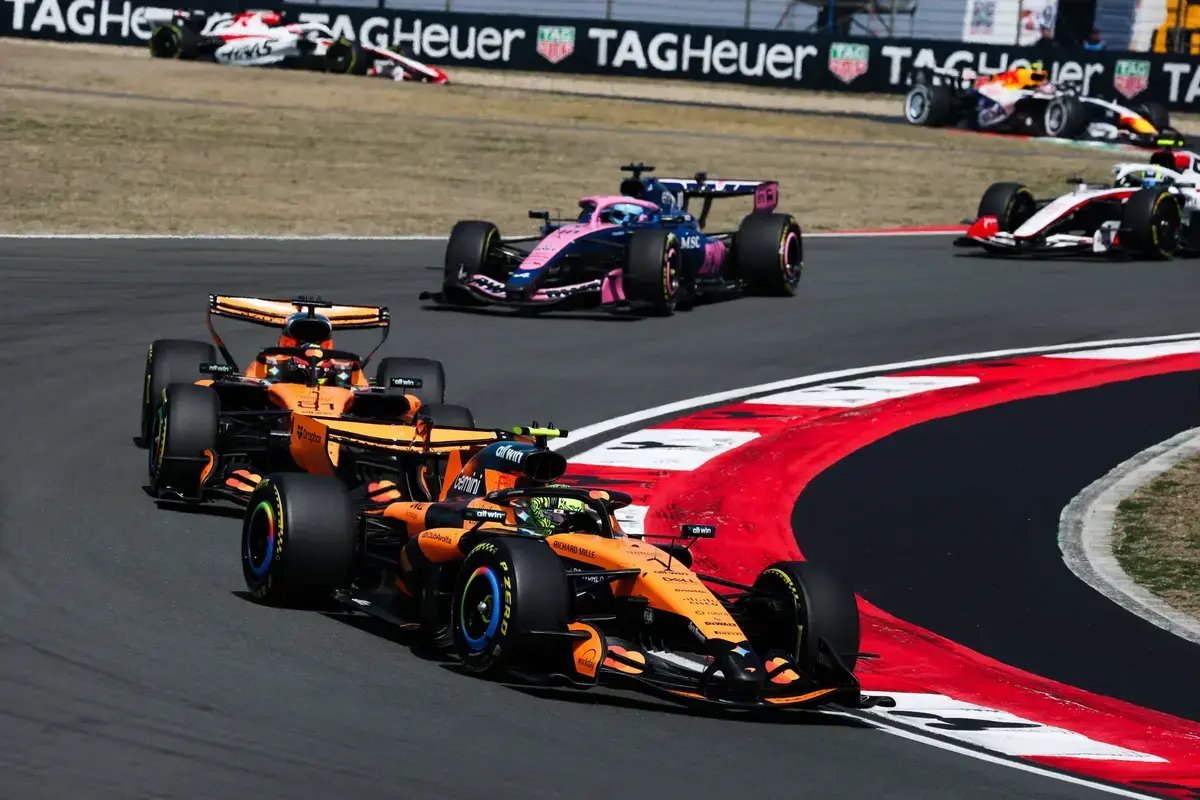
The MCL40 emerges as the third-fastest contender on the grid, flaunting impressive qualifying performances that put it neck and neck with Ferrari and ahead of Red Bull. However, translating that raw speed into substantial race results has proven elusive. The crux of the issue? A staggering lack of continuity on race day, punctuated by three non-starts in just two races, leaving drivers Lando Norris and Oscar Piastri with scant experience behind the wheel.
In a season marked by sweeping regulatory changes, this dearth of track time is more than mere bad luck; it’s a glaring structural drawback. McLaren’s true performance remains shrouded in uncertainty due to an alarming absence of race data. With only one completed race start between its two drivers, the team is deprived of the essential insights that come from comparative analysis, a fundamental facet of Formula 1.
While other teams are gathering valuable knowledge about race distances, tire behavior, and energy deployment, McLaren is left scrambling to piece together disjointed fragments of data. However, even from these fragments, a competitive picture begins to materialize, revealing the team is merely one percent shy of the benchmark set by Mercedes. This small margin signifies that the MCL40 holds genuine potential, but as any seasoned F1 fan knows, potential alone doesn’t secure victories – execution does.
So far, McLaren's season has been a tale of unraveling threads. The catastrophic double non-start in China wasn’t just a stroke of bad luck; it was a glaring exposure of deeper systemic issues. Electrical failures plagued both cars, dramatically showcasing the challenges of integrating a new-generation power unit under fresh regulations. Norris’s car struggled with communication between the internal combustion engine and the hybrid system, while Piastri’s machine failed to ignite on the grid.
Andrea Stella, McLaren’s team principal, expressed that while these failures were unrelated, the costs were monumental. The outcome? A devastating loss of crucial race weekend data and the opportunity to hone in on energy management, a vital aspect of the 2026 F1 formula.
On the surface, McLaren should thrive as one of the best-placed teams this season. The Mercedes power unit has proven to be the most consistent across deployment, recovery, and efficiency, making it the gold standard for the competition. But for a customer team like McLaren, this advantage has morphed into a limitation. The challenge lies not within the engine itself but within the understanding of how to optimize its capabilities.
While Mercedes has adeptly developed its power unit alongside its chassis, deepening its knowledge of performance optimization, McLaren has been forced into a reactive mode. “We go on track, we run the car, and we react,” Stella lamented earlier this season. This knowledge gap is subtle yet crucial, as the world of F1 is unforgiving when it comes to marginal gains.
As the technical landscape shifts with the 2026 regulations, the gap between works teams and customer outfits has widened once more. The reset of the technical framework has put a premium on integration, an area where works teams excel. Mercedes’s seamless alignment of chassis and power unit development provides it with an undeniable edge, allowing it to extract maximum performance at every corner of the track. In contrast, customer teams like McLaren are forced to play catch-up.
This has thrust McLaren into an uncomfortable position, finding itself trailing for the first time since its switch to Mercedes power in 2021. Even with advancements in energy deployment, the gap to Mercedes remains, particularly in cornering performance, revealing inherent aerodynamic limitations within the car. “We need to improve aerodynamic efficiency,” Stella stated, emphasizing the need for enhanced downforce.
While the MCL40 is not fundamentally flawed – being stable, predictable, and sound – it lacks the raw performance needed to challenge for top honors. This deficit, though small, is significant enough to dictate the difference between vying for wins and merely contending for podiums.
As the Japanese Grand Prix looms, McLaren faces a pivotal moment. After a tumultuous start, the team desperately requires a clean race weekend to gather the data it has sorely missed. The demanding Suzuka circuit will serve as a true test for both car and driver, potentially offering the clarity McLaren needs. However, with major upgrades not slated until Miami, any immediate breakthrough seems unlikely.
Yet, amidst the clouds of uncertainty, there is a glimmer of hope rooted in McLaren's recent history. This team has demonstrated resilience in the past, transforming from early season struggles in 2023 to championship contenders in 2025. The same leadership and processes are still in place, providing a solid foundation for future success.
It would be easy to paint McLaren’s early 2026 season as a crisis, with the glaring absence of results, reliability issues, and a visible gap to Mercedes. However, the truth is far more nuanced. McLaren is not in decline; it is adapting to a new set of challenges. The MCL40 is competitive, the power unit is robust, and a clear development pathway exists. What remains elusive, for now, is execution.
Time is of the essence, and each missed opportunity carries a weighty cost. While the early rounds of 2026 may not ultimately define McLaren’s season, they will undoubtedly shape its trajectory. The pressing question is not whether the team can recover, but rather how swiftly they can bounce back to reclaim their rightful place in the battle for supremacy on the Formula 1 stage.