Shocking FIA Move: Japanese Grand Prix Gets a Daring New DRS Zone!
In a breathtaking announcement that has sent shockwaves through the motorsport community, the FIA is set to unleash a groundbreaking change for the upcoming Japanese Grand Prix! For the first time since 2012, drivers will have access to an additional straight-mode zone on the notoriously challenging Suzuka circuit. This bold decision is poised to redefine racing tactics and strategies for the weekend, igniting fierce competition among the teams!
Unlike the traditional Drag Reduction System (DRS), which has only allowed adjustments on the rear wing, this innovative active aero technology enables drivers to manipulate both their front and rear wings. This means they can fine-tune their setups to maximize speed on the straights while optimizing downforce for the demanding corners. The newly introduced straight-mode will be utilized on the high-speed stretch between the infamous Spoon Curve and the treacherous 130R turn—a section that has seen its share of dramatic accidents over the years.
One of the most notorious incidents occurred in 2002 when Toyota driver Allan McNish experienced a catastrophic 69G crash at 130R, which nearly breached the barriers. More recently, Williams junior Luke Browning suffered a similar fate during a Super Formula test, further highlighting the dangers of this perilous corner. With the addition of the straight-mode zone, fans and drivers alike are bracing for an electrifying and risky race.
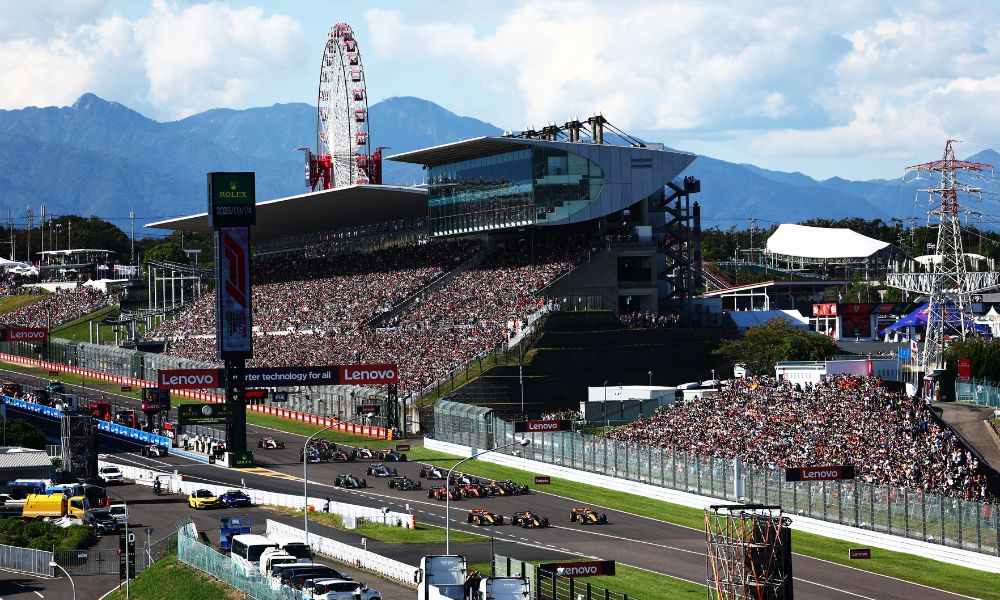
Previously, only one DRS zone was established at Suzuka, located on the main straight. However, the FIA’s recent revelation marks a significant shift in protocol, as this additional zone opens up new possibilities for overtaking maneuvers and strategic gameplay. Following the initial implementation of DRS in 2011, drivers enjoyed the freedom to utilize this system throughout practice and qualifying sessions. Yet, concerns about safety led to restrictions by the FIA prior to the 2013 season, limiting DRS use and aiming to prevent dangerous high-speed spins.
The straight stretch between Spoon and 130R is notorious for being one of the narrowest sections of the Suzuka lap, with minimal run-off areas on either side. This adds an extra layer of intensity, as drivers navigate the tricky terrain that also crosses over the exit of Degner 2, making Suzuka the only figure-of-eight circuit on the F1 calendar. The FIA has been known to remove DRS zones during race weekends due to safety concerns, as seen at the 2022 Australian Grand Prix, where a high-speed DRS zone was scrapped after driver briefings raised alarms.
Despite the historical risks, the recent updates indicate that the Suzuka layout will allow for slower cornering speeds at 130R and the esses due to the energy demands of the F1 2026 cars. Alpine Racing Director Dave Greenwood stated, “With reduced downforce on the cars, we’ll definitely see lower apex speeds in the opening sequence of corners.” Greenwood believes that these changes will challenge drivers further, creating more excitement as they adjust their lines through the corners and aim for the perfect exit speed onto the next straight.
As the anticipation builds for this monumental race weekend, fans are eager to see how teams adapt to the new dynamics of the Suzuka circuit. Will the added straight-mode zone ignite fierce battles for position? Or will the risks prove too great for drivers to capitalize on the additional speed? One thing is for sure: the Japanese Grand Prix is set to deliver heart-pounding action that motorsport enthusiasts won't want to miss!
Stay ahead of the game! Join our broadcast channel to get the latest updates from the F1 paddock, and don’t forget to subscribe to our YouTube channel for exclusive features and insider stories from the world of Formula 1!