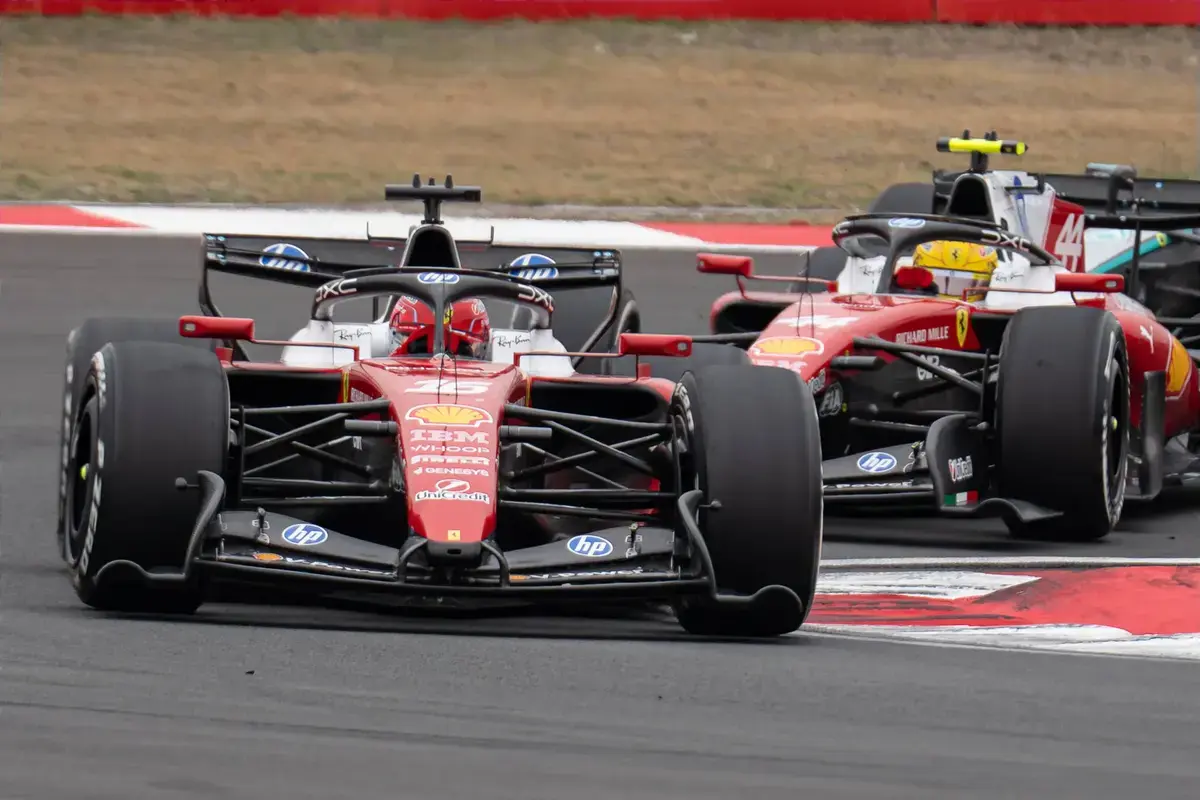
Title: Charles Leclerc’s Daring Qualifying Tactics Crushed by New F1 Car Dynamics!
In the glamorous yet cutthroat world of Formula 1, Charles Leclerc has long been heralded as a qualifying maestro, a driver whose fearless approach often catapulted him to the front of the grid. However, a seismic shift in car dynamics for the 2026 season has left Leclerc grappling with a disheartening reality: the very risks that once defined his driving style are now a liability.
Leclerc, boasting an impressive tally of 27 pole positions—only behind the titans Lewis Hamilton and Max Verstappen—has always thrived on the edge, pushing his machine to the absolute limits in pursuit of glory. But now, with the introduction of the new cars, that edge seems to have dulled. “I can no longer take a ‘risk’ during a qualifying lap,” he lamented, revealing how this change has hampered his once-dominant form.
The new breed of F1 cars demands a radically different driving technique, one that prioritizes consistency over unbridled aggression. “It’s a lot down to understanding these new cars,” Leclerc explained. Gone are the days when he could simply throw caution to the wind, risking everything for a shot at pole. Instead, the current landscape requires him to adopt a more cautious approach, leading to a less thrilling experience in the cockpit during crucial qualifying sessions.
In the opening rounds of the season, Leclerc managed to secure a fourth-place start, a respectable position but far from the exhilarating highs of past performances. “Consistency pays off more,” he noted, acknowledging the trade-off between thrilling laps and strategic pacing. In a recent performance in China, he felt the rhythm gradually build from Q1 to Q3, yet the thrill of pushing limits was absent. “It was not a crazy lap, unfortunately, but you can't really achieve that anymore,” he pointed out, encapsulating the frustration of an elite driver constrained by new technological realities.
As the season unfolds, fans and analysts alike will be watching closely to see how Leclerc adapts to this new paradigm. Can he reclaim the daring spirit that once propelled him to the top, or will he be forced to play it safe, sacrificing the electrifying performances that captivated audiences? The stakes have never been higher, and the question lingers: Is the thrill of risk lost forever in the relentless evolution of F1 racing? Only time will tell if the daring Leclerc can navigate this new terrain and reclaim his rightful place among the greats.