NASCAR's High-Stakes Drama: Are $50,000 Fines Killing the Sport’s Spirit?
In a shocking revelation that exposes the rift between racing’s glorious past and its corporate present, Daniel Suarez candidly admitted that the hefty $50,000 penalty looming over him was the reason he refrained from escalating a heated confrontation with Ross Chastain at the Las Vegas Motor Speedway. “To punch him and put him on the ground, it was going to cost me $50,000,” he lamented, encapsulating a growing frustration among drivers who feel their passion for racing is being stifled by financial repercussions.
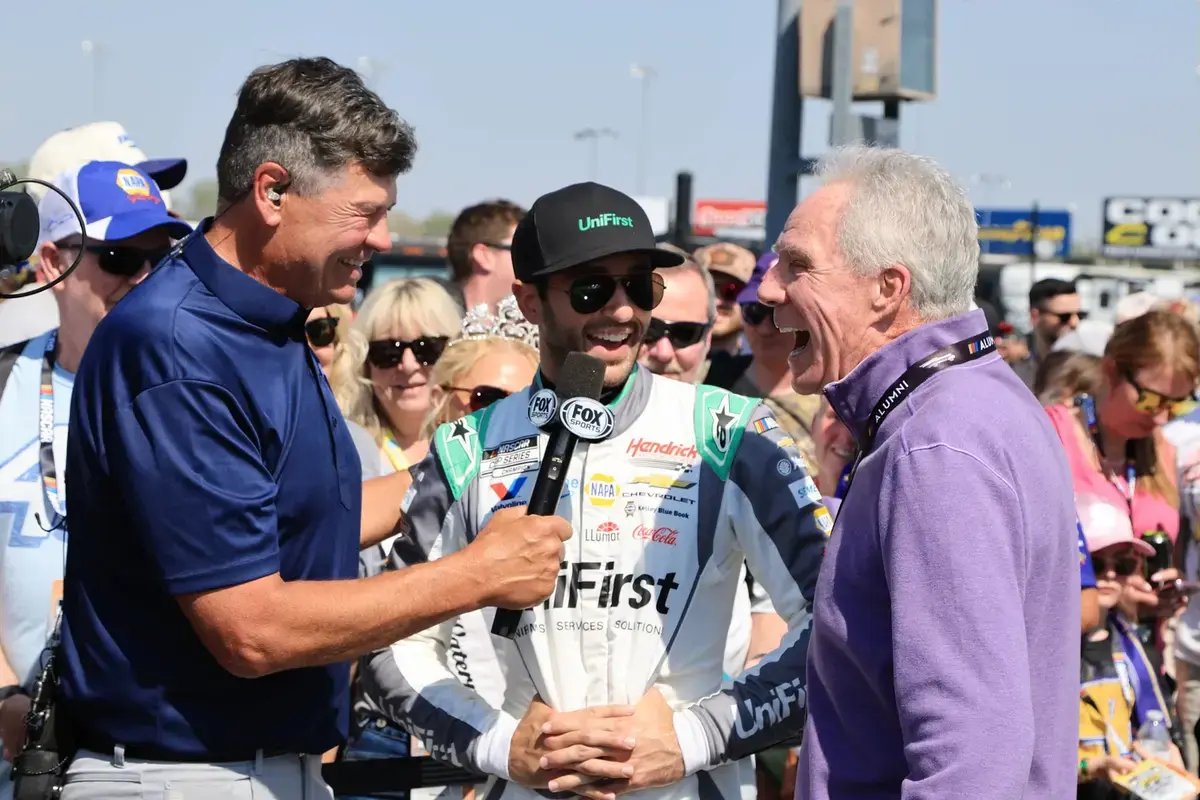
Enter NASCAR legend Darrell Waltrip, whose recent comments have ignited a firestorm of division among fans. As the NASCAR circuit rolled into Darlington Raceway for the highly anticipated Goodyear 400, Waltrip was posed a provocative question: Would a $50,000 fine ever deter him from throwing punches during his racing heyday? His response was instantaneous and unapologetic—laughter followed by a resounding “Nope. Not even one bit.”
What many fans are left wondering is whether this old-school mentality aligns with today’s NASCAR landscape. In a world where financial penalties are more than just a slap on the wrist, the sport’s identity is being called into question. Are we witnessing the death of true racing spirit in exchange for sanitized, sponsor-friendly decorum?
The ramifications of financial penalties on driver aggression are becoming increasingly evident. Suarez’s hesitation during his recent altercation is not an isolated case. Ben Rhodes, another competitor, expressed his frustrations after a collision with Tyler Ankrum, lamenting, “I would love to go get myself a penalty and fight right now… But I heard that’s $75,000, so we won’t be doing that.” The reality is stark: the fists aren’t flying, not because the fire isn’t there, but because the consequences are all too real.
Waltrip’s perspective has further polarized the NASCAR community. While many nostalgic fans celebrate his willingness to embrace raw emotion, others chastise this outdated mentality. The racing world has transformed, and some fans feel that Waltrip’s bravado is a relic of a bygone era. One fan cheekily remarked, “He’ll just send the bill to Rusty Wallace,” a nod to their notorious rivalry from the late 1980s.
As the debate rages on, the philosophical divide among fans is revealing. Some argue for a return to the sport's roots, believing that “$50k is a small price for passion,” a sentiment reflecting the grit that has long defined NASCAR. They yearn for the days when racing was about heart, not handshakes, and when drivers were unrestrained by fear of fines. However, others take a more pragmatic approach, warning that reckless behavior could lead to career-ending financial consequences, as demonstrated by the tumultuous history of drivers like Kyle Busch.
The most cutting commentary comes from those who lament the shift in NASCAR culture: “Thank god we didn’t have penalties for trash-talking back in the day. DW would’ve been broke.” It underscores a critical point—today's NASCAR is not just a racing event, but a carefully curated spectacle driven by corporate interests, sponsorships, and image management.
In the end, Darrell Waltrip’s bold declaration didn’t resolve the debate; it merely peeled back the layers of a sport grappling with its identity. As fans find themselves at a crossroads, the question lingers: Is NASCAR sacrificing its soul for the sake of financial stability? As the engines roar and tempers flare, one thing is clear—this ongoing saga is far from over.