Cadillac's Formula 1 Journey: From Underdogs to Championship Aspirants – What’s Holding Them Back?
In the cutthroat arena of Formula 1, where speed and precision reign supreme, the debut of Cadillac Racing has been nothing short of a rollercoaster ride. While other teams may see a dismal four-second gap from pole position as a reason for despair, for Cadillac, merely securing a place on the grid is an incredible victory. This ambitious team, which was only granted its F1 entry a mere 12 months ago, has faced both political and logistical hurdles that would leave many others in the dust. Yet, their aspirations soar high—they are not here to play second fiddle but to compete for the coveted world championship.
Cadillac's CEO Dan Towriss and team principal Graeme Lowdon are treading carefully, avoiding the classic blunder of pinning down a timeline for success. The road ahead is fraught with challenges, particularly in keeping up with the relentless pace of technical advancements. This season marks the dawn of a radically different set of technical regulations, and the competition is fierce.
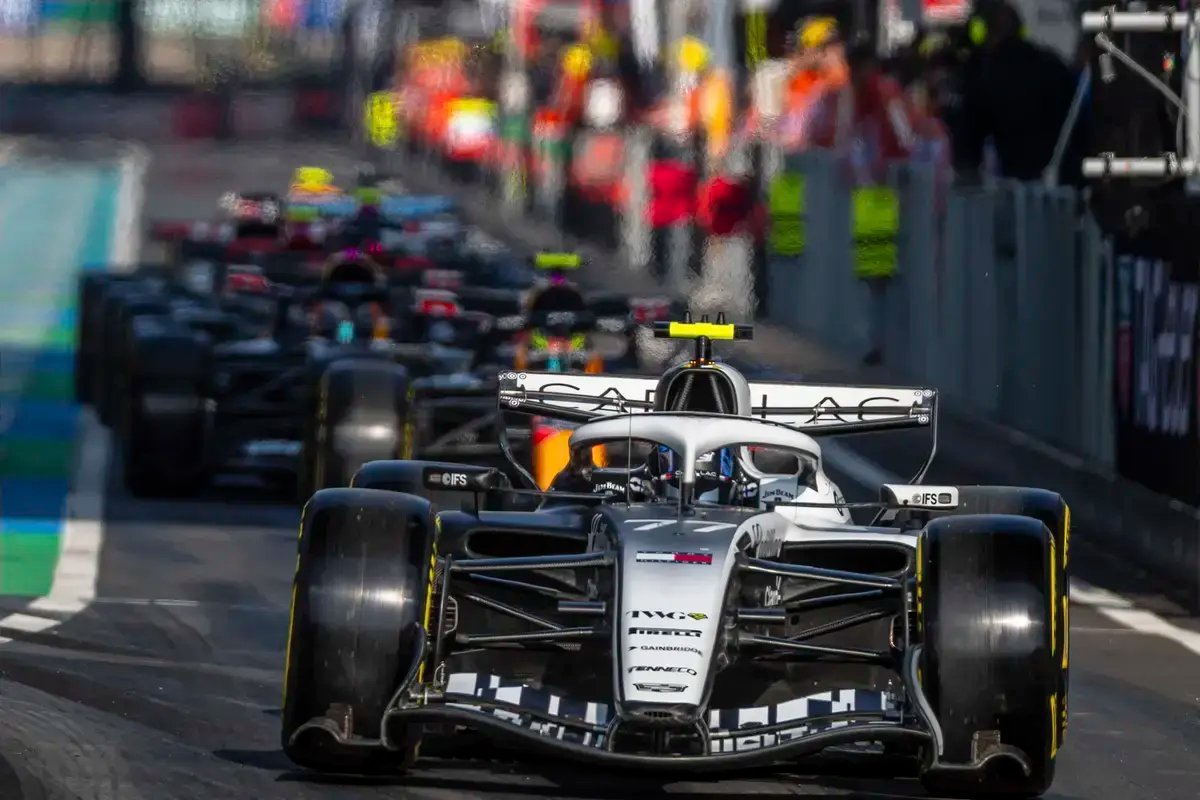
What sets Cadillac apart from its rivals, however, is the unique perspective of its drivers. Unlike many competitors who are preoccupied with optimizing their power units, Cadillac's talent has identified aerodynamic shortcomings as the primary hurdle. Valtteri Bottas, Cadillac's ace driver, recently highlighted the critical need for improved aerodynamic load, especially at the rear end of the MAC-26. “I think Ferrari proved that they can race towards the front end, so the power unit is decent,” Bottas stated, emphasizing that the real limitations lie within the car's design rather than the power source. “We're lacking quite a lot of load, especially on the rear end of the car, which now has kind of boxed us in with this mechanical setup.”
In stark contrast, most other teams are laser-focused on maximizing the efficiency of their power units. Mercedes' clients, for instance, are enviously eyeing the factory team’s prowess. Oscar Piastri from McLaren pointed out that optimizing the power unit offers gains that vastly overshadow any benefits from car setup adjustments. The emphasis is on extracting every ounce of performance from the power unit, while Cadillac must grapple with a more fundamental issue—its basic aerodynamic framework.
The disparity between Cadillac's MAC-26 and the more refined models of its competitors is glaring. Observers have harshly likened the MAC-26 to a “show car you might see in a shopping mall,” underscoring the challenges faced by a team that rushed to compete amid the pressure of tight deadlines. Bottas further revealed that many aspects of the car had to be finalized prematurely to ensure timely production—an obstacle that teams with more extensive experience wouldn’t typically encounter.
Yet, it would be a grave error to view aerodynamic efficiency, mechanical setup, and power unit operations as isolated concerns. These elements are intricately interwoven, especially in an era where downforce, chassis balance, and energy management influence each other like never before. The challenge of cornering speeds has a direct impact on a car’s energy recovery capabilities, which in turn affects overall performance.
As Cadillac navigates this treacherous landscape, it faces the daunting task of improving its downforce to unleash the full potential of its power unit. Bottas has made it clear: the key to unlocking faster lap times lies not in managing the power unit but in addressing the car's aerodynamic deficiencies. With each passing lap, the lack of rear downforce compounds the team’s struggles, leading to understeer that not only hampers speed but also accelerates tire degradation.
As the F1 circus rolls into China, Cadillac's drivers are acutely aware that the Shanghai circuit—a front-limited track with its fast and variable corners—will only heighten their aerodynamic challenges. The stakes are high, and the pressure is mounting. Cadillac must not only enhance its aerodynamic efficiency but also consider how to leverage the information it receives from its Ferrari power unit to gain a competitive edge.
Will Cadillac Racing rise from the shadows of its early struggles to become a formidable force in Formula 1? The journey ahead is fraught with both potential and peril, but one thing is for certain: the team is determined to carve out its place among the giants of the sport. As they strive for greatness, all eyes will be on this fearless contender as it battles against the odds in pursuit of F1 glory.