Ferrari's Bold Warning: Don't Rush to Change F1's Exciting New Rules!
In a gripping display of motorsport strategy, Ferrari's team principal, Fred Vasseur, issued a stark warning that could shake the foundations of Formula 1: altering the newly introduced rules for 2026 in haste “would be a mistake.” As the world of F1 adapts to revolutionary chassis and engine regulations, which have leaned heavily towards electrification—about 50%—the impact on race dynamics has been nothing short of dramatic.
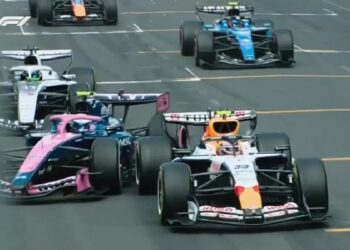
The recent Australian Grand Prix was a spectacle, showcasing the intense energy management strategies that drivers had to employ. This was thrust into the spotlight as competitors were seen lifting and coasting before braking zones, a tactic that raised eyebrows, particularly on the energy-intensive Albert Park circuit. In an astonishing twist, the race recorded a staggering 120 overtakes—an impressive leap from last year’s mere 45—signifying a thrilling return to action that fans have long yearned for. However, this excitement came with its own set of challenges, as the absence of the MGU-H component in the power units caused significant issues with turbo responsiveness, leading to a hair-raising near-miss during the start sequence in Melbourne.
Vasseur, reflecting on the race, urged patience, stating, “We were pushed also to change our regulation before race one.” He emphasized the importance of waiting for a broader perspective after a few races before jumping to conclusions about the new regulations. “Honestly, I think it makes sense to wait two or three events. It is not because this one was a very good one that they will be all good,” he cautioned, while acknowledging the exhilarating battles witnessed during the race, particularly the fierce duel between George Russell and Charles Leclerc in the opening laps. “I am not sure I saw something like this in the last 10 years,” he admitted, hinting at the potential for this season to deliver unforgettable moments.
Sauber team boss Jonathan Wheatley echoed Vasseur's sentiments, insisting that this was merely the first race with a new set of cars. “The starts were interesting,” he noted, hinting that some teams have better launch capabilities than others. But he remained optimistic, believing that the competitive landscape will soon balance as teams adapt and evolve. Wheatley also celebrated the thrilling racing action, stating, “It was exciting. The crowd certainly thought so; I heard the cheering over the sound of the cars.”
As the season unfolds, concerns over closing speeds due to energy management strategies have arisen. However, Wheatley reassured fans and teams alike, stating, “We're all involved in making sure that this sport is the best sport in the world.” He acknowledged the FIA's commitment to listening to drivers and teams, suggesting that as the technology advances, these cars will become easier to drive and potentially the best F1 cars in history within three years.
With the 2026 regulations still in their infancy, the F1 community stands at a crossroads. Will the sport embrace the exhilarating challenges presented by the new rules, or will it succumb to the pressures of immediate change? As the dust settles from the opening race, one thing is clear: the excitement of F1 is alive and well, and the stakes have never been higher. Keep your engines revving—this season promises to be a thrilling ride!