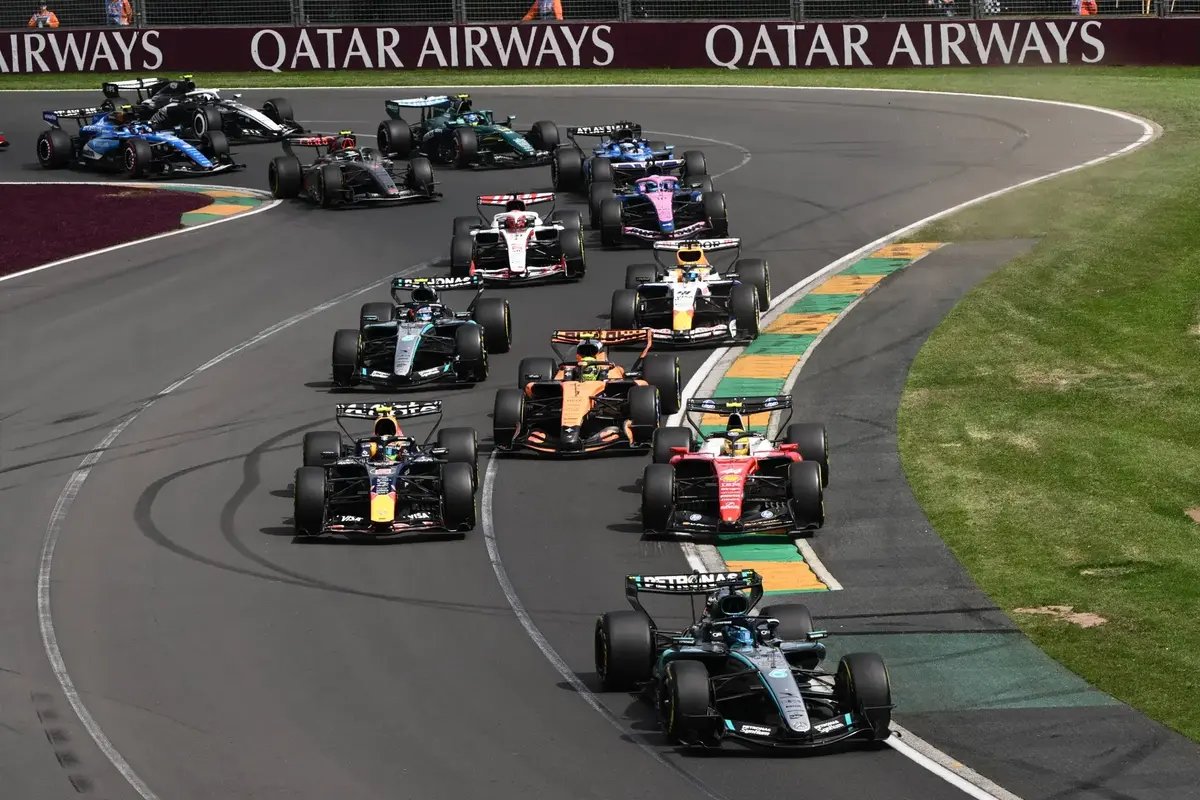
Mercedes Dominates the Australian GP: Russell's Triumph Highlights Ferrari's Strategic Blunders
In a stunning display of speed and strategy, Mercedes has decisively taken the top two spots at the Australian Grand Prix, marking a spectacular start to the new era of Formula 1. George Russell, starting from pole position, outpaced his teammate Kimi Antonelli to secure a commanding victory, while Ferrari’s aspirations crumbled under the weight of poor tactical decisions.
The race kicked off with a wave of disappointment for local fans as Melbourne's own Oscar Piastri suffered a heartbreaking crash on his reconnaissance lap. The young McLaren driver lost control of his MCL40 at Turn 4, forcing him to retire before the race even began. Adding to the drama, Nico Hulkenberg faced his own setback with mechanical troubles that prevented him from taking to the grid.
From the get-go, it was evident that the Ferraris were eager to capitalize on their pre-season speed. Charles Leclerc, starting from fourth on the grid, swiftly snatched the lead from Russell. However, the early excitement was short-lived as Isack Hadjar and Antonelli struggled to maintain their positions, with Antonelli plummeting from second to seventh.
The action heated up quickly. On lap 2, Russell reclaimed his position by overtaking Leclerc as they barreled towards Turn 11, but it wasn’t without fierce resistance. Leclerc responded with a brilliant outside move at Turn 9 on the following lap, setting the stage for a thrilling energy management duel between the two.
As the laps progressed, Max Verstappen was making his way through the field from the back, while Antonelli climbed back into contention, reaching fourth. However, it was Russell who remained relentless, pushing Leclerc hard and ultimately executing a bold maneuver at Turn 3 to regain the lead—only for Leclerc to claw his way back with another counterattack.
Disaster struck for Hadjar on lap 12 when a technical issue forced his retirement, leading to a virtual safety car that reshaped the race dynamics. Mercedes seized the opportunity to pit, changing to hard tires and rejoining in third and fifth positions. Meanwhile, Hamilton questioned Ferrari's strategy, suggesting that at least one of their drivers should have pitted during the yellow flag.
As the race unfolded, the tension escalated. Valtteri Bottas’ breakdown on lap 20 brought out another virtual safety car, but Ferrari stubbornly opted to remain on track, missing a crucial chance to pit. By lap 25, Leclerc finally pitted but emerged a staggering 16 seconds behind Russell, who was now firmly in the driver's seat.
With Hamilton also making his stop, the order quickly shifted. Russell was not only in the lead but also managed to establish a comfortable gap, enjoying a seven-second advantage over Antonelli. The race for the win seemed locked in as Russell's pace became increasingly dominant, leaving his rivals scrambling in his wake.
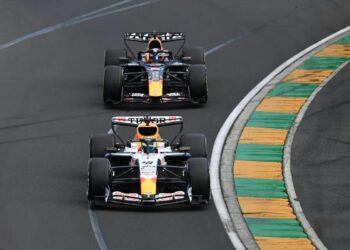
As the final laps approached, Mercedes cruised to a 1-2 finish, with Russell crossing the line just three seconds ahead of Antonelli. Leclerc and Hamilton trailed by an astonishing 16 seconds, highlighting the sheer ineffectiveness of Ferrari's strategy. The battle for fifth place ignited between a resurgent Verstappen and Lando Norris, with Norris taking the upper hand but still finishing a staggering 52 seconds behind the race leader.
In a race marked by technical failures, strategic miscalculations, and a fierce display of driving prowess, Mercedes has firmly established itself as the team to beat in this new chapter of Formula 1. Meanwhile, Ferrari's failure to capitalize on their early potential raises serious questions about their approach moving forward. As the dust settles on the Australian GP, fans and teams alike are left wondering: can anyone challenge the dominance of Mercedes in the races ahead?