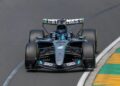
Title: Aston Martin's AMR26: A Chassis with Potential Amidst Melbourne Mayhem!
In a dramatic start to the 2026 Formula 1 season, Aston Martin finds itself in the eye of the storm following a tumultuous race weekend in Melbourne. The legendary Fernando Alonso faced a nightmare as he missed the entire first practice session, and as if that weren't enough, only two out of four Honda batteries were operational, leaving Alonso and teammate Lance Stroll to grapple with reliability issues.
Despite increasing lap counts and pace during practice, Aston Martin's troubles continued, with Stroll's second practice session cut short and missing the third due to a suspected Internal Combustion Engine malfunction. Alonso, battling to catch up, finished FP3 a staggering 3.667 seconds behind the dominant George Russell, who led the pack in his Mercedes. Alarm bells are ringing louder than ever at Aston Martin as they confront the harsh realities of their performance.
Enter Adrian Newey, a name synonymous with cutting-edge engineering and success in F1. In a candid discussion alongside Honda Racing's Koji Watanabe, Newey expressed optimism about the AMR26 chassis despite its current challenges. “On the chassis side, I think it’s well known that we faced a very condensed period of development,” he explained. “We didn’t get a model into the wind tunnel until mid-April, so we are quite a long way behind our competitors. That’s just a fact of life.”
Newey emphasized the team's focus on creating a robust architectural package for the AMR26. He articulated, “I don’t feel as if we particularly missed anything. Therefore, I believe that the car has huge, tremendous development potential.” However, he acknowledged that it could take several races to fully unlock that potential. “It’s fair to say that here in Melbourne, we are a bit behind the leaders. I would say we’re maybe the fifth-best team, potentially qualifying for Q3, which is not where we want to be, but there’s room to climb.”
The British engineer is convinced that, given time and the aggressive development plan already underway, Aston Martin could emerge as a formidable competitor. “I see no inherent reason within the architecture of the car why we can’t become, on the chassis side, close to, if not fully competitive,” he stated confidently.
Yet, the challenges are not solely on the chassis front. Newey pointed to the need for clarity on Honda's engine performance and the crucial role of internal combustion engine power. He noted, “Once we have GPS and sound analysis from the Formula 1 TV coming in over the weekend, we can accurately measure what power each PU is producing.” Such data will be essential for dissecting the lap time deficits the team faces.
One critical factor contributing to Aston Martin's struggles is the delicate balance between ICE power and electrical energy. Newey warned, “The shorter you are on ICE power, the more you have to make up for using electrical energy. By the time you really want that electrical energy on the straights, your battery has gone flat.” This complex interplay could spell trouble as the team navigates the tightening regulations of Formula 1.
As the tension rises and the stakes are higher than ever, Aston Martin must rally together and tackle the challenges head-on. With their eyes set on the future and a clear vision for development, fans and critics alike will be watching closely as they strive to turn their fortunes around in the fast-paced world of Formula 1. The question remains: Can the AMR26 rise from the ashes of Melbourne’s trials to become a force to be reckoned with on the track? Only time will tell!