Having celebrated its 130th anniversary in 2025, Skoda has a quite rich legacy: it witnessed the dawn of the automobile, survived two world wars, and various political regimes, being today one of the important manufacturers in the global landscape of the industry. The mission of preserving and compiling all the data of a brand with such a long history is often accompanied by the discovery of new and unexpected facts.
The coordinator of the Skoda Archive in Mladá Boleslav admits that this is precisely the case with the Czech manufacturer, as, in addition to helping to tell its story, the documentary collection also helps safeguard the future. Established in the 1950s and located in the heart of the company, it is professionally managed and contains materials that illustrate the company’s development, including founding contracts and internal documentation (board meetings, workers’ council meetings, etc.), as well as photographs, posters, and technical drawings.
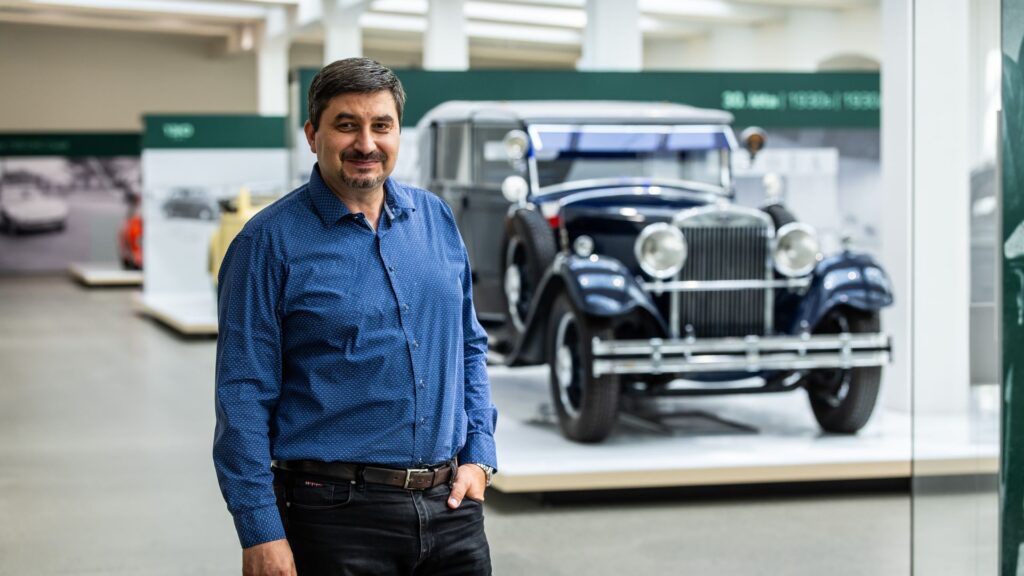
Open to the public and professional researchers, in the so-called Study Room, all the materials that make up this archive are accessible, except for those that have not been processed, those that are confidential, and those considered classified. Its maintenance and organization is the responsibility of Lukás Nachtmann who, along with his team, takes care of the documentary heritage, a fundamental support of the collection of historical vehicles.
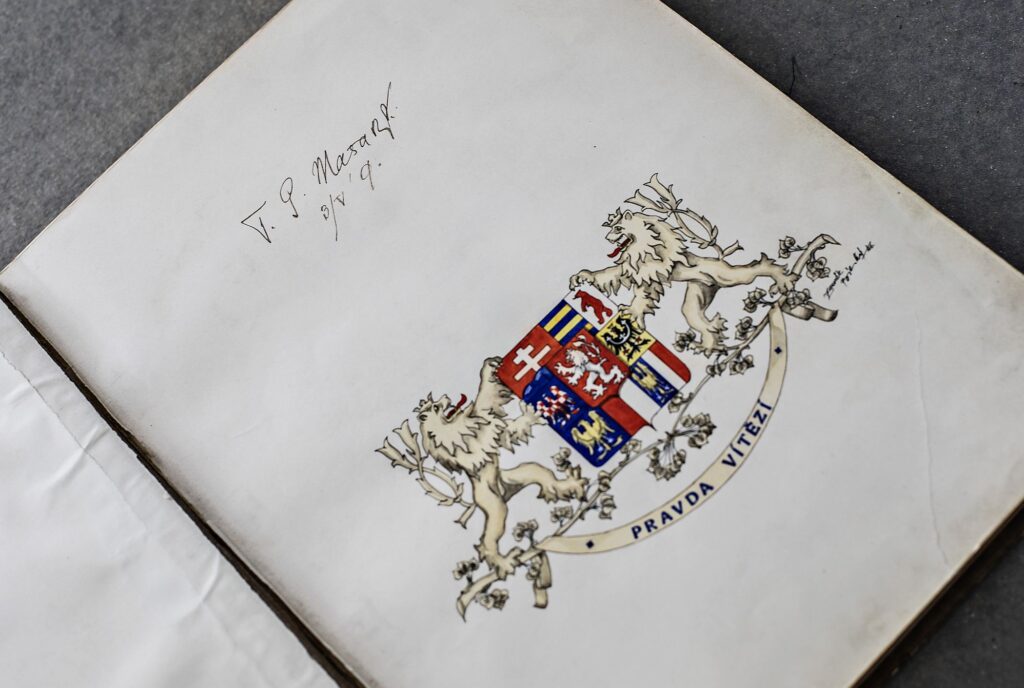
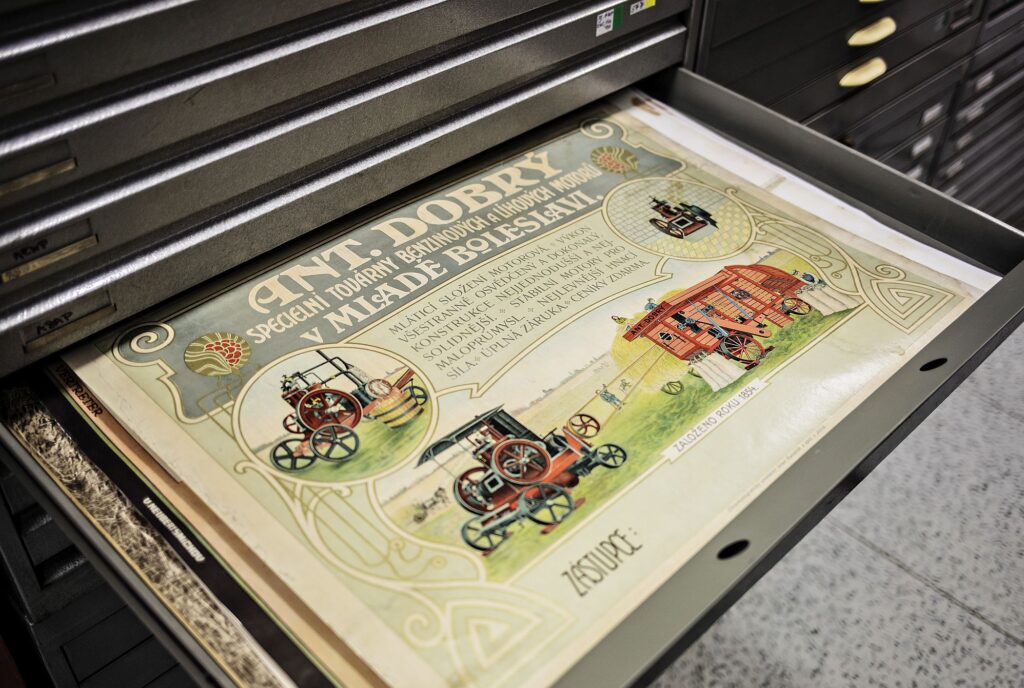
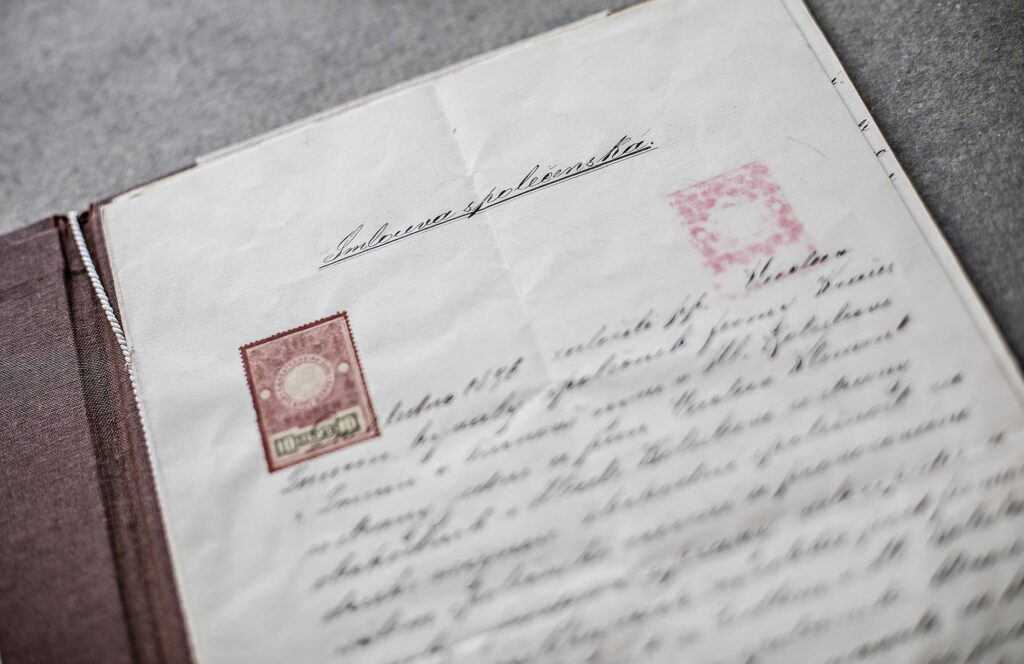
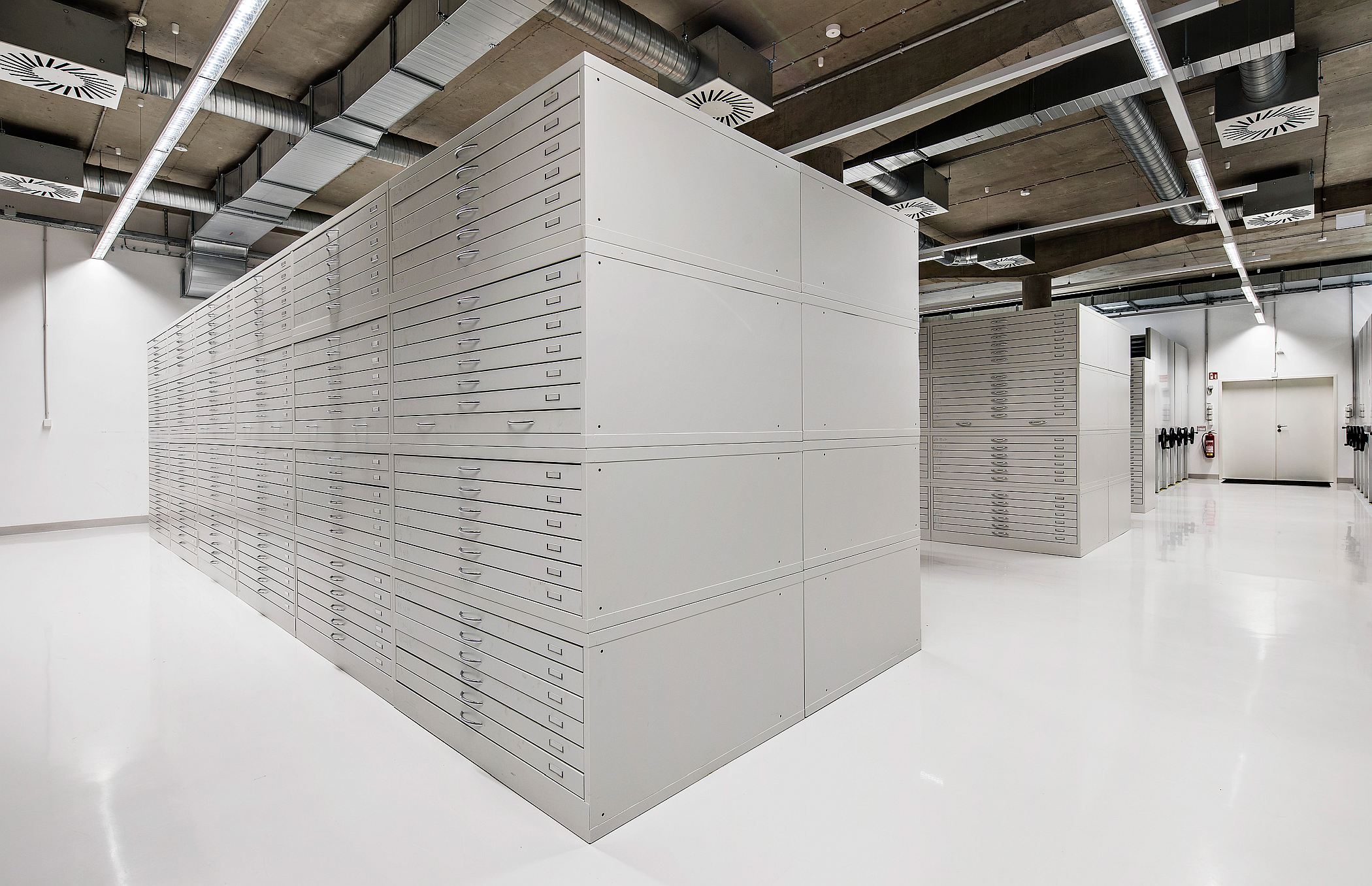
Although the cars themselves are essential for telling the brand’s past, all technical and statistical documentation plays a fundamental role in preserving the company’s history, requiring ideal conditions to withstand the test of time. Thus, Skoda’s archive includes state-of-the-art isolated storage facilities, with a constant temperature of around 18° C, and humidity between 40% and 60%, which is an essential condition: below 40%, the paper dries and cracks; and above 60%, bacteria and mold proliferate.
Graduated from Charles University in Prague, Lukáš Nachtmann specialized in Modern and Contemporary Czech History, joining Skoda at a young age. “When I was deciding which path to take, I taught a few classes, and then I found a job advertisement for an archive manager. I applied and was accepted. So, since April 1999, I have been here. And even after 26 years, I continue to discover new things,” he states. Among his activities are the preparation of exhibitions for museums, providing documentation for board meetings, organizing open days, and locating documents for various public events, both inside and outside the Czech Republic.
The department also collaborates closely with the museum’s restoration workshop, in addition to responding to specific requests from classic car owners, who “represent a large part of our inquiries. They may need help with restoration, and either they are looking for specific vehicle details, or they are facing registration issues, and need an official declaration for technical inspection centers,” explains Lukáš Nachtmann. These documents include details such as the vehicle’s production date, production location, and even the type of wheels it originally had.
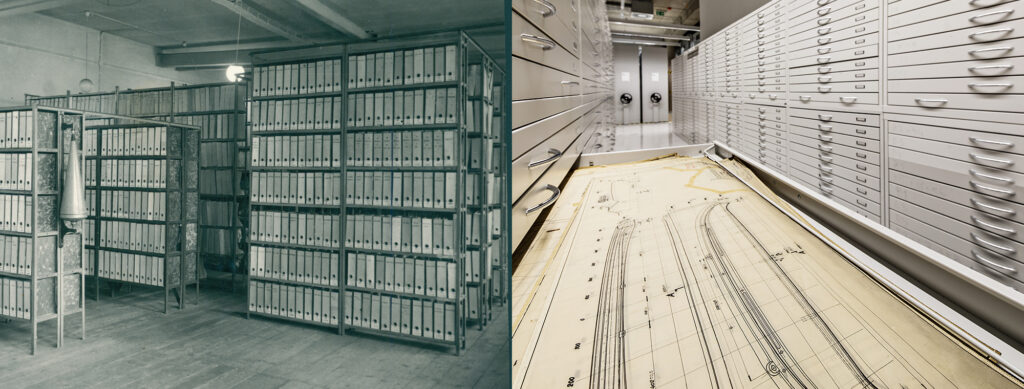
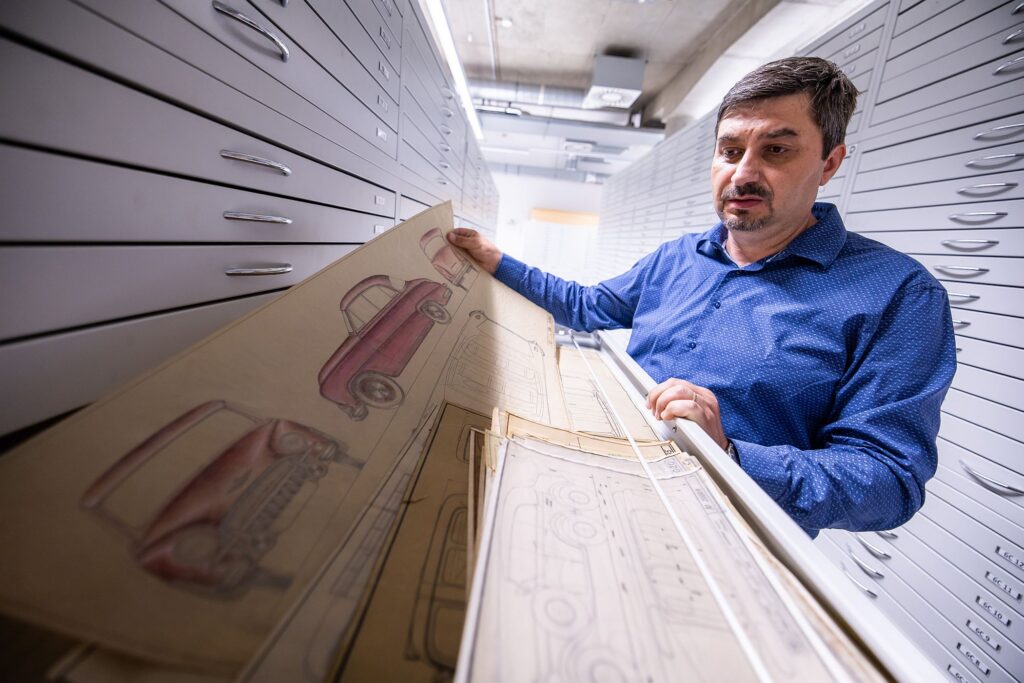
“Most researchers look for information related to their vehicles, and usually, we can help them online. Those who visit us in person typically need more in-depth information – authors of books, for example. Here, they can examine the materials in detail and discover facts that may not be known or may not be accurately dated”, adds the person in charge. The archive is also highly sought after by groups or clubs of Skoda fans and enthusiasts from all over the world: “we have a strong relationship with a private Skoda museum in Denmark, for example”, adding that he receives many contacts from the Skoda Tatra Club in Australia.
But the inquiries are not limited to cars. They often cover general history or related topics, including even more personal requests. “Once, we were contacted by a man named Wolfgang Amadeo Klement from Brazil, who said that his ancestors had emigrated from Bohemia. He was curious to know if he could be related to Václav Klement. Unfortunately, we had to disappoint him – there was no family connection”, explains Lukás Nachtmann.
However, the archive is not only meant to preserve history; it also plays a fundamental role in preparing for the future: “If someone needs something in 100 years, they will be able to find it here”, assures Lukás Nachtmann, for whom digitization has, and will have, a decisive weight. “On one hand, we are digitizing and uploading digitized documents with metadata into the database. On the other hand, we are also building a digital archive for records created digitally”.
Still, he emphasizes the importance of maintaining physical copies; “We know what a piece of paper that is a thousand years old is like – we know it survives, and that the writing remains legible. But we do not have data that old. We do not know how time will affect current storage media. Will the formats we use today still exist in 130 years? And, if a migration occurs – of hardware or software – will these documents still have the same legal and evidential validity?”, he concludes.