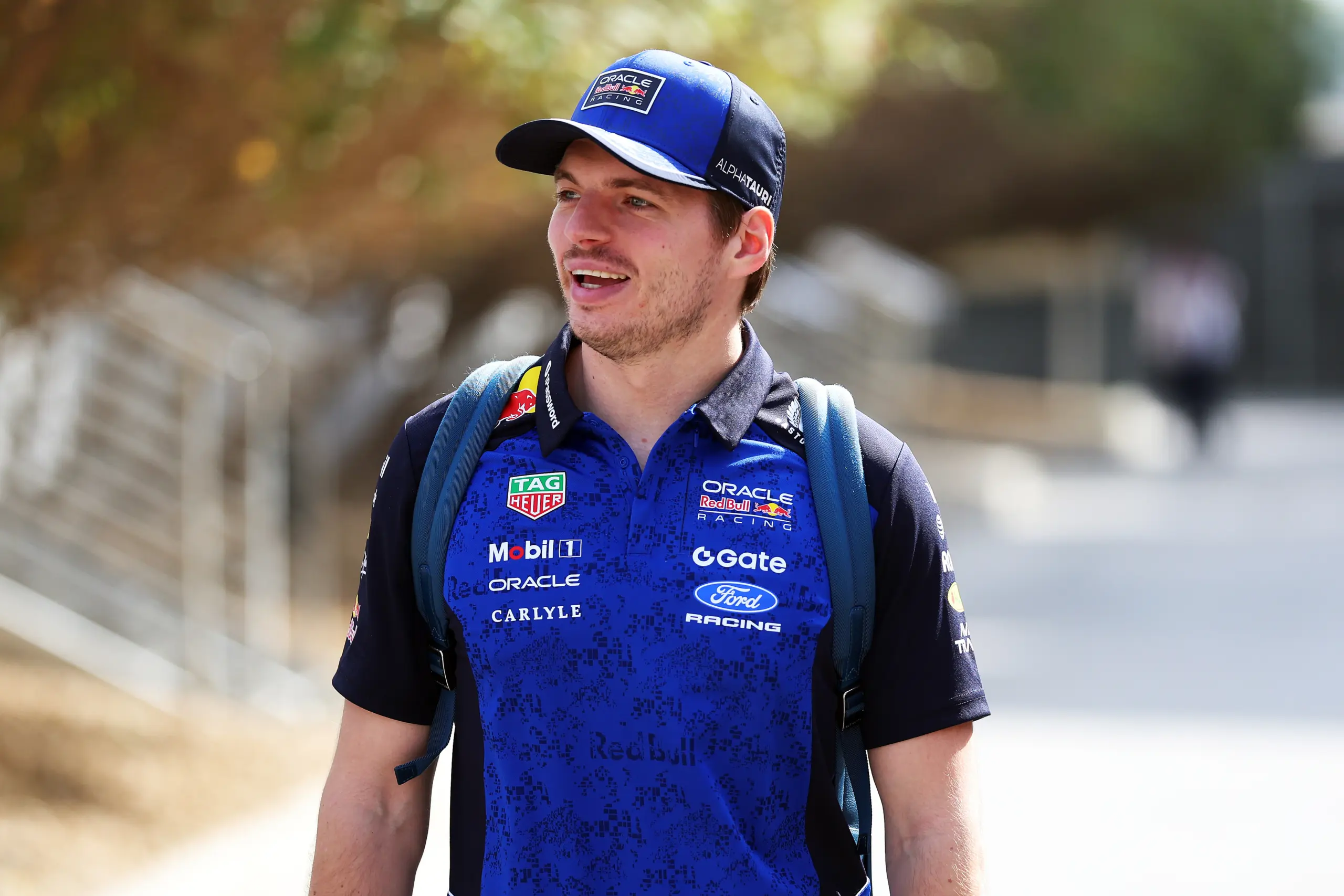
Max Verstappen’s Shocking Rejection of 2026 F1 Simulator: “It’s Anti-Racing!”
In a stunning revelation that could send shockwaves through the world of Formula 1, reigning champion Max Verstappen has openly criticized the new 2026 regulations, declaring them “anti-racing” and likening them to “Formula E on steroids.” This bold statement was made during a recent media session following the second day of testing in Bahrain, where the four-time world champion didn’t hold back his disdain for the upcoming changes.
Verstappen’s frustration reached new heights when he admitted that he found the new machinery so dreadful that he flatly refused to continue testing the 2026 car in the simulator last year. “The feeling in real life is the same as in the simulator,” Verstappen explained, noting that despite the simulator’s accuracy, he felt no compulsion to spend time on the abhorrent new model. “Last year, at one point, I deliberately said that I didn’t want to drive it in the simulator any more. It felt so bad compared to last year.”
When pressed on whether he ever disliked last year’s ground-effect cars, Verstappen responded candidly: “Yes, but that was still ten times better than this.” His blunt assessment underscores a growing discontent within the F1 community regarding the direction the sport is heading.
The Dutch driver went on to outline several critical flaws with the new rules, particularly pointing out the inefficiency on straights. “On this track, it’s not too bad, but we’re also going to circuits where it will be a real drama. The entire feeling in the car in terms of grip and how you have to drive it – it’s just not fun.” Verstappen’s words resonate with concerns that the sport is losing its edge, favoring a tactical approach over raw speed and racing instincts.
In a jaw-dropping twist, Verstappen noted that drivers may need to adjust their racing strategies completely. “You might gain two tenths in a corner, but because you recover less energy, drivers can lose three tenths on the straights,” he lamented. “That just makes no sense at all, right? Sorry, but that belongs in Formula E.” This stark comparison raises questions about the future of F1 and whether the new rules align with fans’ expectations for thrilling, high-speed competition.
As Verstappen reflects on his career, he reveals a surprising indifference toward his future in the sport. “Once you’ve already won and achieved everything, then it’s not really necessary [to stay around] any more. There are a lot of other nice things you can do.” His casual mention of pursuing other racing avenues, including endurance and GT3 racing, hints at a potential shift in priorities if the current trajectory of F1 continues.
“Look, we’re still racing in Formula 1 and that’s great,” he added, but the implications of his words are clear: the allure of the sport may be fading for those who have already conquered it. Verstappen’s playful suggestion that he could simply “race somewhere else” and enjoy a barbecue adds a layer of levity to an otherwise serious declaration of his discontent.
As the 2026 regulations loom, Verstappen’s candid comments mark him as the first driver to vocally critique the changes. While he acknowledges that some may be displeased with his honesty, he stands firm: “I didn’t make the rules, so they shouldn’t be angry with me for something I didn’t create.”
With the 2026 season on the horizon, Verstappen’s revelations raise urgent questions about the future of Formula 1. Will the sport heed the warnings of its stars, or are we witnessing the gradual erosion of what made F1 the pinnacle of motorsport? As fans brace for the impact of these changes, one thing is clear: the racing world is watching, and Verstappen’s next move could redefine the future of the sport.