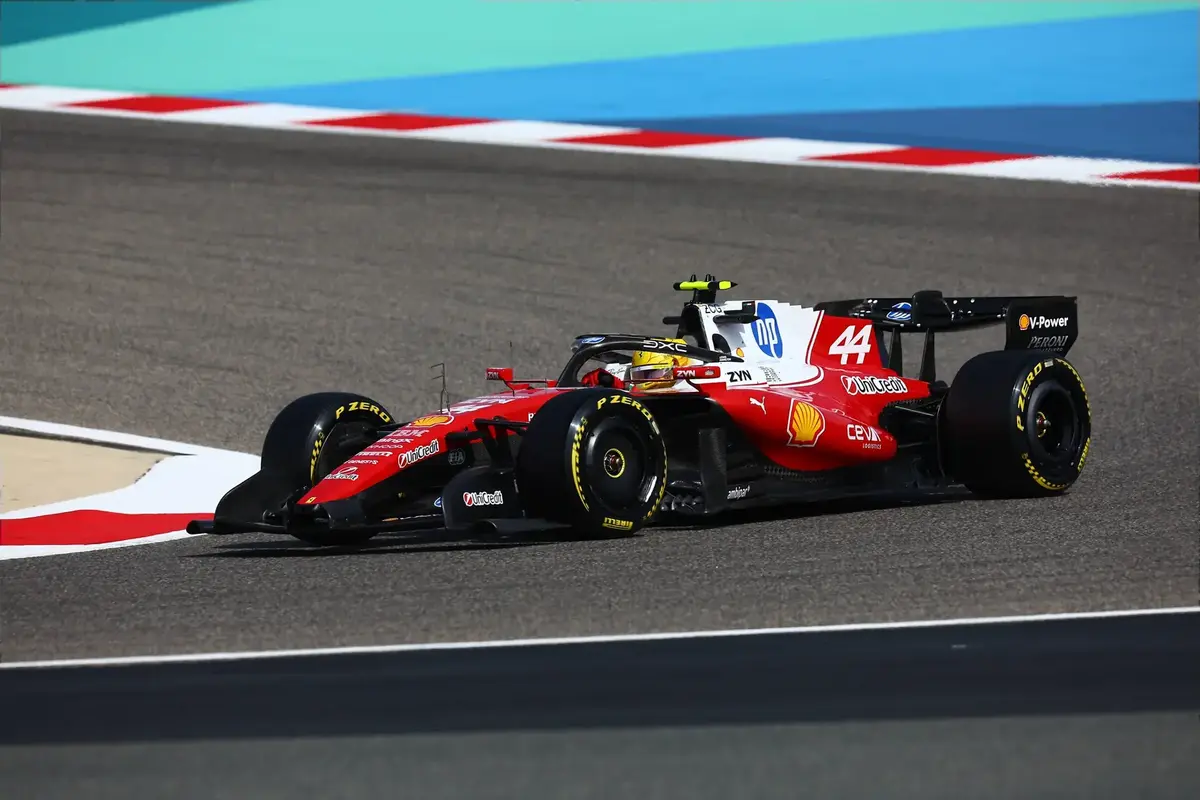
Lewis Hamilton Raises Alarm Over GP2 Comparisons as Adrian Newey Drops Bombshell on Mercedes' Engine Controversy
In a stunning revelation that is sure to send shockwaves through the Formula 1 community, seven-time world champion Lewis Hamilton has expressed serious concerns regarding the performance of the latest F1 vehicles, suggesting they “feel” slower than their GP2 counterparts. While Hamilton acknowledges that the current generation of ground effects cars is “a more fun car to drive” than its predecessors, his candid critique raises pivotal questions about the competitive landscape of Formula 1.
Meanwhile, the legendary Adrian Newey, renowned for his engineering prowess, has openly admitted to a potential bias when assessing the controversial engine innovations employed by Mercedes. In a bold statement, Newey conceded, “I'm biased,” as he weighed in on the heated debate surrounding Mercedes' alleged ability to run an astonishing 18:1 compression ratio while the engine is hot and operational—this, despite the regulations explicitly capping it at 16:1.
The implications of this revelation are monumental. Williams team principal James Vowles has issued a stark warning, cautioning the FIA against hastily altering power unit regulations in response to Mercedes' clever engineering trick. Vowles argues that a sudden shift could result in “punishing” consequences for Mercedes and its engine partners, including Williams, McLaren, and Alpine, who might unjustly bear the brunt of the regulatory fallout stemming from High Performance Powertrains' innovative interpretations of the new power unit regulations.
In the midst of these controversies, the F1 testing scene is heating up. Lando Norris has emerged as a frontrunner after clocking the fastest time on the opening day of pre-season testing in Bahrain. But not to be overshadowed, Max Verstappen made headlines with a decisive statement about Red Bull's ambitions, putting the entire paddock on notice.
However, it wasn't all smooth sailing for Red Bull, which encountered a serious issue with its new power unit during testing, leading to rookie Arvid Lindblad being sidelined in the afternoon session. Meanwhile, Mercedes faced its own struggles, with George Russell acknowledging a “difficult” start to the Bahrain test, following a promising performance during the pre-season shakedown in Barcelona.
As the F1 world holds its breath, one thing is abundantly clear: the stakes have never been higher. The intricacies of engine regulations, the competitive edge of groundbreaking technology, and the raw talent of drivers like Hamilton and Norris set the stage for a breathtaking season ahead. With the specter of potential regulatory crackdowns looming, the F1 paddock is on the brink of a seismic shift that could redefine the landscape of motor racing as we know it.