Bahrain Testing: Audi and Alpine Unleash Revolutionary Innovations in F1!
The Formula 1 pre-season testing in Bahrain has kicked off with a bang, revealing jaw-dropping technological advancements that could reshape the grid. As the engines roar to life, it's clear that there is no shortage of ingenuity on display, with Audi and Alpine stealing the spotlight with their groundbreaking innovations.
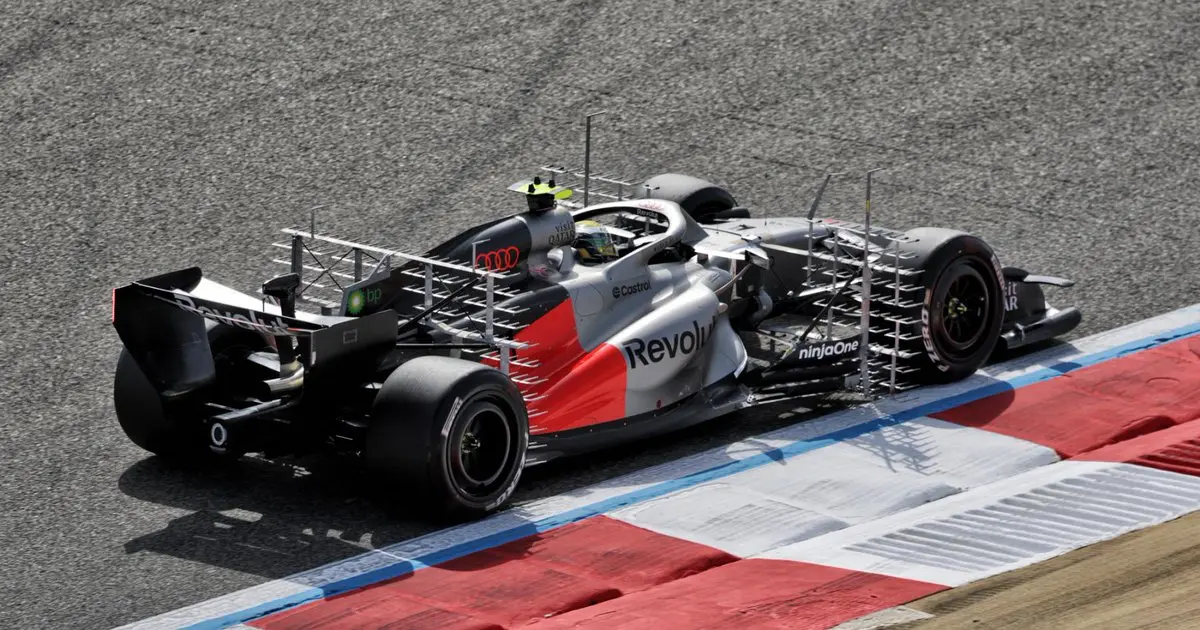
Leading the charge is Audi, which has unveiled a sidepod design so radical it harkens back to the legendary Ferrari 640 from 37 years ago! This revolutionary sidepod configuration features vertical inlets that completely upend traditional aerodynamic strategies. Instead of the expected undercut design, Audi is embracing a bold new philosophy that increases the frontal area of the sidepods, intentionally directing turbulent air outward. This daring approach demands a complete rethinking of rear aerodynamic management, ushering in an era of complexity and sophistication in airflow management that could redefine performance on the track.
What’s more, Audi's method for aerodynamic measurement starkly contrasts with its competitors. While other teams have deployed significant aerodynamic rakes, Audi has ingeniously positioned theirs in front of the rear wheels. This strategic choice highlights the intricate challenges they face with their unconventional airflow management tactics, further emphasizing their commitment to innovation.
But Audi isn't the only team making waves in Bahrain. The Aston Martin AMR26 is turning heads with its eye-catching air vent located on the engine cover. This design not only showcases the car's remarkably compact rear but also its sleek and sinuous profile, engineered to optimize airflow over crucial areas of the vehicle.
Alpine, on the other hand, has made significant strides in rear-flap operation, particularly in their aerodynamic active overtake mode. Their unique mechanism features a pivot point that is ingeniously located at the center of the two movable elements, diverging from the traditional design anchored at the trailing edge. This innovative setup effectively lowers the trailing edge of the final flap, rather than lifting the leading edge of the first flap. This design is rooted in a strategic philosophy centered around enhancing air extraction from the diffuser during straight-line conditions, especially under diffuser stall situations.
In a captivating twist, the world of Formula 1 engines is also under scrutiny, as whispers of a Mercedes engine theory circulate throughout the paddock. While on paper, all engines adhere to the same regulations, a clever interpretation of compression ratios during FIA inspections may yield significant advantages once the engines hit optimal operating temperature. This potential game-changer raises questions about legality and the ever-elusive grey areas of F1 regulations. However, one thing is certain: in the cutthroat world of Formula 1, no advantage lasts forever, and every loophole will eventually be closed.
As the Bahrain test session progresses, the tension mounts and the stakes rise. With Audi and Alpine pushing the boundaries of technology, the 2023 Formula 1 season promises to be a thrilling spectacle filled with innovation, competition, and perhaps, a few surprises along the way! Buckle up, because this F1 season is set to be one for the history books!