Title: Unveiling the Secrets: What Mercedes’ and Ferrari’s Revolutionary Diffuser Holes Mean for F1’s Future
As the engines roar to life in the thrilling world of Formula 1, an air of intrigue surrounds the latest innovations from powerhouse teams Mercedes and Ferrari. With the dawn of the 2026 regulations, fans and experts alike are buzzing with questions about the striking holes appearing in the diffusers of these iconic machines. What do these openings signify in the relentless pursuit of speed and downforce?
Caution is paramount when dissecting the unveiling of new F1 cars. Historical tactics reveal that teams often play a cat-and-mouse game with their designs during launches, as seen when Red Bull showcased multiple sidepod variations only to surprise everyone with a completely different look during test days in Bahrain. This year, however, the stakes are higher, and the early runs of the 2026 machinery have unveiled a treasure trove of innovative engineering.
The return of the higher rake philosophy, reminiscent of pre-2021 designs, coupled with a shift back to pushrod front suspension, has set the stage for thrilling developments. But the real game-changer? Ferrari’s groundbreaking implementation of active aerodynamics, a first in competitive racing.
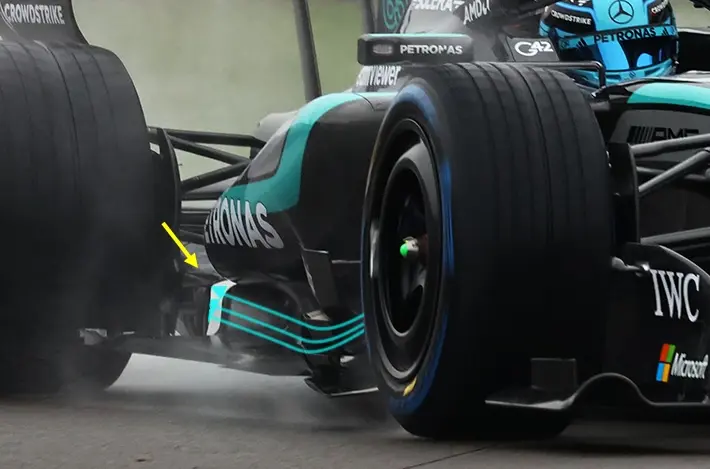
Mercedes’ recent shakedown has spotlighted a captivating feature: an eye-catching opening in the diffuser that has sparked speculation. This design echoes the ‘mouse holes’ seen on cars until 2022, but this time, the opening is significantly larger and more audacious. Just a day later, Ferrari unveiled a similar design at Fiorano, igniting conversations about airflow manipulation and aerodynamic efficiency.
So, what’s the science behind these diffuser holes? As the 2026 regulations lead to simpler floors that generate considerably less downforce than their ground-effect predecessors, teams are on a quest to maximize the efficiency of their diffusers. The key lies in manipulating airflow; the larger openings are strategically designed to channel air from the undercut sidepods directly towards the diffuser. The faster and more directed the airflow, the greater the potential for downforce generation.
Interestingly, this innovation diverges from past practices where sealing the diffuser was vital for maximizing pressure differences and optimizing airflow beneath the car. The current regulations have flattened floor designs, resulting in weaker airflow that compels teams to seek external enhancements to bolster the diffuser’s performance. The introduction of a slotted diffuser allows the sidepod airflow to accelerate towards the diffuser ramp, marking a significant shift in aerodynamic strategy.
Moreover, the resurgence of barge boards—akin to those from yesteryear—adds another layer of complexity. These elements, now designed as ‘inwash devices,’ aim to mitigate the impact of dirty air from the front tires, thus enhancing rear car performance. As teams strive to manage this disturbed airflow, the dynamic interplay between bodywork and diffuser becomes crucial.
Mercedes and Ferrari’s cutting-edge approaches have not gone unnoticed. Alpine’s technical director, David Sanchez, characterized the developments as “interesting, but not a total surprise,” acknowledging that significant evolution in diffuser technology is imminent. “The interaction between the bodywork, the diffuser, and the rear corner will be a continuous work in progress,” he noted, hinting at the fierce competition that lies ahead.
The 2026 F1 season is shaping up to be a battleground of ingenuity, with teams scrambling to master the art of airflow manipulation and diffuser efficiency. As we stand on the brink of a new era, the world watches with bated breath—who will harness these aerodynamic advancements to dominate the track? The answer could redefine the landscape of Formula 1 for years to come.