Mercedes on the Brink of a Comeback: Will 2026 Mark the Return of the Silver Arrows?
As the countdown to the 2026 Formula 1 season begins, all eyes are glued to Mercedes, a titan of the sport that has faced a tumultuous ride through the ground effect era. After a period marred by inconsistency—where one race they seemed untouchable and the next, they struggled just to scrape into Q3—there’s a palpable sense of urgency within the team. Is this the year they reclaim their throne, or will they continue to flounder?
Gary Anderson, a revered voice in F1 analysis, weighs in on the critical crossroads facing the Mercedes team. He warns that if the engineering squad fails to pinpoint the root of their recent struggles—whether it be issues with their wind tunnel, simulation tools, or the manner in which data is synthesized—they risk repeating the same mistakes in 2026. Anderson’s insights suggest that the tools at their disposal are key to unlocking the car’s potential. Without a clear understanding of their past missteps, the team may find itself adrift once again.
However, there’s reason for cautious optimism. The new regulations for 2026 are designed to lessen the emphasis on ground effect, potentially alleviating some of the aerodynamic challenges that have plagued the team. This shift could provide Mercedes the breathing room it desperately needs to recalibrate and innovate.
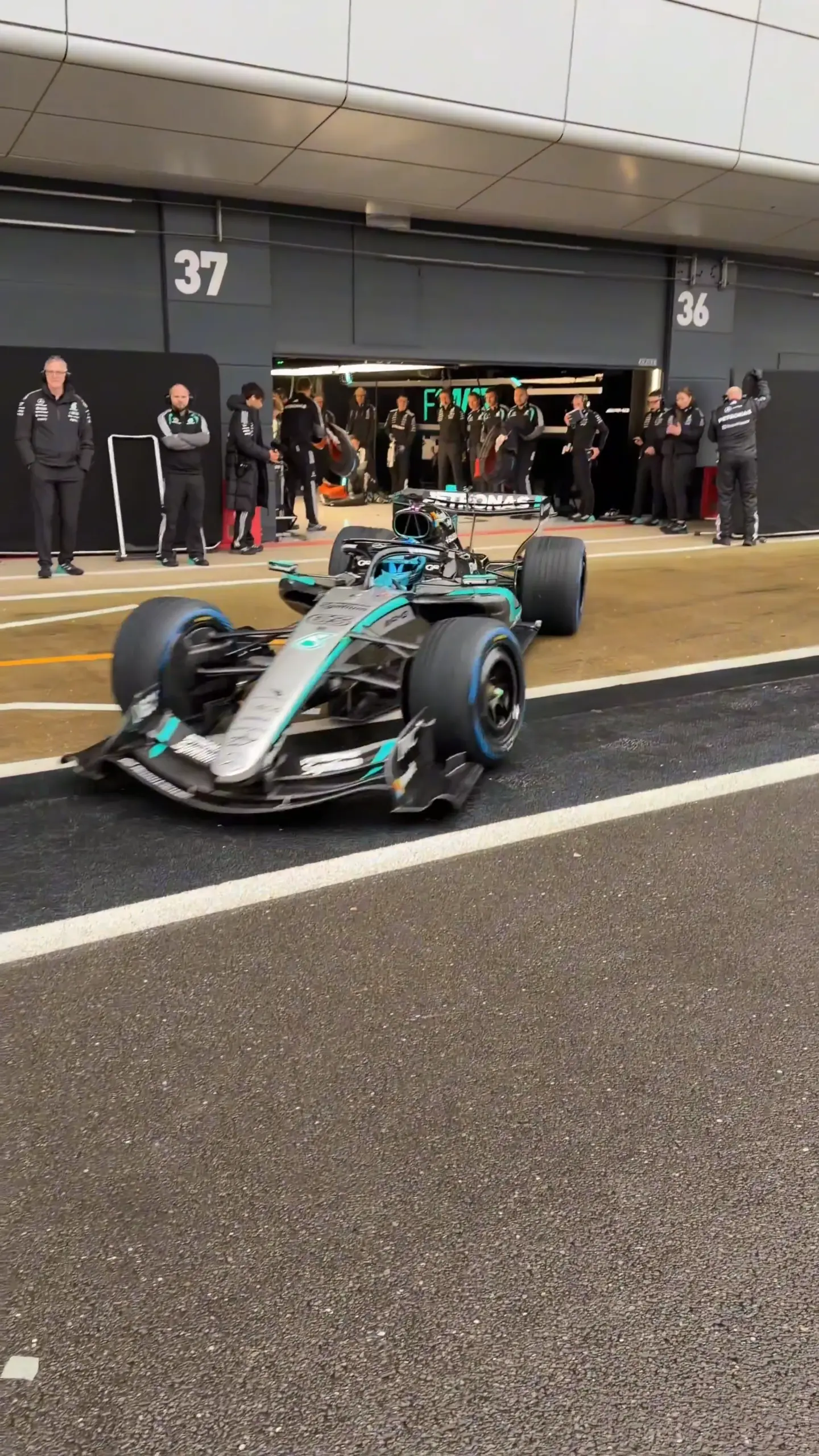
The initial glimpses of the 2026 Mercedes have sparked intrigue. Early renders suggest a cohesive design, but as ever in F1, the reality of the car can diverge significantly from what’s portrayed in digital mock-ups. The shakedown run unveiled a vehicle that, while clean and streamlined, may still carry echoes of past struggles. Yet, Anderson asserts that sticking with the tried-and-true pushrod front suspension design is a wise choice, as it allows for optimized packaging and performance—a nod to the importance of experience in development.
Aerodynamically, the new car appears to embrace a three-element front wing detached from the nose, a design Anderson favors for its ability to enhance airflow management. The shakedown images revealed a high radiator inlet and a cleverly designed sidepod undercut—both crucial for channeling airflow effectively and bolstering performance. However, Anderson raises eyebrows at the presence of a vertical fin on the front wing endplates, questioning its purpose and whether it might inadvertently create outwash, complicating overtaking maneuvers for competitors.
The rear of the car tells a story of its own. While the anti-lift characteristics of the rear suspension have been retained, concerns linger about driver feedback and handling. The intricate balance of load distribution during braking, now compounded by enhanced electrical energy recovery, could lead to a distinct driving experience compared to previous seasons.
As the technical landscape evolves, the return of bargeboards—a staple of the pre-ground-effect era—hints at a strategic shift in how Mercedes intends to manage airflow around the tires and under the car. This is coupled with a streamlined design that eschews unnecessary bulk for optimal aerodynamic efficiency.
Rumors abound regarding the power unit, with whispers of a “rocketship” engine that could propel Mercedes back into contention. With formidable drivers like George Russell and Kimi Antonelli poised to harness this new machinery, the stakes are higher than ever. Will Mercedes reclaim the supremacy it enjoyed before 2022?
As the 2026 season approaches, the question remains: has Mercedes learned from its past, or will history repeat itself? The answer lies in the innovation and execution that unfolds on the track. The world is watching, and the anticipation is electric. Buckle up; the next chapter in Mercedes’ storied legacy is about to be written.