Haas Racing Faces Power Challenge Ahead of Revolutionary F1 2026 Season
In a bold proclamation that could define the upcoming racing season, Ayao Komatsu, the head of Haas Racing, has underscored a monumental focus on mastering the complexities of new power units as Formula 1 gears up for its groundbreaking 2026 regulations. With the stakes higher than ever, Komatsu believes that the team’s success hinges on their ability to effectively manage the intricacies of these new power units during pre-season testing.
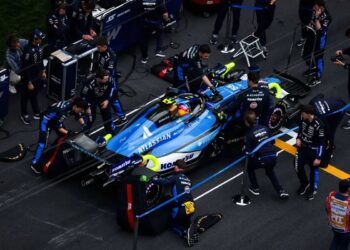
As Haas unveils its striking VF-26, the team prepares for a seismic shift in how F1 cars will operate, particularly with a near 50/50 split between electrification and traditional internal combustion engines. This year marks not just a change in chassis design but a complete overhaul of the engine formula, emphasizing sustainable fuels and advanced energy management techniques. Komatsu insists that navigating these changes will be critical, stating, “Before we go racing, and even testing, we need to get on top of energy management, that’s the huge one.”
With only nine days of testing before the first race in Australia, the pressure is mounting. The initial testing phase runs from January 26th to 30th, where all 11 teams will scramble to adapt their strategies to these revolutionary changes. Unlike in previous years, where aerodynamic efficiency was the key differentiator, the 2026 season promises to reshape the competitive landscape. Komatsu added, “If we have to change direction or look at different concepts, again, we’ve got to do that promptly.”
The clock is ticking as power unit manufacturers are due to submit their homologation dossiers to the FIA by March 1st. This tight deadline leaves little room for error, and Haas must ensure that their understanding of energy management keeps pace with the innovations being introduced. Komatsu expressed his concerns, stating, “I don’t know if we all understand the full extent of the challenge because we don’t know what we don’t know.”
Haas’ technical director, Andrea de Zordo, echoed these sentiments, highlighting the shifting balance between aerodynamic performance and energy management. “Initially with the PU, as it’s all so new, there is a lot more to lose if you don’t do well,” he explained. The urgency to harness energy recovery techniques will be a central focus as drivers Esteban Ocon and Ollie Bearman hit the simulators. Komatsu confirmed, “We’re definitely in the homework phase of prepping all these scenarios,” emphasizing the necessity of thorough preparation.
As the racing world watches with bated breath, Haas Racing stands at a pivotal moment, tasked with mastering the art of energy utilization while simultaneously adapting to a radically altered racing environment. The upcoming tests in Barcelona will serve as a proving ground for the VF-26, and with the spotlight shining brightly on the team, the pressure to perform has never been greater.
The question looms: Will Haas Racing rise to the occasion and navigate the turbulent waters of F1’s new era, or will they falter under the weight of these unprecedented challenges? The answers will start to unfold in the coming weeks as the teams prepare to unleash their innovations on the track. Buckle up; the 2026 Formula 1 season promises to be a thrilling ride!