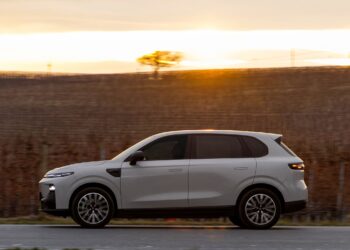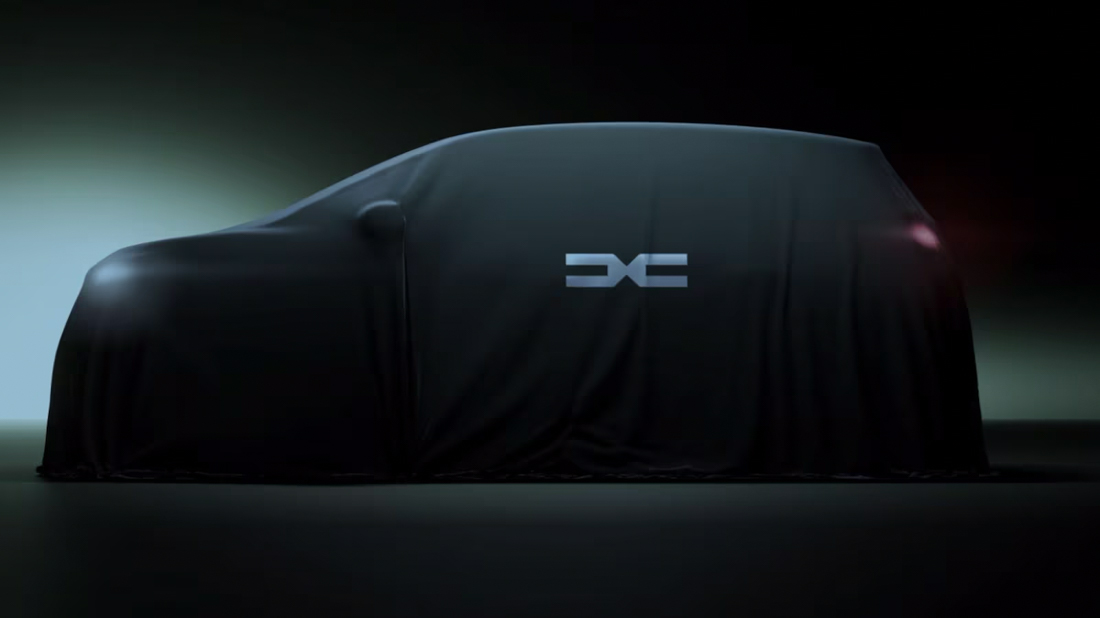
Dacia has a second fully electric model ready for launch, which will be part of the offering from the Romanian brand of the Renault Group alongside the Spring. It is anticipated by a first image that allows us to perceive the shapes of a city car, namely the silhouette, which is based on the same platform as the Renault Twingo E-Tech Electric (offered in Portugal starting at €19,490), and therefore very similar dimensions are expected to its “right cousin” from Gaul, which measures 3789 mm in length and 2493 mm between axles.
In the current Spring, now in its second generation, two engine options are offered with 70 hp or 100 hp, both powered by a lithium-ion battery with a capacity of 24.3 kWh – Dacia, in terms of combined range, in the WLTP cycle, announces 225 km in the first case (on sale in Portugal starting at €16,900), and 228 km in the second (available from €18,990 in the Portuguese market). Renault, on the other hand, uses an 82 hp engine and a battery with a capacity of 27.5 kWh, announcing a range of 263 km.
With the production of its second electric city car, which will only start after its respective presentation scheduled for the second quarter of this year, Dacia aims to meet the CO2 emissions limit for the average fleet sold in Europe. The model is planned for commercial launch in 2026, and according to a source from the brand, it will be offered at prices starting from €18,000.
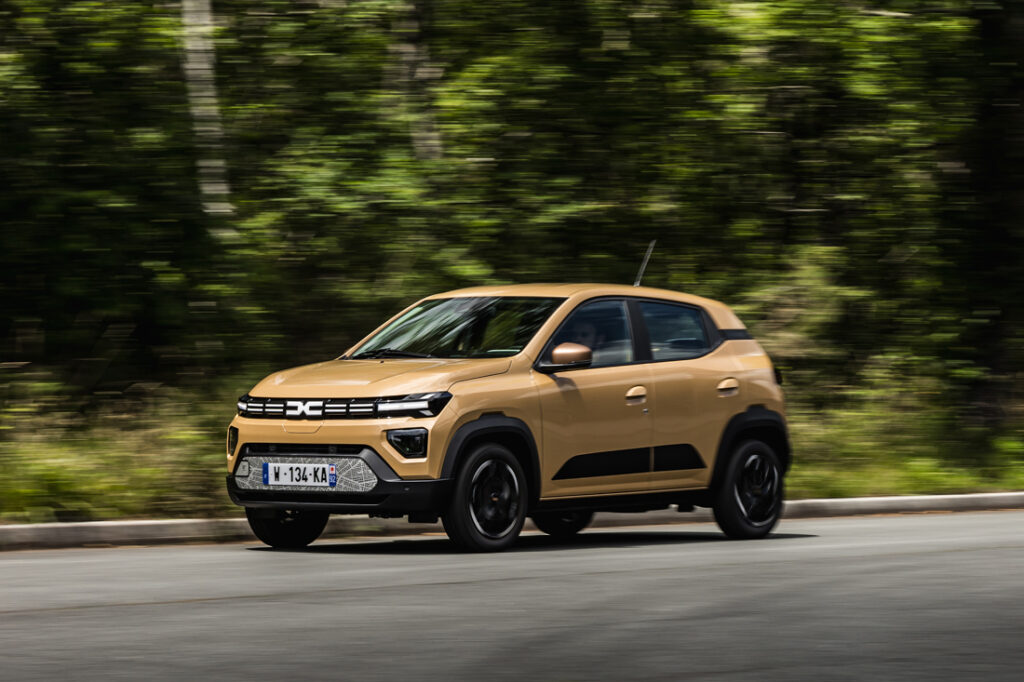
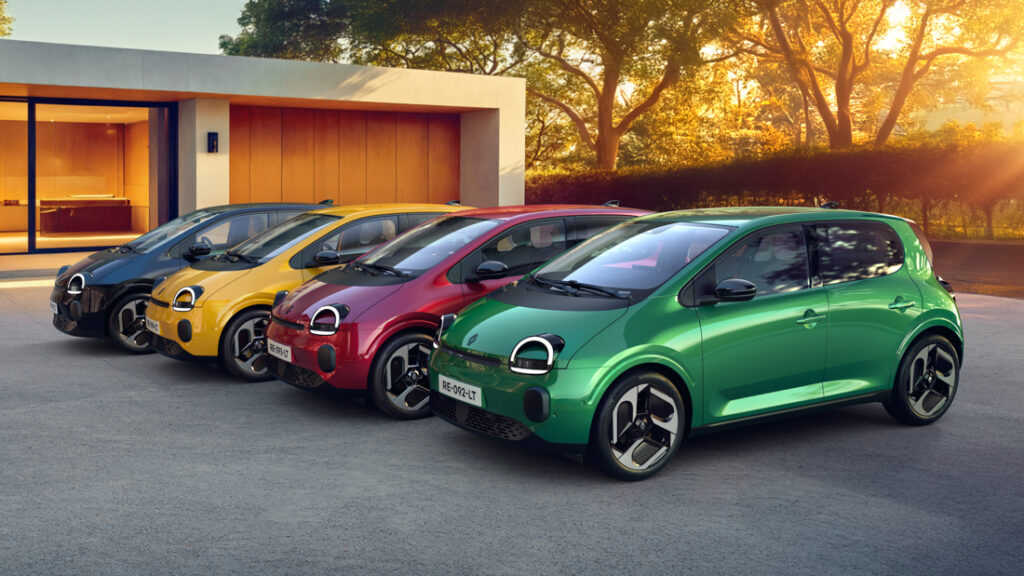
The Spring is manufactured by Renault Dongfeng, in Wuhan, China, while the new electric Dacia will come off the same assembly lines as the Twing E-Tech Electric (Novo Mesto, Slovenia). And, thus, with the approval by the European Union of the creation of the M1E automobile category, the latter will be covered by the benefits proposed by the European Commission, so that a new generation of affordable electric cars can be manufactured on the Old Continent.
“Our ambition is to propose more cars with this technology in the segments where electrification is advancing very rapidly,” confirmed Frank Marotte, sales director of Dacia. “Theoretically, the Spring will be cheaper, but the price always depends on the incentives available in each market, and it may be the case that the new model could even cost less in some countries,” he emphasized.
The same official also assured that the differentiation between the two models will be ensured by design, not by technology. “We want to have two very competitive products and offer them at different prices”. The Spring, it should be noted, was recently updated and received a new battery with lithium iron phosphate (LFP) cells and more powerful motors.
Dacia has many successes in selling economical and small cars equipped with internal combustion engines, particularly with the Sandero, the utility vehicle that ended 2025 at the top of the list of the best-selling new cars in Europe. However, the brand has exceeded CO2 limits and will also be above the maximum in 2026, according to Frank Marotte. In 2027, however, in the first full year of sales of the Twingo derivative, mission accomplished. Until then, the Renault Group will be obliged to bear the emission deficit of its Romanian subsidiary, according to Automotive News Europe.