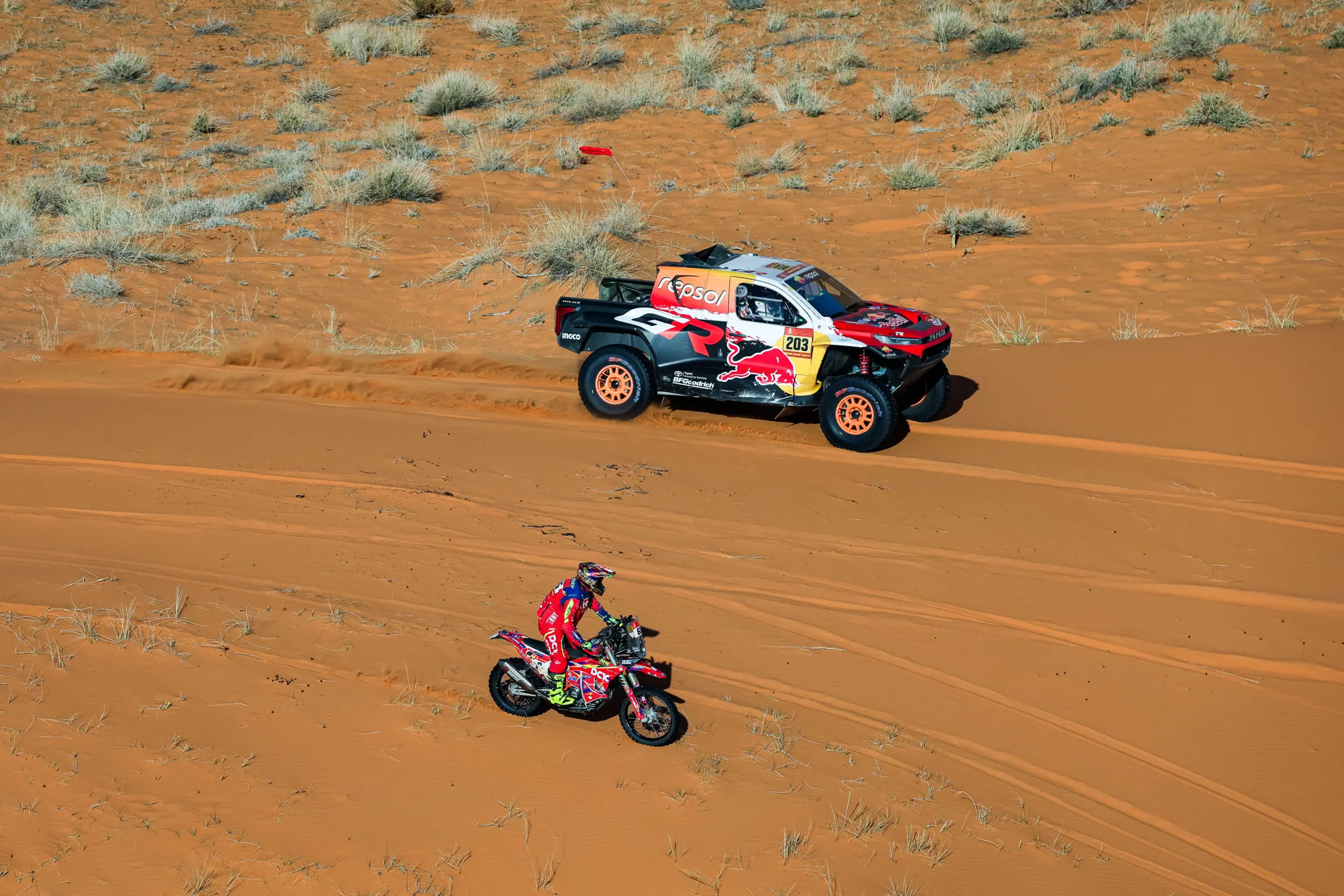
Dakar Rally Chaos: Tyre Troubles Turn 2026 Race into a Puncture Lottery!
The 2026 Dakar Rally in Saudi Arabia has quickly devolved into a gripping saga of tyre calamities, leaving competitors reeling and spectators on the edge of their seats. The first week was marred by a staggering number of tyre failures, with nearly every top-tier team grappling with the issue. Drivers have reported multiple punctures in a single day, prompting emergency pit stops just to keep their vehicles in the race. It’s no wonder some participants are dubbing this year’s event a “lottery.”
With the competition tighter than ever, the eventual champion could simply be the one lucky enough to cross the finish line with the fewest punctures. “Without the pit stops, it would have been a disaster,” lamented Joan Navarro, head engineer at M-Sport Ford, expressing the frustration echoing through the bivouac. “We had over 15 punctures among seven cars in just one stage! That’s outrageous!”
The root of the problem? The controversial new tyres from manufacturer BFGoodrich. Navarro didn’t hold back in his criticism: “This tyre isn’t validated. We normally test our components over more than 5,000 kilometers, but this one was introduced at the last minute during the Rallye du Maroc. It’s unacceptable!” The new tyre was designed to combat previous years’ tread damage but, according to Navarro, it has only shifted the problem. “We’re now seeing more sidewall damage instead. It’s just as many punctures, but in different spots.”
But the tyres aren’t the sole villains in this unfolding drama. The rugged Saudi terrain, particularly the rocky sections in the north, has become a formidable adversary for the competitors. “This landscape is nothing like what we encounter in Europe,” noted Dacia team principal Tiphanie Isnard. “The terrain is incredibly tough on tyres, and it’s all about tyre management.” While Isnard acknowledges the challenges, she remains proud of her team’s resilience, stating, “They reinforced the tread, which is what we asked for.”
Toyota team manager Jan Verhaegen shifted the blame away from BFGoodrich, attributing the high incidence of punctures to the unique type of sharp stones strewn across the course. “We’re dealing with razor-sharp, almost ceramic-like rocks,” he explained. “The terrain is the primary issue, not the tyre design.” However, he conceded that the sidewall area may still need reinforcement, indicating a learning curve for future events.
The rally’s director, David Castera, holds the reins on route decisions, and with the words “luck” and “lottery” circulating among teams, it’s clear that strategy is being overshadowed by sheer chance. “Drivers often don’t realize they have a puncture until it’s too late,” Ford team boss Matthew Wilson pointed out. “This has turned into a gamble, and it’s frustrating for everyone who invests so much to compete.”
As the rally progresses, competitors are pushing their limits, turning this grueling event into a high-stakes sprint race. “Every day, they’re going all out,” said X-raid boss Sven Quandt, highlighting the risks involved. “One car might dodge a stone, but the next could hit it and face serious damage. It’s all about luck!”
With the second week on the horizon after a well-deserved rest day in Riyadh, the path forward leads south toward Wadi ad-Dawasir and Bisha before returning north. The question on everyone’s lips: how will the tyre issues impact the overall results as the race continues? One thing is for sure—the drama of the Dakar Rally is only just beginning!