
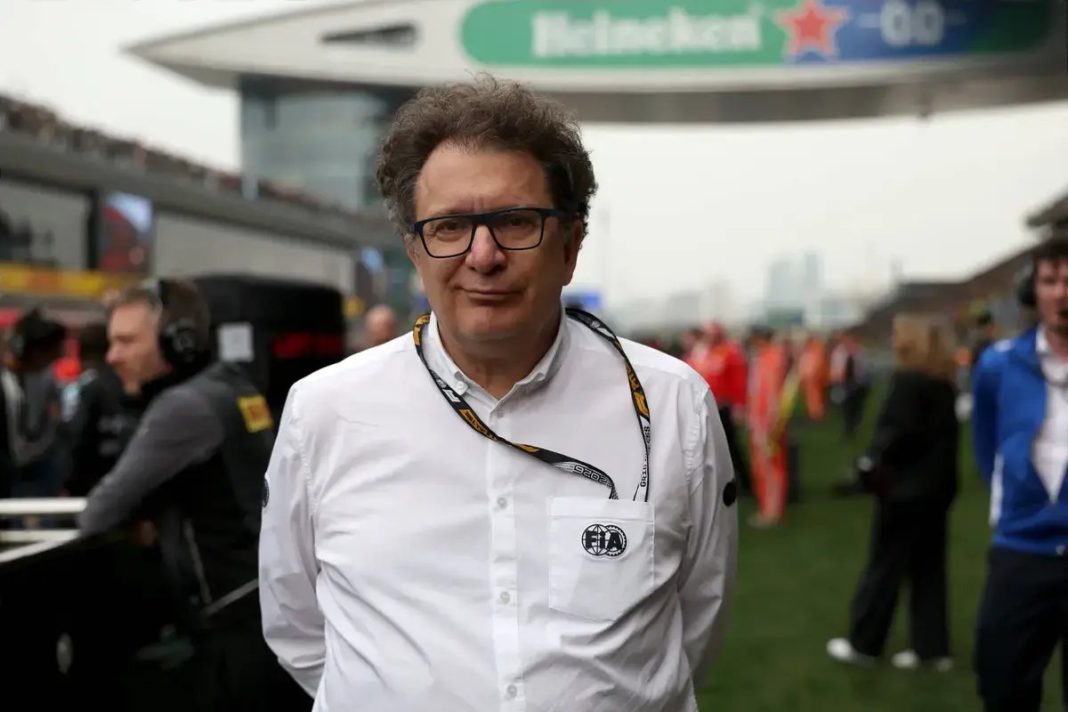

F1 Revolution: Nikolas Tombazis Unveils Game-Changing Plans for 2027!
In a bold and revealing interview, Nikolas Tombazis, the technical director of the FIA, has set the motorsport world ablaze with his announcement regarding sweeping changes to Formula 1 regulations slated for 2027. The spotlight is on eliminating the controversial “yo-yo” effect that has plagued straightaways, a byproduct of the divisive hybrid regulations introduced in 2026.
The FIA is ready to shake things up by increasing the power of the internal combustion engine (ICE) by an impressive 50 kW, while simultaneously decreasing the electric power output. This dramatic shift signals an end to the current “50-50” power distribution that has defined the latest generation of F1 engines. Tombazis stressed the importance of these changes, explaining that they come in response to intense scrutiny and criticism of the existing motor regulations.
“We recognize that the original allocation could lead to early battery depletion under certain conditions,” Tombazis stated emphatically in his discussion with Auto Motor und Sport. The FIA's strategic move to enhance the combustion engine's capacity aims to create a more stable energy management platform for drivers, allowing them to unleash their full potential on the track.
“Our objective is not to dilute the hybrid concept. We want to ensure that drivers can race aggressively on the straights without resorting to defensive energy-saving tactics,” Tombazis declared. This sentiment echoes the frustrations of fans and drivers alike, who have witnessed moments where competitors had to throttle back mid-straight to conserve energy for subsequent laps.
As for the timeline of these pivotal changes, Tombazis made it clear that the 2026 designs are largely locked in, leaving little room for adjustments. The planned enhancements for 2027 will provide manufacturers with ample time to adapt and fine-tune their designs without the pressure of an immediate overhaul. “It’s an evolutionary refinement rather than a radical revision,” he noted, emphasizing the methodical approach the FIA is taking.
With these groundbreaking plans set in motion, the future of Formula 1 is poised for an exhilarating transformation. As the 2027 season approaches, fans can expect a thrilling return to high-octane racing where drivers are equipped to push their limits without hesitation. This announcement is not just a technical adjustment; it’s a clarion call for a return to the unadulterated thrill of racing!
Stay tuned as the FIA and F1 teams prepare for a new era where speed reigns supreme and hybrid technology evolves without compromising the heart-pounding essence of motorsport!