
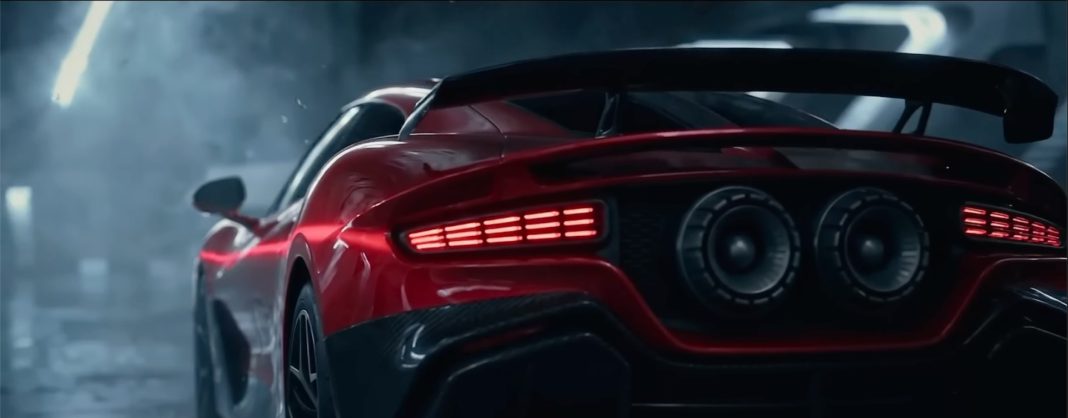

Imagine a five-seater car capable of reaching 100 km/h in just 0.9 seconds. This is not science fiction, it is not a computer-generated video, and it is not the latest empty promise from Silicon Valley. It is the Dreame Nebula NEXT 01 JET Edition, and it was presented live in San Francisco at the end of April 2026. What makes this story even more extraordinary is the fact that the company behind this machine is the same one that, just a few years ago, manufactured robotic vacuum cleaners and hair dryers.
Dreame Technology chose the stage of DREAME NEXT, the largest international event in the company’s history, to launch what could be the boldest statement in the automotive industry in a generation. The special guest for the presentation was Sebastian Thrun, a professor at Stanford University, widely regarded as the father of modern autonomous vehicles, founder of Google X Lab, Udacity, and Kitty Hawk, who attended the event and did not hold back on his words. “In my entire life, I have never seen a product announcement as exciting as this,” Thrun declared before the audience gathered in California.
The central point of this entire story is a propulsion system unlike anything seen in a passenger vehicle. The Nebula NEXT 01 JET Edition is equipped with a dual solid fuel booster system developed in-house by Dreame, capable of responding in 150 milliseconds and generating a maximum thrust of 100 kilonewtons. The practical result of this engineering feat? Zero to 100 km/h in 0.9 seconds, a number that places this concept above any existing production car on the planet. To put it in context, the current holder of the electric acceleration record is an ultra-lightweight university prototype that weighs just over 130 kilograms and has no roof. The Dreame has five seats and a luxury fastback silhouette.
But the rocket engine is just the most spectacular part of a vehicle that goes far beyond mere showmanship. The base electric platform of the Nebula NEXT 01 develops 1,876 horsepower in standard configuration, with the JET version reaching approximately 2,000 horsepower. Four internally mounted electric motors drive all four wheels with single-speed transmission. The torque control is fine enough to allow parallel parking maneuvers without any forward movement. The body, sized similarly to a BMW i7 in terms of length and wheelbase, sits 16.5 centimeters lower and is 9 centimeters wider, giving it a truly intimidating visual presence.
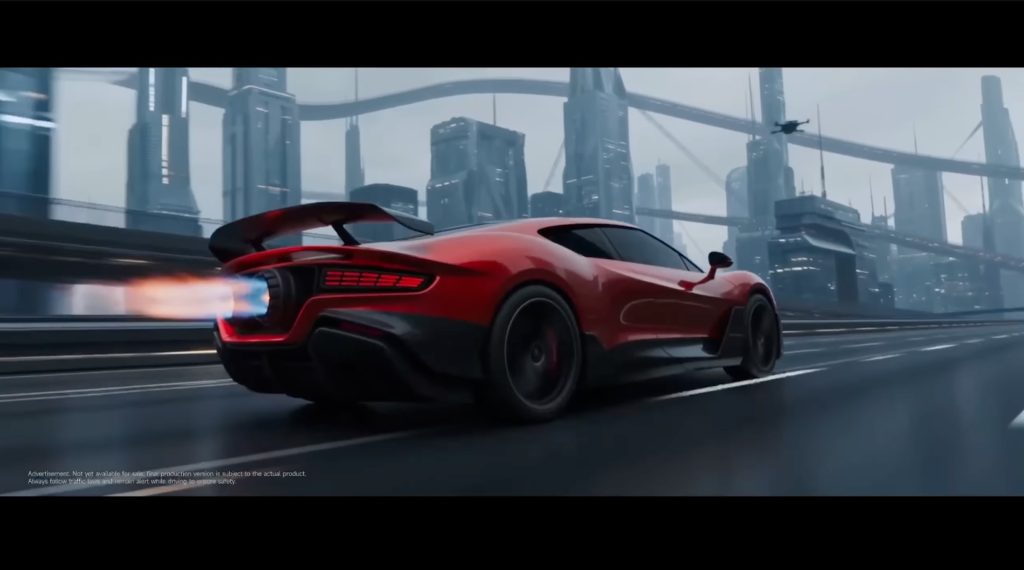
The perception technology is equally revolutionary. Dreame simultaneously introduced the DHX1, the first LiDAR unit developed under the Nebula Next program. In high-performance mode, this system represents a leap from point cloud perception to ultra-high-definition image sensing. While conventional LiDAR captures rough outlines of obstacles on the road, the DHX1 resolves fine details at great distances: potholes in the asphalt, loose stones, traffic signs, and subtle movements of pedestrians. The detection range reaches up to 600 meters in a straight line, being capable of identifying small animals at 270 meters, even in rain or total darkness.
On board, the vehicle incorporates an autonomous driving platform built on a third-generation architecture with a Visual Language Model and World Model. The offering includes an L2++ solution that supports complete urban navigation from parking lot to parking lot, and an L3+ solution built on a top-tier computing platform for fully driverless autonomous driving. The electromagnetic active suspension keeps the body stable during high-speed launches, while the wire-dry disc brakes reduce drag and energy consumption by more than half. If a tire bursts at high speed, the system automatically stabilizes the vehicle. The CTP 4.0 battery integration technology eliminates traditional transverse and longitudinal cross members from the battery pack to free up vertical space in the chassis. The solid-state sulfide cells achieve an energy density of over 450 Wh/kg, with the declared range around 550 kilometers in the Chinese testing cycle.
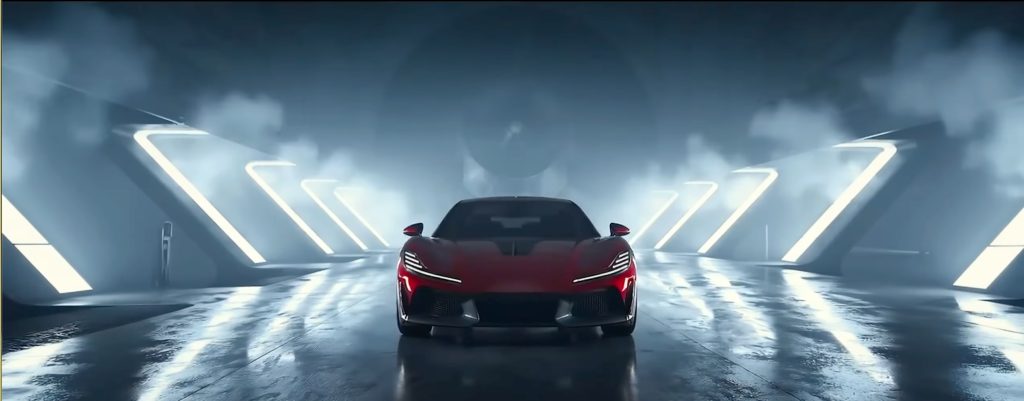
The story that serves as the backdrop to this launch is, in itself, worthy of a Hollywood script. The founder of Dreame, Yu Hao, and his team explored autonomous driving during the early days of the SkyAxis Program at Tsinghua University. These experiences planted the seeds of what would become the Nebula Next program. The company’s decision to enter the automotive sector was only made after accumulating sufficient depth in technology, organization, capital, and global capability. The same high-speed digital motor that Dreame spins at 200,000 revolutions per minute in its vacuum cleaners is now applied to propulsion and automotive perception systems. It is the same engineering philosophy, scaled up for a completely different mission.
Skepticism is legitimate. Dreame has not announced a production date for the JET Edition nor revealed any pricing. What the company has confirmed is its commitment to bringing the standard version of the Nebula NEXT 01 to market in the second half of 2027, with 1,900 horsepower, acceleration from zero to 100 km/h in 1.8 seconds, and four doors. It may not be the model with rockets, but it will still be one of the most powerful electric vehicles ever proposed to private customers. For a company that most of the world still associates with cordless vacuum cleaners, the scale of this ambition is, in itself, breathtaking.
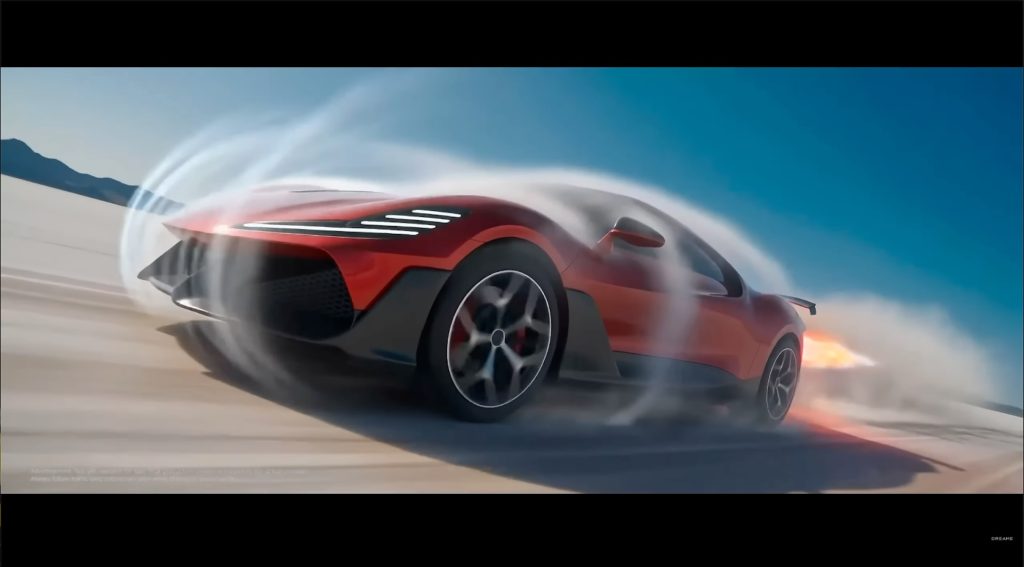
The DREAME NEXT event took place in San Francisco from April 27 to 30, 2026. Dreame Technology operates in over 120 countries and regions, has more than 6,500 physical stores, and serves over 42 million families worldwide. The company has registered more than 10,000 patents globally and holds over 3,000 granted patents, placing this automotive launch in the context of a company with decades of proven innovation behind it.