
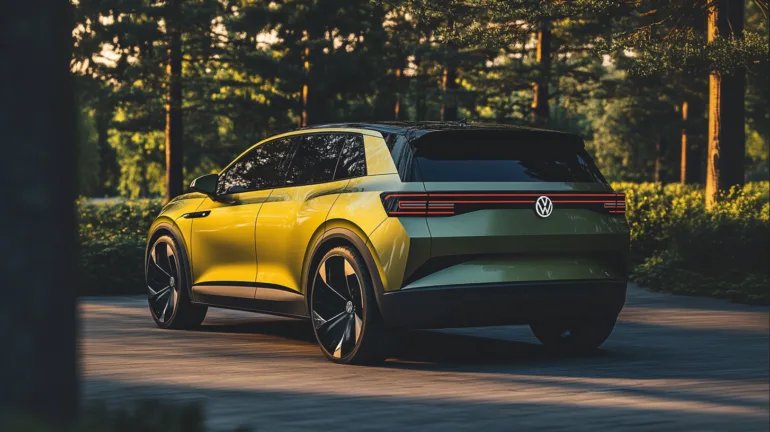

At a time when hatchbacks seem to be losing ground to SUVs, Volkswagen continues to invest in one of its most iconic models. The Golf is set to have a new generation — and, by all indications, it will not just be another evolution. It will be a change in direction.
A practically closed design
The development of the new Volkswagen Golf Mk9 is already in an advanced stage. According to Thomas Schäfer, CEO of Volkswagen, the model is “on the right track” and the design is practically defined.
The internal reaction seems to have been immediate. When he saw one of the first full-scale prototypes, Schäfer summed up the experience simply: “it’s very beautiful.” It was not yet the final model, but enough to validate the aesthetic direction of the project.
A return to the spirit of the Golf Mk4
If there is a clear reference in this new generation, it comes from the past.
Kai Grünitz, responsible for technical development at Volkswagen, confirmed that the new Golf will draw inspiration from the Mk4 — one of the most important generations in the history of the model. Not in nostalgic terms, but as a basis for something more timeless.
The idea is to recover balanced proportions and a cleaner identity, in a car that is modern but does not age quickly. According to the brand itself, the electric Golf is already 96 to 97% defined in terms of design, which shows the level of maturity of the project.
Two Golfs, two strategies
The biggest news is not just in the design, but in the very structure of the range.
Volkswagen will split the Golf into two distinct lines:
- one version with combustion engines (including plug-in hybrids), based on the MQB Evo platform
- one fully electric version, built on a new dedicated architecture, the SSB
This means that, for the first time, the Golf will not just be a model with various powertrains — it will, in practice, be two different cars sharing the same name.
And both will coexist in the market.
The electric Golf enters a new phase
The 100% electric version will be built on the new SSB platform, which should represent a technological leap compared to the current ID models.
This base will allow for greater efficiency, better range, and more advanced software integration — areas where Volkswagen has faced criticism in recent years.
At the same time, the brand seeks to maintain what has always defined the Golf: balance, usability, and accessible driving.
And the GTI and Golf R?
Despite the news, there is one question that remains unanswered.
The future of the sports models — GTI and Golf R — has not yet been detailed. However, the fact that Volkswagen continues to invest in the Golf as the central model of its range suggests that these versions should continue, although possibly adapted to new technical and environmental demands.
A model that withstands the test of time
The Golf is one of the few cars that has managed to maintain relevance over several decades. In a constantly changing market, it remains a reference.
The ninth generation does not seem to want to break with that legacy. On the contrary, it seems to want to reinforce it — with a more rational, cleaner approach that is more aligned with the future of mobility.
Conclusion
The Golf Mk9 will not just be another update. It will be a redefinition of the model at a critical moment for the industry.
Two parallel paths — combustion and electric —
A design that looks to the past to build the future —
And a brand that tries to balance tradition with transformation.
If the execution matches the ambition, the Golf may continue to do what it has always done best: adapt… without losing its identity.