
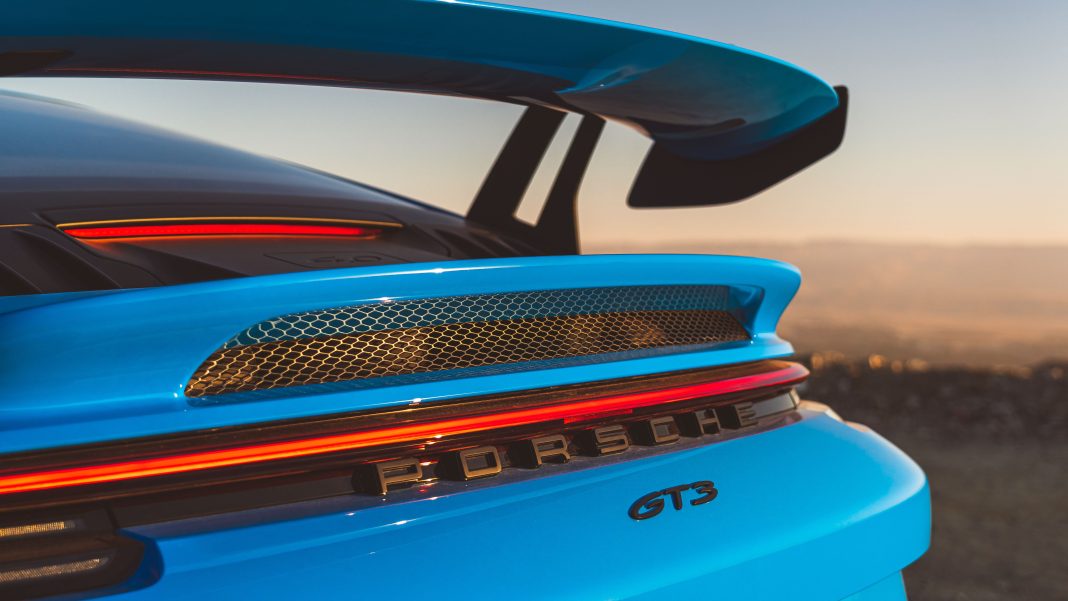

Since the 996 generation, launched in 1999, the Porsche 911 GT3 has built its reputation around a naturally aspirated flat-six engine. An engine that didn't need turbos to impress, nor electric assistance to deliver excitement.
But regulatory pressure in Europe is making this formula increasingly difficult to sustain.
According to Andreas Preuninger, head of Porsche's GT division, the current 4.0-liter engine may be running out of time — at least in its current form.
Europe sets the pace, not the United States
Interestingly, the problem is not global — it is regional.
In the United States, the engine may still survive for some time. But in Europe, the scenario is much tighter. Emission regulations make a structural change practically inevitable.
And there is an important detail: Porsche is not expected to develop different versions of the GT3 for distinct markets. This would imply duplicating homologation processes, testing, and development — something difficult to justify, even for an iconic model.
As a result: the decision will be global, but influenced by Europe.
The turbo is no longer a taboo
For years, the GT3 resisted the turbo. This distinction was fundamental within the Porsche range: the GT3 was the last bastion of naturally aspirated engines, while the GT2 took on the more brutal role with supercharged engines.
Now, this line begins to fade.
When directly questioned about the possibility of the next GT3 using a turbo, Preuninger did not deny it — he only left the door open. And, in this context, that is enough to perceive the direction.
It is not a confirmation. But it is also no longer a “no.”
A change that goes beyond mechanics
If the GT3 becomes turbocharged, the impact goes far beyond the engine.
The very logic of the GT range may need to be rethought. The GT2 would lose some of its differentiation, the GT4 could enter a new phase with electrification, and the balance between the models would no longer be as clear as it is today.
More than that, a reference is lost.
Because the GT3 has never been just a fast car. It has been a concept. A symbol of resistance to trends. A model that remained true to an idea while the rest of the industry evolved in another direction.
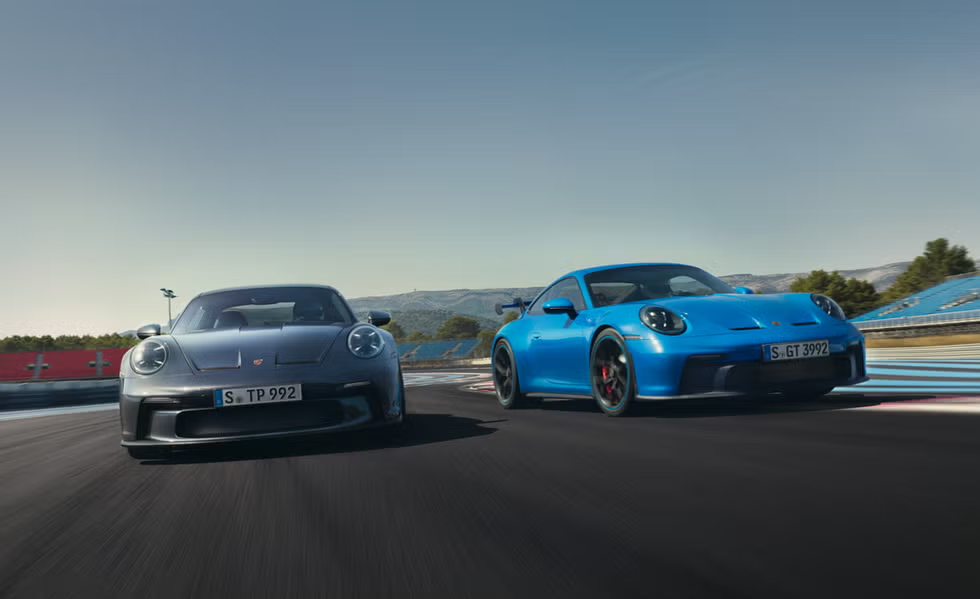
The last of the “purists”?
The current generation, known as 992.2, begins to gain a new significance. It may not just be another evolution of the model — it could be the last truly atmospheric GT3.
And this changes the way it will be seen in the future.
The Inevitable Confrontation Between Emotion and Regulation
What is happening with the GT3 is not an isolated case. It is a reflection of an industry in transition, where engineering no longer responds only to performance, but also to increasingly demanding environmental limits.
Porsche, like other brands, is trying to balance two worlds:
- comply with the rules
- maintain identity
And this balance is rarely perfect.
Conclusion
The Porsche 911 GT3 may be on the verge of entering a new era. More efficient, more compatible with the future — but also, inevitably, different.
If the turbo arrives, it will not just be a technical change. It will be the end of a philosophy that has marked generations of enthusiasts.
And, as always happens at these moments, there will be those who accept the evolution…
and those who will never stop preferring the sound of an engine breathing freely.