

For years, the name Freelander has been associated with a very concrete idea within Land Rover: accessibility, versatility, and a gateway to the brand's SUV universe. When it disappeared, it seemed definitive. But the automotive industry has a peculiar way of recovering the past — not to repeat it, but to reinvent it.
The new Freelander 8, unveiled at the Beijing Auto Show, is exactly that. It is not a direct continuation of the old model. It is something else. A new brand, a new strategy, and, above all, a new type of product that reflects the global transformation of Jaguar Land Rover and the growing influence of China in the sector.
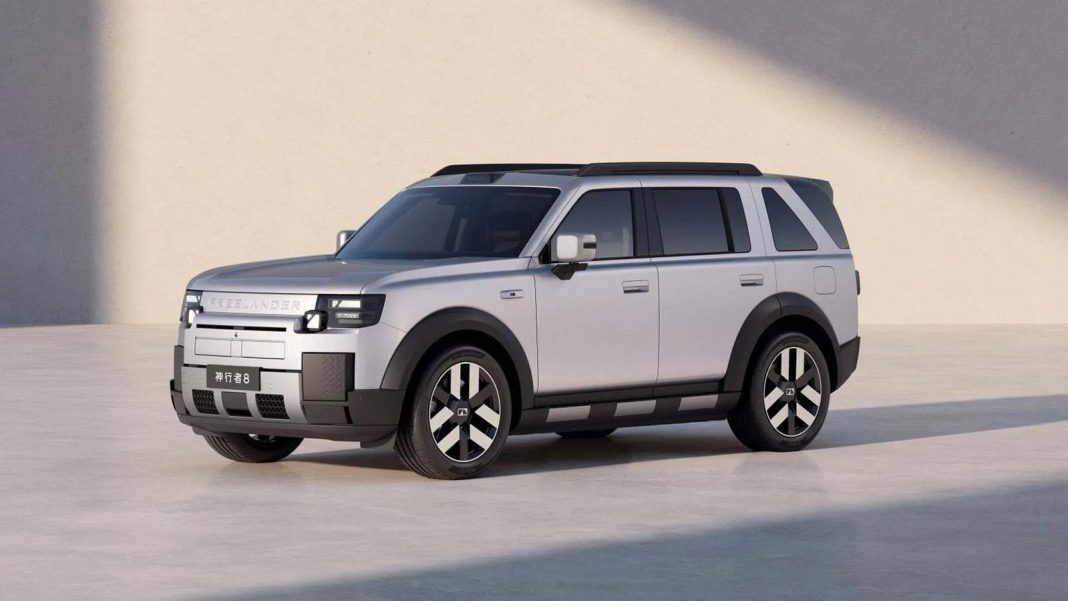
At first glance, there is something that immediately catches the eye: the size. The Freelander 8 is neither a compact SUV nor an entry-level model. On the contrary, it is positioned above references such as the Defender 110 in dimensions, which completely alters the perception of what this name represents. What was once an entry point is now an aspirational model.
This change does not happen by chance. It arises in the context of a new partnership with Chery, which is not limited to local production but directly influences product development. The Freelander ceases to be just a name within Land Rover and becomes a new entity with global objectives, designed to compete in a market where electrification and technology define the rules.
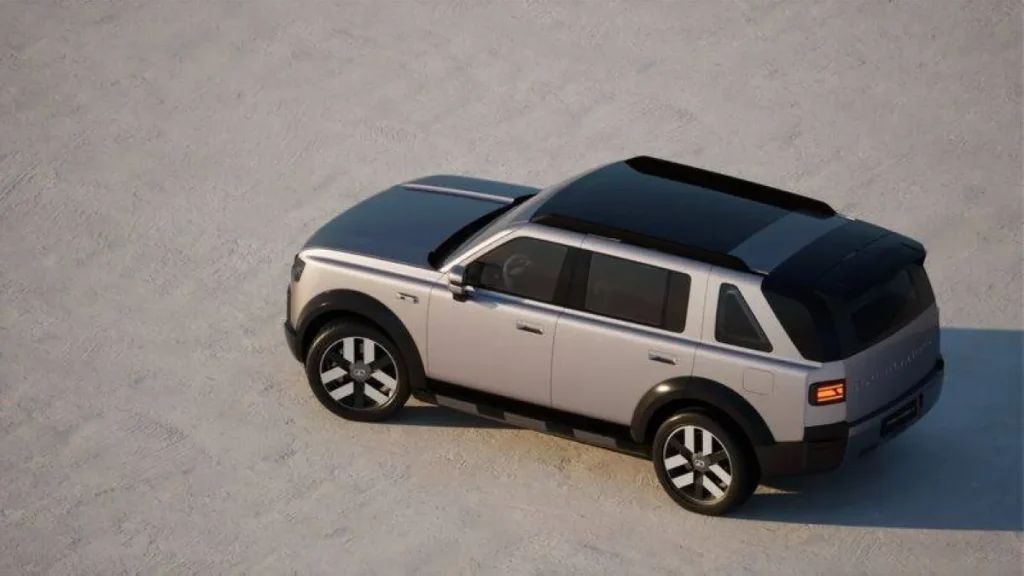
The design confirms this intention. The Freelander 8 retains much of the language presented in the concept that preceded it, with a clean front, lacking a traditional grille, and a light signature marked by square headlights that give it identity. The absence of excessive decorative elements gives it a solid and contemporary presence, while details like the LiDAR sensor on top of the windshield clearly reveal the focus on advanced driver assistance systems.
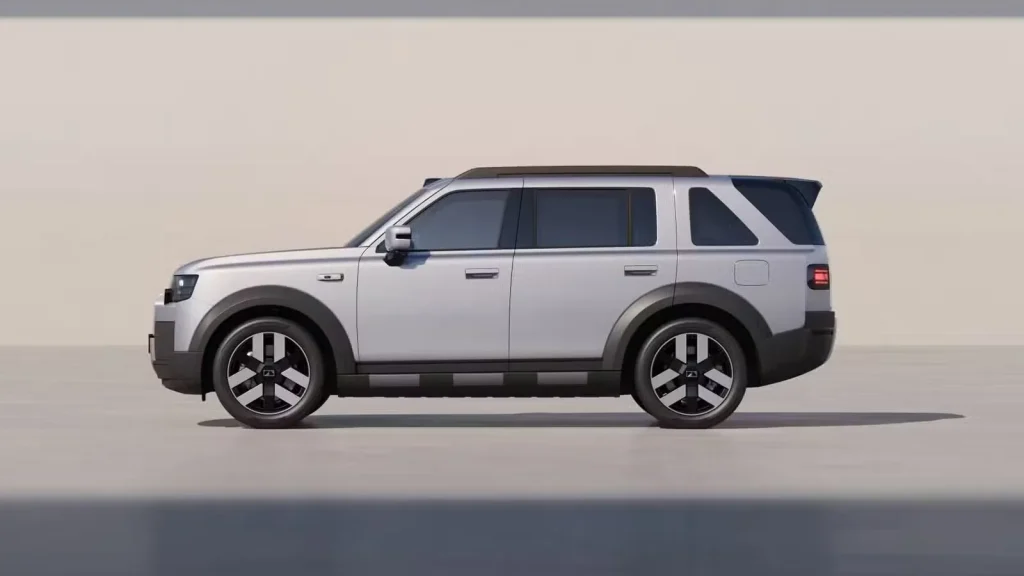
There are also subtle references to the past, such as the sloping rear pillar, which evokes the original Freelander. But they are just that: references. The car does not live on nostalgia. It uses it as a foundation to build something new.
Naturally, the transition from concept to production version brought some concessions. The rear doors with inverted opening have disappeared, replaced by a more conventional solution. It is a predictable decision, dictated by cost and homologation reasons, but it takes away some of the initial visual impact. Still, the overall design maintains enough coherence and presence to stand out in an increasingly competitive segment.
If the exterior already reveals much about the model's ambition, the interior remains, for now, partially a secret. The brand has only indicated that the Freelander 8 will feature a large screen based on Mini LED technology and a digital approach close to the concept, where the dashboard extends from end to end. The promise of “zero gravity” seats indicates that comfort will continue to be one of the pillars of the project, although it is difficult to assess to what extent the final result will match the presented idea.
More revealing is what lies beneath the bodywork. The Freelander 8 is based on a new platform designed to accommodate different types of electrification — from 100% electric versions to plug-in hybrid and extended range solutions. This flexibility is not only technical; it is strategic. It allows the model to be adapted to different markets, especially China, where demand remains diverse and the transition to pure electric is still not uniform.
The choice of an 800-volt electric architecture, with charging capacity of up to 350 kW, places the Freelander 8 on par with the most advanced offerings in the premium segment. This is not a minor detail. It is a clear signal that the brand does not just want to compete — it wants to be at the forefront.
All of this raises an inevitable question: where does the Freelander 8 really position itself within the Jaguar Land Rover universe? The answer is not simple. On one hand, it represents an extension of the brand into new markets and new audiences. On the other, it could end up directly competing with existing models, including the Defender itself. It is a calculated risk, but a risk nonetheless.
The Freelander 8 is not just a new model. It is a test of Jaguar Land Rover's ability to reinvent itself at a time when the automotive industry is changing faster than ever. A test of the acceptance of a new brand built on an old name. And a test of the very idea of identity within a group that seeks to grow without losing coherence.
If successful, the Freelander will no longer be remembered as a model of the past. It will be seen as the beginning of a new phase.
And that, in an industry where the past weighs so heavily, is perhaps the greatest challenge of all.