
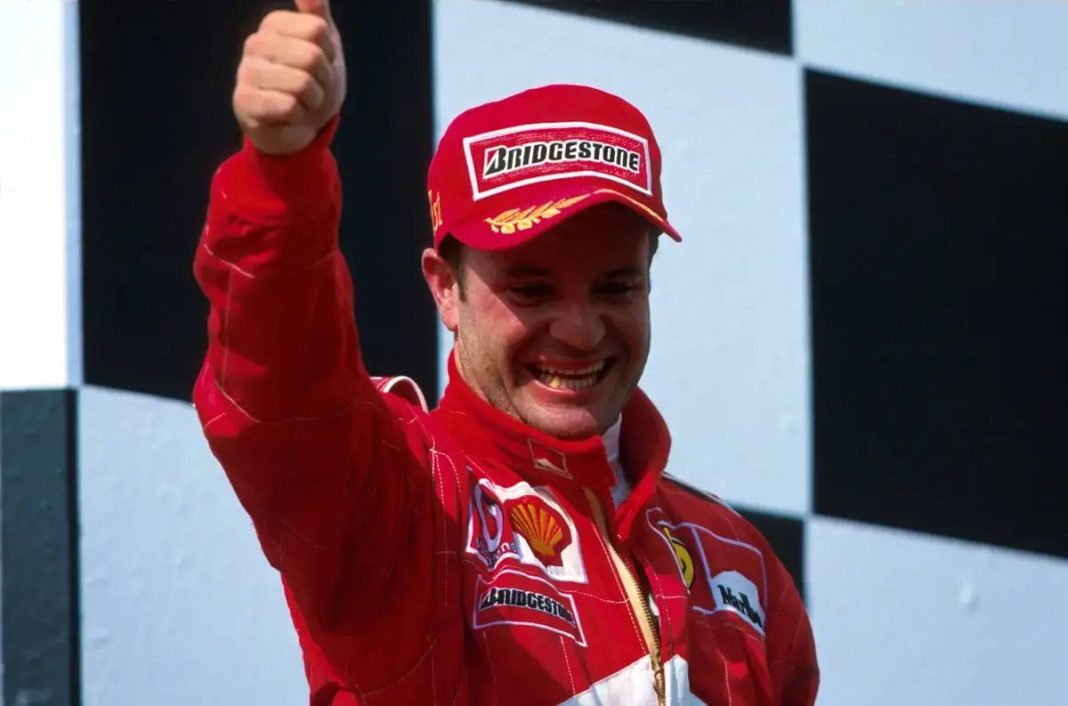

F1 SHOCKER: Jean Todt Breaks Silence on Barrichello's Heart-Wrenching Sacrifice at 2002 Austrian GP!
In an explosive revelation, Jean Todt, the former head of Ferrari and ex-president of the FIA, has finally shed light on one of the most contentious moments in Formula 1 history—the infamous 2002 Austrian Grand Prix. This jaw-dropping episode saw Rubens Barrichello ordered to relinquish victory to teammate Michael Schumacher, igniting a firestorm of debate that has smoldered for over two decades!
Speaking candidly on the High Performance podcast, Todt staunchly defended Ferrari's controversial decision, arguing that it was a calculated move born out of the need to safeguard their championship ambitions. “The fear of losing was my constant nightmare,” he declared. With Schumacher leading the World Championship at that time, the stakes were astronomically high, and the internal team dynamics dictated that the top driver take precedence as the season progressed.
The dramatic order, however, was executed in a manner that has since become a symbol of Formula 1's deep-rooted conflicts between sportsmanship and team strategy. Barrichello, visibly reluctant, slowed down mere meters from the finish line, handing victory to Schumacher in a breathtakingly awkward moment that left fans booing and gasping in disbelief.
Todt recounted the pre-race discussions that set the stage for this contentious moment. “We initiated the race with a briefing on team orders… and it was agreed,” he stated. Yet, the manner of the position swap only fueled public outrage, with Barrichello's hesitance creating a spectacle of embarrassment for the entire Scuderia. “Rubens wasn't happy to comply, which led to a massive public controversy,” Todt admitted, reflecting on the fallout.
The tension didn’t cease with the race conclusion; it spilled over onto the podium itself. In a strikingly awkward gesture, Schumacher attempted to ease the situation by standing aside and allowing Barrichello to take the top spot, handing him the winner's trophy in a moment of palpable discomfort. “Michael was so embarrassed that he gave his position to Rubens,” Todt revealed, emphasizing that the ensuing penalties for Ferrari stemmed more from the podium debacle than the race itself.
This riveting saga not only highlights Todt's leadership style but also underscores the intense pressure faced by team principals in high-stakes environments. “Being a team leader means making tough calls, even when the heat is on,” he stated, likening his role to that of a firefighter extinguishing flames of controversy.
As Todt revisits this monumental incident, he acknowledges the emotional turbulence surrounding Barrichello's reaction and the implications it had on their reputations. “Both Barrichello and Schumacher were under immense pressure, and their emotional responses were inevitable,” he reflected, shedding light on the human element often overlooked in the world of high-octane motorsport.
More than two decades later, the 2002 Austrian GP remains one of the most debated events in modern Formula 1, a stark reminder of the ongoing struggle between collective strategy, ethical competition, and public perception. Todt's candid remarks not only reignite this long-standing controversy but also provide a crucial insight into the management philosophies that helped reshape Ferrari in the early 2000s—a period marked by strict internal discipline and a relentless pursuit of victory.
As fans and critics alike continue to dissect the implications of this harrowing chapter, one thing is clear: the shadows of the past continue to loom large over Formula 1, blending the lines between triumph and tragedy in the relentless quest for glory on the racetrack!