
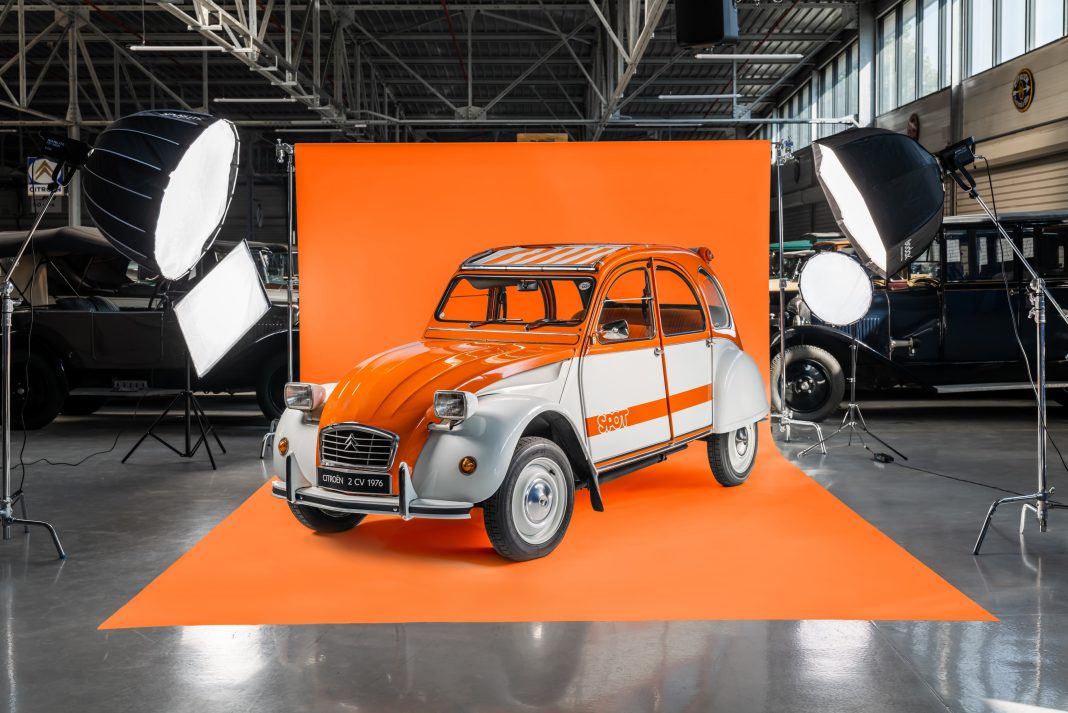

Citroën marks half a century of one of the most significant models in its history: the 2CV Spot, launched in 1976 as the brand's first limited edition and which quickly became a phenomenon of popularity.
A bold design that marked an era
Created in 1974 by designer Serge Gevin, the 2CV Spot stood out for its unique visual identity, featuring a two-tone paint job in orange and white and details inspired by the seaside environment.
Elements such as the striped roof, customized door panels, and colorful fabric upholstery contributed to a relaxed and innovative image, unusual for the time.
Immediate success and limited production
Officially launched on April 10, 1976, with only 1,800 units available, the model sold out within a few days, exceeding all expectations.
Based on the 2CV 4, the Spot was equipped with a 435 cm³ engine, capable of exceeding 100 km/h, and featured moderate fuel consumption, suitable for everyday use.
Expansion beyond France
The success led to its commercialization in several European markets still in 1976, with additional production in Belgium.
Depending on the market, the model was offered with different engine options, including more powerful versions for countries such as the United Kingdom and Switzerland.
A milestone in Citroën's strategy
The 2CV Spot marked the beginning of a new commercial approach for Citroën, introducing the concept of limited series as a way to enhance its models and get closer to customers.
Today, this strategy remains present in the brand, with special editions playing an important role in its range.
An icon celebrated 50 years later
In 2026, the model will be honored at two major events:
- Nationale 2CV, in Villiers-sur-Loir, with around 3,000 vehicles expected
- Epoqu’auto, in Lyon, where the 2CV Spot will be featured on the official poster
From utility to heritage piece
Five decades after its launch, the 2CV Spot is now recognized as a cultural and automotive icon, symbolizing creativity, simplicity, and innovation.
Its story demonstrates how a small car can leave a lasting mark and influence future generations in the automotive industry.