
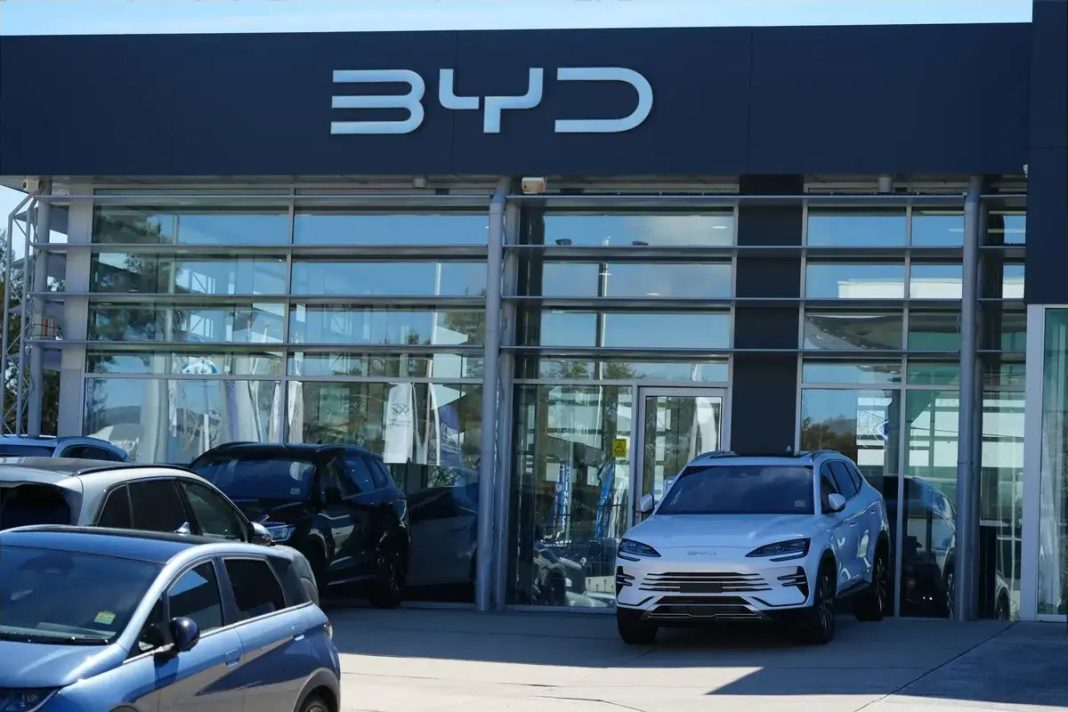

The global automotive sector is entering a phase of increasing uncertainty, marked by geopolitical tensions, a slowdown in demand, and an ever more evident threat: the competitiveness of Chinese electric vehicles.
Chinese electric vehicles concern the North American industry
Models developed by Chinese manufacturers are demonstrating significant technological advancements, raising concerns among builders in the United States.
Recent tests conducted on vehicles such as the Geely Galaxy M9 indicate that these models offer superior features and equipment levels compared to those currently available in the North American market, often at lower prices.
Political pressure increases in the US
The issue has also become political, with several US senators and industry associations advocating for more restrictive measures.
Among the proposals are:
- preventing the entry of Chinese vehicles into the market
- blocking factories of Chinese brands in the US
- limiting indirect imports via Mexico and Canada
BYD faces internal difficulties but grows abroad
BYD continues to feel pressure in the domestic market, with seven consecutive months of declining sales, due to increasing competition from brands such as Geely and Leapmotor.
Despite this, the international strategy is gaining strength, with nearly half of the brand's sales occurring outside of China.
However, reputational challenges, such as the company's inclusion on a list in Brazil for alleged abusive labor practices, may hinder this expansion.
Tesla faces excess inventory
Tesla is also going through a delicate moment, with deliveries in the first quarter declining and inventory levels increasing.
The company is facing lower demand in the U.S., exacerbated by the end of tax incentives and increasing competition, especially from Chinese manufacturers.
Still, Tesla's strategy is increasingly focused on areas such as solar energy, robotics, and autonomous driving.
Robotaxis raise new doubts
In China, an incident involving autonomous vehicles from Baidu, which became immobilized on the road due to a system failure, has reinforced concerns about the reliability of these technologies.
In some cases, passengers were trapped in the vehicles for long periods, raising questions about safety and public trust.
Global market under pressure
The current context is marked by several adverse factors:
- rise in energy costs
- impact of the conflict in the Middle East
- global economic uncertainty
- slowing demand in key markets
A sector in accelerated transformation
While traditional manufacturers face challenges, Chinese builders continue to gain ground, both in technology and competitiveness.
The evolution of this balance will be decisive for the future of the global automotive industry, at a time when electrification is no longer just a trend, but a strategic battleground.